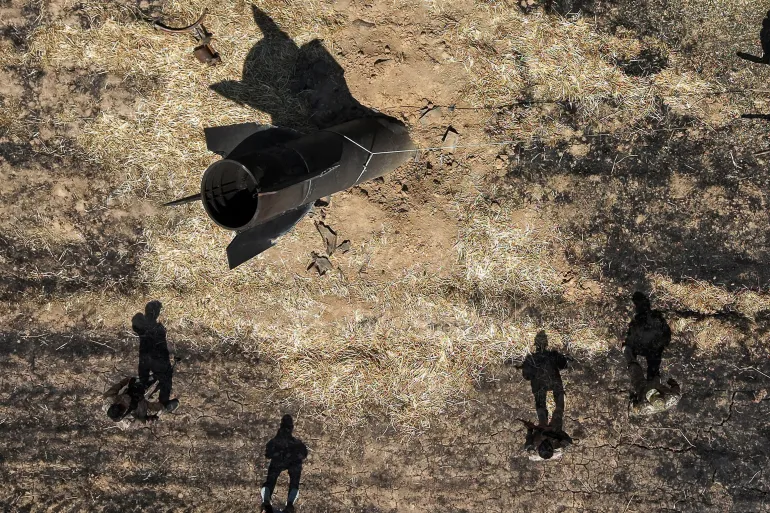
President Donald Trump announced "major combat operations" against Iran on February 28, initiating massive joint U.S.-Israeli strikes targeting military, government, and infrastructure sites. The U.S. Central Command (CENTCOM) reported that American forces struck Iranian air defense, ground control stations, and surveillance radar sites near the Strait of Hormuz on Tuesday as part of these retaliatory actions. These strikes were a direct response to recent aggressions, aiming to neutralize threats posed by Iranian military capabilities in the vital maritime region. Kuwait's Defense Ministry stated on X on Wednesday that its defenses also intercepted "hostile aerial targets at dawn today," confirming activity in the region. The interception by Kuwaiti forces notes the broad impact of the ongoing conflict on regional stability and security.
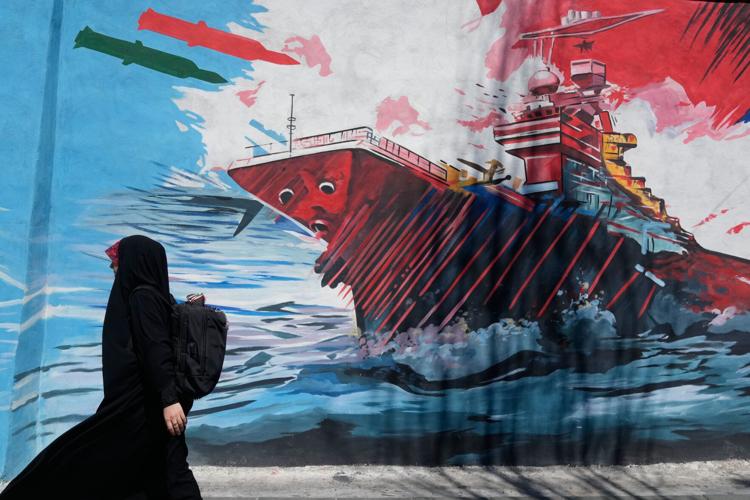
President Trump claimed the operation established "the most successful Blockade in the history of Naval Warfare," adding that "NOTHING GETS THROUGH unless we want it to. IT IS A STEEL WALL!" He further asserted that "Iran is doing ZERO business... And quickly becoming a FAILED NATION!" Trump remarked that Iran "taken too long to negotiate a deal... Now they will have to pay the price!!!" He also declared Iran's military "a complete and total mess," stating, "The Bully of the Middle East is DEAD!!!" These strong statements show the Trump administration's firm stance against Iran and its confidence in the effectiveness of the U.S. Military actions. The Israel Defense Forces confirmed strikes on "infrastructure," indicating a coordinated effort between the U.S. And its allies.
U.S. Strikes Spark Retaliation
U.S. Forces "completed self-defense strikes" in Iran in response to the downing of a U.S. Army Apache helicopter, U.S. Central Command (CENTCOM) announced in a statement on Tuesday. The Apache helicopter incident marked a significant escalation, prompting a strong and immediate response from American forces. CENTCOM stated the operation was a proportional response to recent attacks on U.S. Forces and international commercial ships transiting regional waters. These attacks had posed a direct threat to U.S. Personnel and vital global shipping lanes, necessitating defensive measures. The command added, "U.S. Forces remain vigilant and postured to defend against unjustified Iranian aggression." This declaration emphasizes the ongoing readiness of U.S. Forces to protect their interests and allies in the Middle East.
Iranian state television reported on Wednesday that U.S. Missiles hit water tanks in Sirik, a county located in the Hormozgan Province on the coastline of the Strait of Hormuz. The report specified that the two affected tanks had capacities of 500 cubic meters and 2,000 cubic meters, respectively. The targeting of these infrastructure sites, particularly water tanks, suggests an effort to disrupt essential services or demonstrate capabilities to strike inland targets. The Hormozgan Province is strategically important due to its location along the Strait of Hormuz, a critical choke point for global oil shipments. The impact on these specific water tanks raises concerns about civilian infrastructure and the potential humanitarian consequences of the strikes. The detailed reporting by Iranian state television aimed to highlight the damage inflicted by the U.S. Actions.
Regional Defenses Intercept Threats
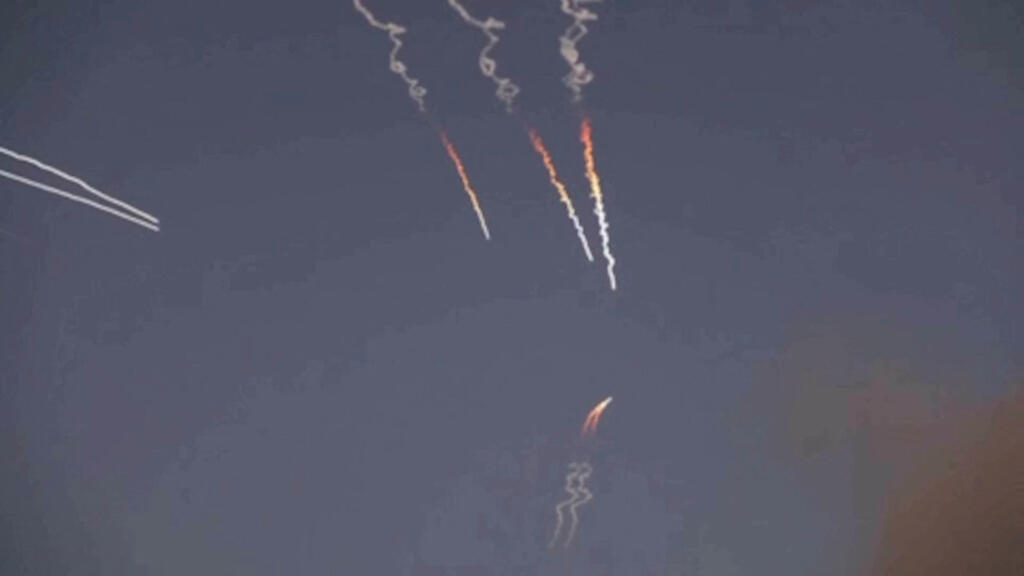
Following a series of U.S. Strikes, Iran launched multiple missiles and drones, though nearly all were intercepted, according to initial assessments from a U.S. Official. This widespread launch of projectiles by Iran indicates a broad retaliatory effort, even if largely unsuccessful in reaching their intended targets. The official did not specify the exact number of projectiles launched or intercepted, nor did they detail the types of systems used for interception. The lack of specific details from the U.S. Official might be due to ongoing intelligence assessments or a desire to avoid revealing sensitive defensive capabilities. The targets of these Iranian launches and the locations of the interceptions were also not immediately disclosed by the U.S. Official. The official's statement suggests a significant defensive effort was mounted in response to the Iranian actions, involving multiple regional partners and advanced air defense systems. The high interception rate shows the effectiveness of these defensive measures in mitigating potential damage.
The Bahrain Defence Force announced on social media Wednesday that its air defenses intercepted an unspecified number of Iranian missiles and drones. This interception by Bahraini forces demonstrates their active participation in regional defense and their capability to protect their airspace. The statement did not provide details on the specific locations of the interceptions within Bahraini airspace or the types of defensive systems employed. While the exact methods remain undisclosed, the successful interception indicates a strong air defense infrastructure. It also did not indicate whether any damage or casualties resulted from the inbound projectiles before their interception. The absence of reported damage or casualties suggests that the interceptions were successful in preventing significant impacts. The Bahraini military's announcement signals its readiness and capability to counter aerial threats, reassuring its populace and allies of its defensive posture. The deployment of such defenses is key for maintaining stability in a volatile region.
Jordan's state news agency, Petra, reported on Wednesday that the Jordanian Armed Forces also intercepted "hostile aerial targets" over its airspace. This report confirms that the Iranian retaliatory launches extended beyond immediate neighbors, impacting a wider regional area. The Jordanian military's statement indicated that these targets were "unmanned aircraft" and were successfully brought down outside populated areas. The interception of these drones over Jordanian territory further illustrates the widespread nature of the Iranian retaliatory strikes and the collective regional effort to counter them. The action by the Jordanian Armed Forces notes the interconnectedness of air defense operations across the Middle East in response to the escalating tensions.
Escalation Amidst Stalled Diplomacy
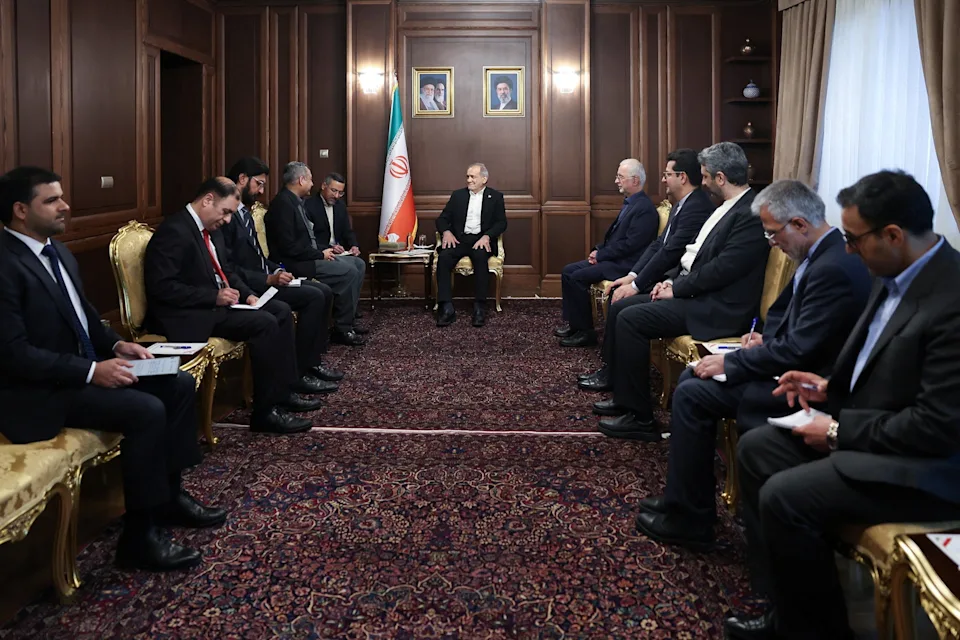
Iranian Foreign Minister Abbas Araghchi stated that Iran's military "will leave no attack or threat unanswered" in response to recent U.S. Strikes. This resolute declaration from a senior Iranian official signals Tehran's unwavering commitment to retaliate against perceived aggressions, further fueling the cycle of escalation. Initial U.S.-Iran talks held in Pakistan in April failed to yield a peace deal, contributing to the current tensions. The collapse of these diplomatic efforts left a void that has since been filled by military confrontation. Iranian President Masoud Pezeshkian remarked on Wednesday that the current "neither war nor peace" situation required resolution. His statement reflects the precarious state of affairs, where open conflict is avoided but true peace remains elusive, creating an environment of constant instability. President Donald Trump posted on social media that Iran had "taken too long to negotiate a deal that would have been great for them, now they will have to pay the price!!!" Trump's assertion suggests that the window for diplomatic resolution has closed, and military pressure is now the primary tool. Trump further claimed the U.S. Blockade of Iranian ports represented "the most successful Blockade in the history of Naval Warfare." He added that "NOTHING GETS THROUGH unless we want it to. IT IS A STEEL WALL! Iran is doing ZERO business, not paying their military, or any of their bills, and quickly becoming a FAILED NATION! Lots of oil is getting out. Praise be to Allah!" These comments underline Trump's belief in the effectiveness of economic sanctions and naval operations to cripple Iran's economy and military.
Iranian Foreign Ministry spokesperson Esmail Baghaei informed reporters on Wednesday that Tehran would need to reassess negotiations with the U.S. Following the latest exchange of strikes. This indicates a potential setback for any future diplomatic efforts, as the recent military actions have likely hardened positions on both sides. Baghaei asserted that "What happened last night demonstrated that Iran's brave armed forces do not hesitate when it comes to defending the country." This statement aims to project strength and resolve to both domestic and international audiences. He also criticized the U.S. Stating, "Unfortunately, the United States is undermining this process through contradictory messages, frequent shifts in its positions and demands, and repeated violations of the ceasefire." Baghaei's remarks highlight Iran's perception of U.S. Inconsistency as a barrier to de-escalation and a lasting peace. President Trump also criticized media coverage of the U.S. Blockade, reiterating his view of its success. He specifically took issue with reports that suggested the blockade was not fully effective, emphasizing his belief that it was a "steel wall" preventing any significant trade. Trump further described Iran's military as "a complete and total mess. Much of it, like their Navy and Air Force, doesn't even exist anymore -- They have been completely defeated. Iran is all talk and no action. The Bully of the Middle East is DEAD!!!" These inflammatory statements from President Trump aim to diminish Iran's military capabilities and leadership, reinforcing his administration's tough stance. Foreign Minister Araghchi issued a warning, telling foreign powers, "Leave our region if you want to be safe." This stark warning shows Iran's demand for foreign military withdrawal from the Middle East, viewing their presence as a source of instability and a threat to Iranian sovereignty.
International Reactions and Warnings
The Israel Defense Forces (IDF) announced on Wednesday that it conducted additional strikes on the southern Lebanese city of Tyre. These strikes represent a continuation of Israeli military operations in the region, often conducted in response to perceived threats from militant groups. The IDF stated the strikes targeted "infrastructure" and weapons utilized by Hezbollah. The targeting of Hezbollah assets indicates Israel's ongoing efforts to degrade the capabilities of the Iran-backed militant group, which it views as a significant security threat along its northern border. This action follows reports from Lebanon's Ministry of Public Health, which confirmed that Israeli attacks in Lebanon have resulted in at least 3,666 fatalities and 11,321 injuries since March 2. These grim statistics highlight the devastating human cost of the ongoing conflict in Lebanon, with a significant number of casualties among the civilian population. The IDF did not specify the exact nature of the infrastructure or the types of weapons targeted in Tyre, maintaining a level of operational secrecy. The ongoing Israeli operations in Lebanon add another layer of complexity to the already volatile regional security landscape, drawing further international concern.