Iran's Islamic Revolutionary Guard Corps (IRGC) on Wednesday claimed responsibility for attacks targeting United States military bases in Bahrain, Kuwait, and Jordan. The IRGC's statement, carried by state media, asserted these actions were retaliatory. Following the reported attacks, air raid alarms were triggered in both Bahrain and Kuwait, signaling an immediate security response to the incoming threats. The IRGC's claims represent a significant escalation in regional tensions, directly implicating US military assets stationed in the Gulf and broader Middle East. These alleged strikes by the IRGC were stated to be in retaliation for earlier United States military actions, specifically US strikes on Iranian ports and islands located in the Strait of Hormuz. The US strikes, according to the IRGC, were themselves a response to Iran downing a US Apache helicopter on Tuesday, further illustrating the complex chain of events leading to the current situation. This series of events began with US and Israeli strikes against Iran on February 28, setting the stage for the subsequent military exchanges.
IRGC Details Attacks and Claims
The Islamic Revolutionary Guard Corps (IRGC) stated it launched drone attacks targeting the US Fifth Fleet in Bahrain. These drone attacks, according to the IRGC, were part of a coordinated effort to respond to perceived aggressions. Simultaneously, the IRGC claimed responsibility for drone attacks directed at the Ali Al Salem airbase in Kuwait. The use of drones in these operations notes a key component of the IRGC's asserted military capabilities in the region. In a separate operation, demonstrating a broader reach, the IRGC also reported a long-range missile strike against an airbase located in Azraq, Jordan. This particular claim suggests a capacity for strikes across significant distances, impacting multiple US military installations.
According to the IRGC's claims, a total of 21 US targets were attacked across these various locations. This broad targeting strategy, if confirmed, would indicate a widespread and systematic attempt to impact US military infrastructure in the region. Of these, the paramilitary force asserted that it successfully destroyed four US targets, although independent verification of these claims was not immediately available. Among the specific claims made by the IRGC was the destruction of an F-35 fighter jet hangar at the airbase in Jordan, a detail that, if true, would represent a significant blow to US air capabilities in the area. The explicit mention of an F-35 hangar suggests a specific and high-value target, indicating a deliberate strategy behind the alleged strikes.
The IRGC also claimed to have shot down a US MQ-9 drone operating in the skies over the Iranian city of Jam. This claim, if substantiated, would show Iran's asserted air defense capabilities against advanced US unmanned aerial vehicles. Separately, the IRGC stated that US attacks had caused damage to a telecommunications tower situated in the town of Sirik, an Iranian coastal town. The IRGC reported that two water tanks in Sirik were destroyed as a result of US actions. These specific claims about damage to civilian infrastructure in Sirik offer a glimpse into the alleged impact of US military operations on Iranian territory, providing a narrative of direct harm to Iranian assets and resources. The reporting of these damages by the IRGC serves to frame their own actions as a direct response to prior hostile acts.
Context of Escalation
The recent claims by the Islamic Revolutionary Guard Corps (IRGC) follow a series of earlier confrontations that have progressively intensified regional tensions. The United States military previously launched attacks targeting Qeshm Island, an Iranian island strategically located in the Strait of Hormuz. These attacks on Qeshm Island were a clear demonstration of US military presence and capability in a critical waterway. In addition to the strike on Qeshm Island, the US military also carried out attacks on various ports located along the Iranian coast within the Strait of Hormuz. These coastal port attacks further noted the direct engagement between US forces and Iranian assets, particularly in areas vital for maritime trade and energy shipments. The IRGC's assertion that their current actions are retaliatory is directly linked to these prior US military operations, creating a tit-for-tat dynamic in the ongoing conflict.
This latest series of strikes, claimed by the IRGC, occurred a day after Iran and Israel engaged in an exchange of fire. The preceding day's events involved direct military action between the two regional powers, setting a tense backdrop for the IRGC's declared retaliatory operations against US bases. The US military attacks on Qeshm Island and other Iranian coastal ports in the strategically vital Strait of Hormuz represent significant engagements in the ongoing regional dynamics, contributing to a volatile environment. These incidents contribute to a pattern of military actions and counter-actions that have characterized relations between the involved parties, creating a cycle of escalation. The Strait of Hormuz is a critical maritime chokepoint for international oil shipments, with approximately one-fifth of the world's petroleum passing through its waters. Military activity in the area is closely monitored globally due to its profound implications for global energy markets and international trade. The reported US military operations in this region show the sensitive nature of the waterway and the potential for broader implications arising from any military confrontations there, raising concerns about freedom of navigation and regional stability. The IRGC's claims of retaliatory strikes against US facilities across the Gulf region are presented within this volatile context, directly following the exchange of fire between Iran and Israel, suggesting a possible linkage between the separate but interconnected escalations involving various regional and international actors. The broader conflict itself began with US and Israeli strikes against Iran on February 28, establishing a foundational point for the current cycle of military engagements.
Regional and International Reactions
The recent attacks claimed by Iran's Islamic Revolutionary Guard Corps (IRGC) were stated to be in retaliation for earlier United States strikes on Iranian ports and islands located in the Strait of Hormuz. These US strikes, in turn, were a response to Iran downing a US Apache helicopter on Tuesday, illustrating a clear chain of events that has led to the current heightened state of alert. The broader conflict began with US and Israeli strikes against Iran on February 28, establishing the initial phase of military engagement. The subsequent actions by the IRGC are presented as a direct consequence of this escalating series of events, where each party's actions are framed as a response to the other's.
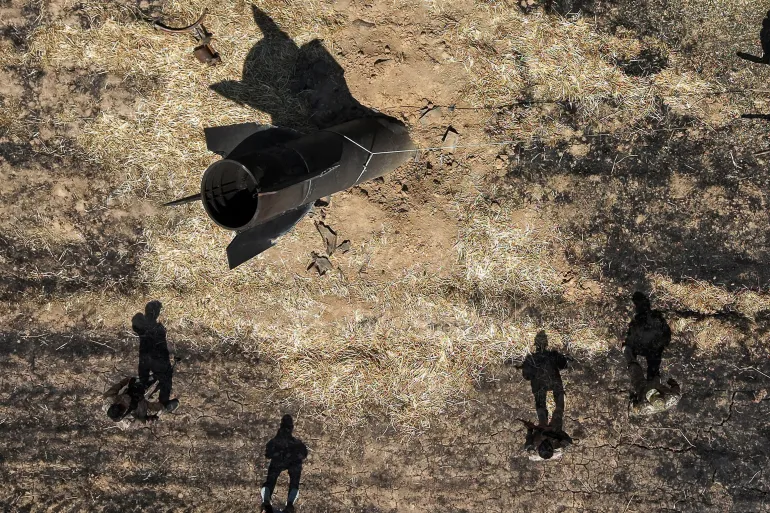
In Jordan, the military reported that it intercepted and shot down five missiles launched from Iran, which were directed towards Azraq. This interception by Jordanian forces notes the immediate defensive measures taken by nations in the region in response to the IRGC's claimed strikes. The successful interception of multiple missiles demonstrates the readiness of regional air defense systems and shows the seriousness with which these threats are being treated. Earlier, the Kuwaiti military also announced that it was intercepting "hostile aerial targets" within the country's airspace, further confirming the widespread nature of the aerial activity and the responsive actions by regional militaries. These military responses show the regional tension following the IRGC's claims, indicating that the alleged attacks prompted swift and decisive defensive actions from affected nations. The triggering of air raid alarms in both Bahrain and Kuwait immediately following the reports of attacks serves as a tangible indicator of the perceived threat and the urgent need for civilian protection measures. The region remains on high alert, with military forces actively monitoring and responding to potential threats, reflecting the volatile security environment created by these claimed retaliatory strikes. The international community is closely watching these developments, concerned about the potential for further escalation in an already tense part of the world.