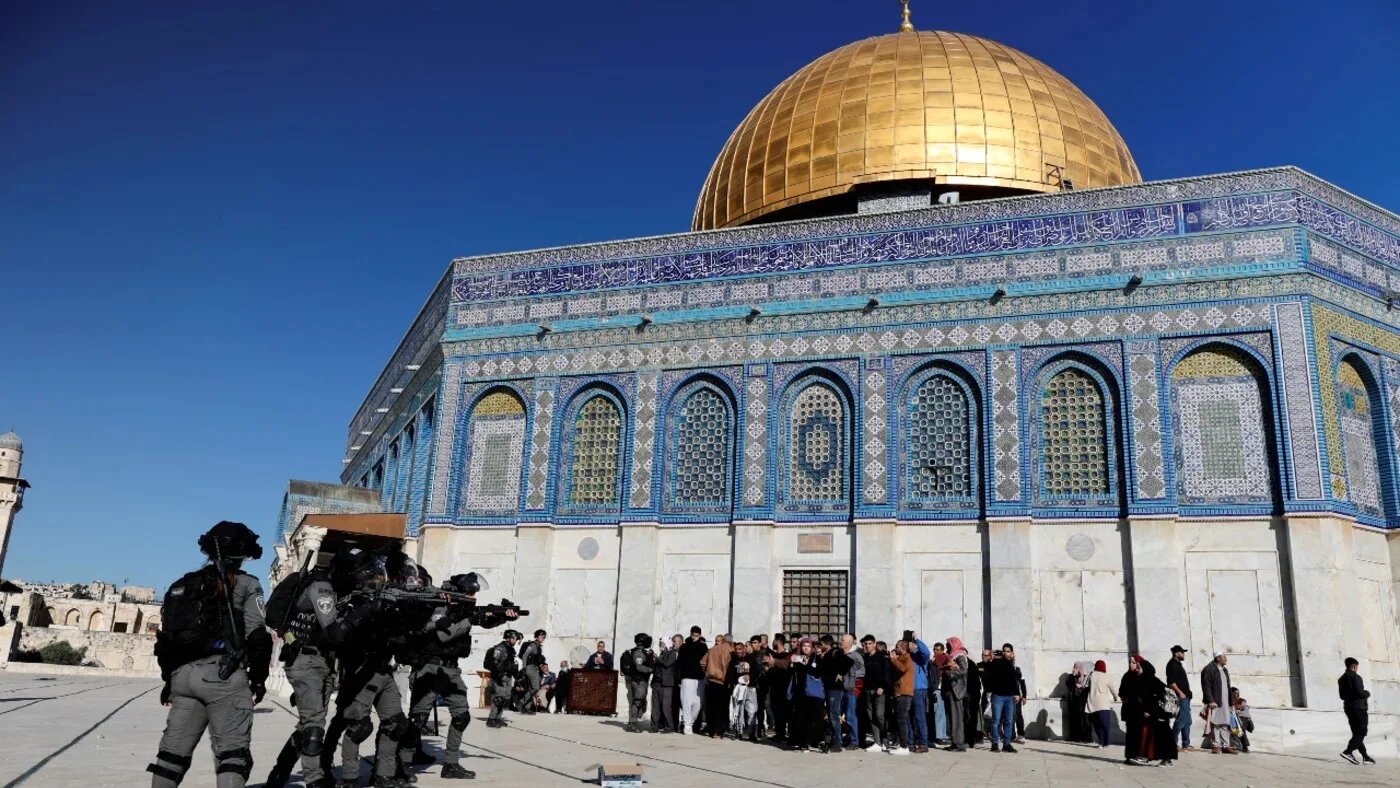
A US-Israeli plan to remove the Hashemite Kingdom of Jordan's historic custodianship of Jerusalem's Al-Aqsa Mosque complex is reportedly being circulated. This alleged proposal concerns the sensitive religious site in East Jerusalem, a location whose status is central to the Israeli-Palestinian conflict and has broader implications for regional stability. A US official, however, denied the White House was actively working to strip Jordan of its custodianship, calling the report "totally false." The official's statement sought to dismiss claims circulating about the controversial initiative.
Details of Proposed Custodianship Shift
Israeli-American attorney Daniel Seidemann confirmed a Middle East Eye (MEE) report detailing a US-Israeli plan to remove Jordan's custodianship over the Al-Aqsa Mosque complex and declare it a "multi-faith centre." Seidemann stated, "We have heard from a reliable source that there is indeed a US proposal to replace/annul Jordanian custodianship over Al Aqsa." He added that a document has been circulated proposing to replace Jordanian custodianship with that of a "consortium of international/interfaith parties, including Muslim/Arab and Jewish representatives." This proposed consortium would fundamentally alter the long-established governance of the holy site. Seidemann emphasized the critical role of Jordanian oversight, saying, "Jordanian custodianship is absolutely essential to maintaining the stability of Al-Aqsa." He warned that "custodianship is the foundation, the raison d'etre of Jordan. Without custodianship over Al-Aqsa, Jordan, as a state, would be widely perceived as an artificial construct." The attorney's remarks show the deep connection between Jordan's national identity and its role as custodian.
The proposed "new arrangement" would reportedly grant Jewish visitors "equal access" to the Muslim holy site and formally permit large-group Jewish prayer. Such a change would alter the long-standing status quo at the sensitive site, which currently reserves prayer rights primarily for Muslims, while allowing non-Muslims to visit during specific hours. According to Seidemann, "What starts in Jerusalem doesn’t stay in Jerusalem," and any such move "would send shockwaves throughout the Arab and Muslim world." He further elaborated on the site's volatility, stating, "When handled appropriately, Al-Aqsa is quite stable. But when its complexities are ignored, it becomes one of the most dangerous places on the planet." A proposal seen by a western official and a source briefed by the Jordanian government indicated that Arab countries could be granted "rotational" oversight of the Al-Aqsa Mosque complex under the new scheme. This rotational oversight, if implemented, would represent a significant departure from the current, singular Jordanian custodianship.
The plan to strip the Hashemite Kingdom of Jordan of its historic custodianship of Jerusalem's Al-Aqsa Mosque complex is indeed being circulated, according to multiple reports. This circulation of the plan has raised alarms among observers who fear its potential ramifications.
Historical Context and Jordan's Role
Israel gained control of East Jerusalem and the West Bank from Jordan following the 1967 war. Despite this change in territorial control, Jordan's ruling family has maintained a custodianship over Muslim and Christian holy sites in Jerusalem since 1924. This long-standing historical role has been a cornerstone of Jordan's foreign policy and its relationship with the Palestinian people. This role was formally recognized in the 1994 peace treaty between Jordan and Israel. The treaty specifically acknowledged Amman's "special role" concerning Jerusalem's Islamic holy sites, providing an international legal framework for Jordan's continued responsibilities. This recognition in the peace treaty cemented Jordan's position as the official guardian of these sacred places, a role it has diligently upheld for decades.
Reactions and Potential Ramifications
The proposed plan to alter Al-Aqsa custodianship could lead to an "outbreak of violence" across the Middle East, according to some assessments. Daniel Seidemann, an Israeli-American attorney, indicated the potential for widespread unrest. "What starts in Jerusalem doesn’t stay in Jerusalem," Seidemann stated, adding that such a move "would send shockwaves throughout the Arab and Muslim world." He further warned, "When handled appropriately, Al-Aqsa is quite stable. But when its complexities are ignored, it becomes one of the most dangerous places on the planet." These warnings highlight the extreme sensitivity surrounding the Al-Aqsa Mosque complex and any attempts to change its status quo.
Seidemann previously confirmed hearing from a "reliable source" about a US proposal to "replace/annul Jordanian custodianship over Al Aqsa." He also wrote on X that a document had been circulated, proposing to replace Jordanian custodianship with a "consortium of international/interfaith parties, including Muslim/Arab and Jewish representatives." This public statement on a widely used social media platform further amplified concerns about the proposal's existence and its potential impact. Seidemann emphasized that "Jordanian custodianship is absolutely essential to maintaining the stability of Al-Aqsa." He also noted, "Custodianship is the foundation, the raison d'etre of Jordan. Without custodianship over Al-Aqsa, Jordan, as a state, would be widely perceived as an artificial construct." These strong statements from Seidemann show the profound political and existential implications for Jordan should its custodianship be undermined.
Among the nations reportedly briefed on the US proposal were Bahrain, Egypt, Morocco, and the United Arab Emirates. These countries, all with significant diplomatic ties in the region, were informed of the developing plan. However, Saudi Arabia is understood to be opposed to the initiative, signaling a potential division among Arab states regarding the proposed changes. US Secretary of State Marco Rubio, when asked about the report, stated he had "just never heard that before," a response that offered little clarity on the US position but did not explicitly deny the existence of discussions or proposals. A US official had earlier denied the White House was actively working to strip Jordan of its custodianship, calling the report "totally false," attempting to quell the growing concerns surrounding the alleged plan.