Iran's Revolutionary Guards Corps (IRGC) announced it conducted strikes on US targets across the region, including military bases in Bahrain, Kuwait, and Jordan. The IRGC stated these actions were taken in retaliation for recent US strikes against Iranian ports and islands located in the Strait of Hormuz. These strikes, which the IRGC claimed were a direct response to US military actions, mark a significant escalation in regional tensions. The IRGC claimed to have targeted US military installations in multiple key regional countries, asserting that these operations were a necessary retaliatory measure. The retaliatory actions by the IRGC follow US operations that reportedly affected Iranian maritime infrastructure and strategic islands. Locations specified by the IRGC include facilities in Bahrain, Kuwait, and Jordan, indicating a broad response to the alleged US actions in the Strait of Hormuz. The group's statements show a rapidly evolving security situation in the Middle East, with direct military engagements between Iranian forces and US interests reported across several nations.
IRGC Strikes on US Bases
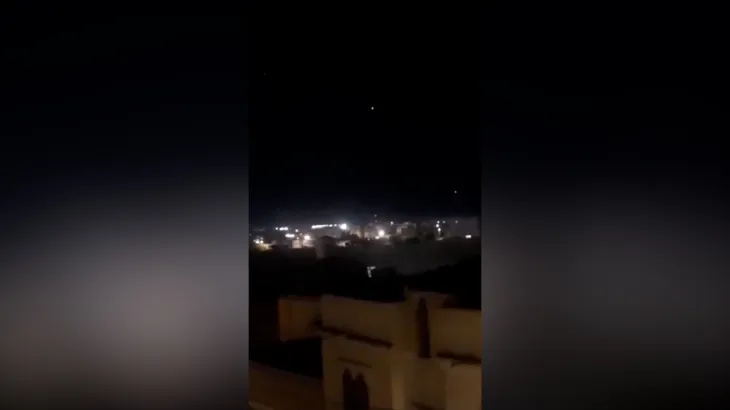
Iran's Revolutionary Guards Corps (IRGC) stated it launched a drone attack targeting the US Fifth Fleet headquarters in Bahrain. This specific drone attack on the US Fifth Fleet in Bahrain was part of a wider series of reported engagements. The IRGC also reported a drone attack on the Ali Al Salem base in Kuwait and a long-range missile strike on an air base in Azraq, Jordan. These coordinated strikes demonstrate the IRGC's asserted capability to project power across a wide geographical area. The group claimed it attacked 21 US targets in total during these operations, asserting that four of these targets were destroyed. Among the destroyed targets, the IRGC specifically mentioned an F-35 fighter jet hangar at the air base in Jordan, noting the severity of the claimed damage. Separately, a video captured by an EarthTV webcam positioned 3.5 miles northeast of the US Fifth Fleet facility showed activity consistent with the reported events, providing some independent corroboration of the incidents. Iran’s Revolutionary Guards had said earlier that they had launched a drone attack specifically targeting the Fifth Fleet headquarters in Bahrain, indicating a focused and deliberate strike against a key US naval command center. These claims of widespread attacks and significant damage, if confirmed, would represent a substantial military challenge to US presence in the region.
Regional Interceptions and Sirens
Jordanian authorities reported the interception of five missiles originating from Iran, showing the active nature of the conflict. These interceptions highlight the immediate defensive responses taken by regional allies to the IRGC's reported strikes. Concurrently, sirens were activated in Kuwait during the early hours of Wednesday, indicating an imminent threat detected by local authorities. Residents were advised to seek safe locations following the alert, reflecting the seriousness of the situation. Similarly, sirens also sounded in Bahrain on Wednesday morning, prompting residents there to head to secure areas, further demonstrating the widespread nature of the perceived threat. Both Kuwait and Bahrain issued warnings to their populations to take cover amidst the regional developments, emphasizing the need for civilian protection during these events. The interceptions in Jordan and the alerts in Kuwait and Bahrain indicate a broad impact across the region during the reported timeframes, affecting multiple nations simultaneously. The missile interceptions by Jordan and the simultaneous siren activations in Kuwait and Bahrain were part of a larger pattern of events that unfolded rapidly. The events occurred early on Wednesday, marking a tense start to the day for millions across the Gulf and Levant regions.
Context and Retaliation Logic
The US military attacked Qeshm Island and ports along the Iranian coast in the Strait of Hormuz, actions that the IRGC cited as the direct provocation for its retaliatory strikes. These US strikes occurred after the US blamed Iran for the downing of a US Apache helicopter earlier on Tuesday, setting off a chain of escalating events. In response to the alleged US actions, the IRGC claimed it shot down a US MQ-9 drone in the skies over the Iranian city of Jam, asserting its ability to defend Iranian airspace against US surveillance. The IRGC further stated the US’s attacks caused damage to a telecommunications tower in the town of Sirik and destroyed two water tanks there, providing specific details of the alleged impact of the US strikes on Iranian civilian infrastructure. These claims of damage in Sirik were presented by the IRGC as part of their rationale for the subsequent retaliatory attacks on US targets. The drone incident and the US strikes on Qeshm Island and coastal ports appear to be part of an escalating series of events in the region, with each action drawing a counter-action from the opposing side.
International Reactions and Analysis
The Islamic Revolutionary Guard Corps (IRGC) reported that the US attacks resulted in damage to a telecommunications tower and the destruction of two water tanks in the town of Sirik, details which they presented as justification for their retaliatory actions. Separately, a webcam video geolocated by CNN reportedly shows a bright flash emanating from the vicinity of the US Fifth Fleet naval facility in Manama. This visual evidence emerged just three minutes after Bahraini officials announced that sirens had sounded across the area, lending credibility to the reports of an incident near the naval base. The video was captured by an EarthTV webcam positioned 3.5 miles northeast of the US Fifth Fleet facility, providing a clear vantage point for the observed event. The flash occurred just three minutes after Bahraini officials announced that sirens had sounded, linking the visual evidence directly to the reported alerts. The IRGC's claims regarding the damage in Sirik provide further details on their reported rationale for the retaliatory strikes, framing their actions as a necessary response to US aggression. The geolocated video offers additional context to the events unfolding near the US military installations in Bahrain, linking the reported siren activations with observed phenomena and contributing to the mounting evidence of a direct engagement. The rapid sequence of events, from US strikes to Iranian retaliation and subsequent regional alerts, shows the volatile nature of the current geopolitical climate in the Middle East.