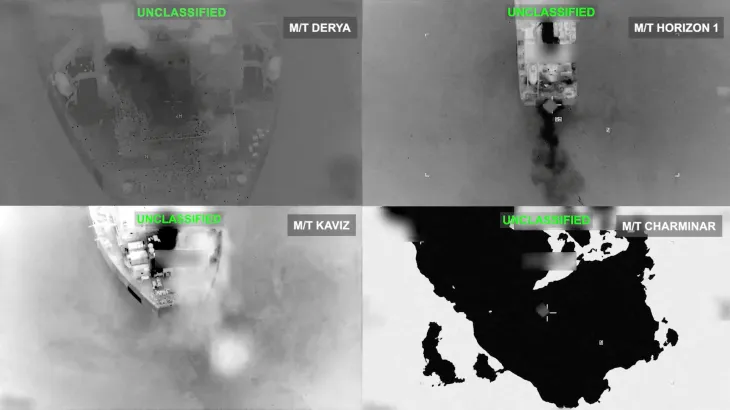
US forces struck five Iranian oil tankers on Tuesday in the Gulf of Oman, targeting four vessels linked to Iran's Revolutionary Guards Corps (IRGC). The operation targeted five tankers that the United States stated were "part of a multi-billion-dollar shadow network that funds the IRGC and its regional proxies." These actions by US forces specifically targeted four Iranian oil tankers in the Gulf of Oman that were directly linked to Iran's Revolutionary Guards Corps (IRGC), a powerful and influential branch of Iran's armed forces. The strikes come amid escalating tit-for-tat actions between the US and Iran over the past week, marking a significant intensification of hostilities in the region. The US has accused the IRGC of using these tankers to finance destabilizing activities across the Middle East, asserting that the revenue generated supports various proxy groups and operations.
US Targets Oil Network
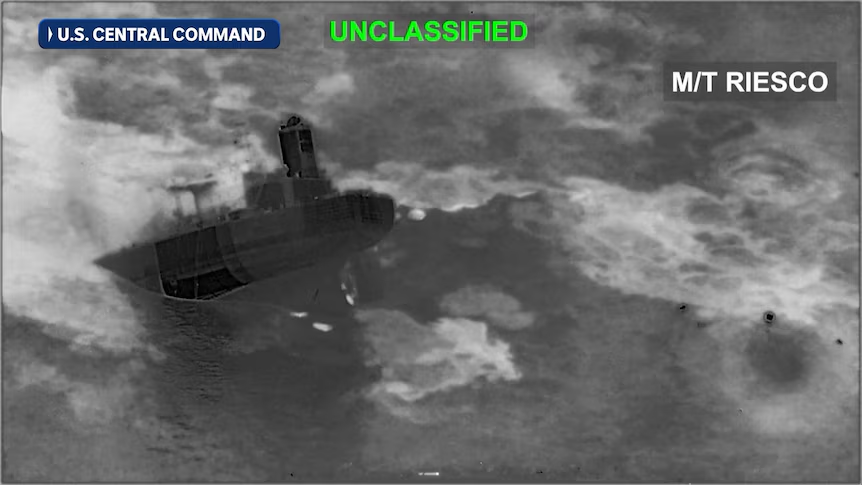
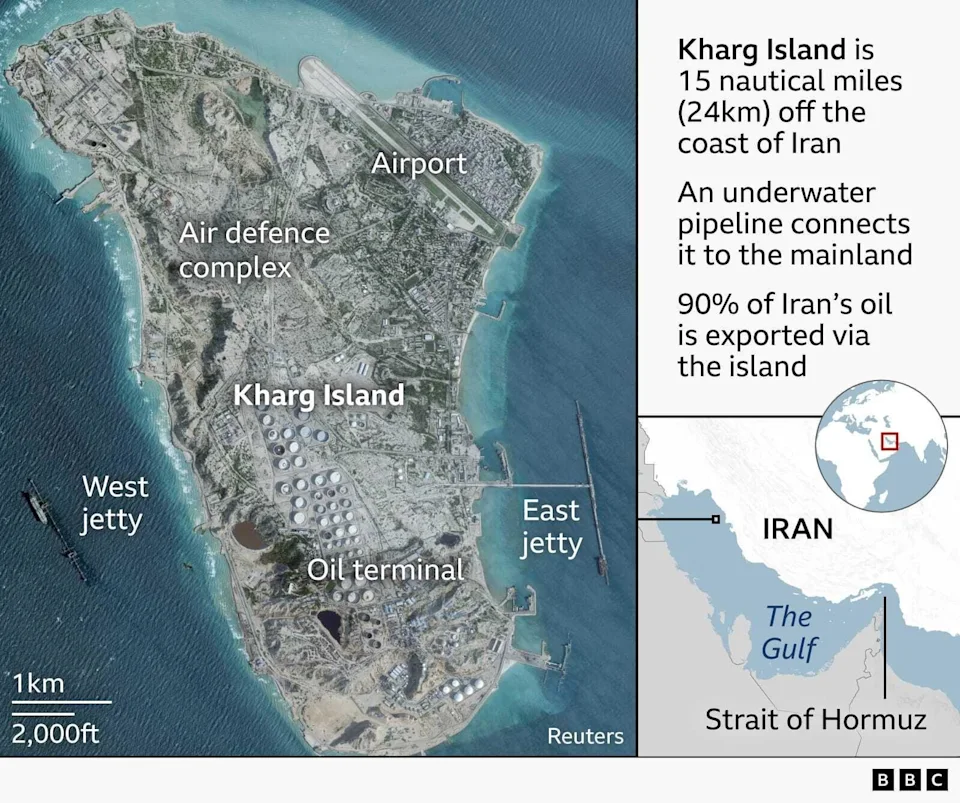
As part of Tuesday's operations, US forces sank one Iranian oil tanker in the Gulf of Oman, demonstrating a direct military response to the alleged illicit financing network. The vessel, identified as the M/T Riesco, was confirmed to have sunk in the Gulf of Oman following the US military engagement. This sinking represents a concrete action against Iran's maritime assets. In addition to the M/T Riesco, another Iranian oil tanker was targeted by US forces near Kharg Island, a location of immense strategic importance for Iran's energy infrastructure. Kharg Island is significant as it hosts Iran's main terminal for exporting oil, making it a critical node in the country's economic lifeline. Approximately 90% of Iran's crude oil passes through this vital terminal, showing the potential impact of any disruption to its operations. The strikes against the Iranian oil network occurred following a period of heightened tensions, including attacks launched by the United States and Israel on Iran on February 28, which further contributed to the escalating regional instability. The US stated that the five Iranian oil tankers targeted were "part of a multi-billion-dollar shadow network that funds the IRGC and its regional proxies," noting the strategic rationale behind these operations.
Iran's Missile Response
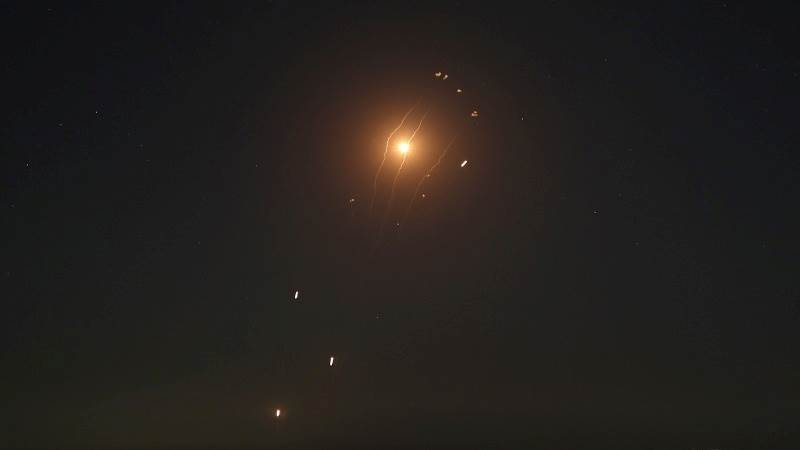
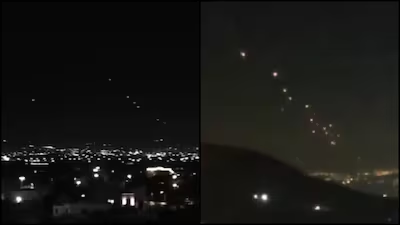
Tehran responded to the US strikes by launching missiles at a US base in Jordan, signaling its resolve to retaliate against American military actions. The missile barrage was a direct countermeasure to the US operations in the Gulf of Oman. Most of the missiles launched by Tehran at the US base in Jordan were successfully shot down by defensive systems. Jordan subsequently reported that its forces shot down 18 of the 20 Iranian missiles, indicating a high success rate for the defensive measures employed. Despite these interceptions, two Iranian missiles subsequently fell in unpopulated areas within Jordan, although no casualties or significant damage were reported from these impacts.
In a separate but related incident, Iran also targeted a US warship with ballistic missiles, further expanding the scope of its retaliatory actions. US Central Command (Centcom) stated that these missiles were "successfully evaded," and no American troops were harmed during the attacks on the US warship, confirming the effectiveness of the warship's defensive maneuvers.
Separately, Iran's Revolutionary Guards announced on Wednesday they had attacked two US vessels, eight oil tankers, and 10 "non-compliant vessels" in the Strait of Hormuz. This claim from Iran's Revolutionary Guards detailed a broader pattern of maritime aggression. Iran stated it attacked two US vessels and eight oil tankers in the Strait of Hormuz, a key choke point for global oil shipments. The Revolutionary Guards claimed to have targeted 10 "non-compliant vessels" in the Strait of Hormuz, though the nature of these vessels and the specifics of the alleged attacks were not immediately clear.
Broader Regional Context
Beyond these direct exchanges, the broader regional context illustrates a widespread increase in hostilities. Yemen's Iran-backed Houthi movement attacked energy facilities and civilian infrastructure in Saudi Arabia on Tuesday, causing fires at oil facilities and installations. This Houthi drone and missile attack resulted in 73 people being injured, showing the human cost of these regional conflicts. Operations at Saudi oil facilities were temporarily halted due to the Houthi attack, disrupting energy supplies and noting the vulnerability of critical infrastructure in the region. Separately, Iran's navy claimed it had seized an uncrewed US submarine in the Strait of Hormuz, adding another layer to the maritime tensions. The US stated the uncrewed submarine had malfunctioned more than a day prior to the Iranian seizure, suggesting it was not actively engaged in intelligence gathering at the time. US Navy Captain Tim Hawkins described the defective drone as "an older model that neither collected sensitive data nor carried any classified sonar or radar equipment," downplaying the significance of its capture. In financial markets, the escalating tensions had an immediate impact: benchmark Brent crude oil rose by 1.5% to $99.35 a barrel, while US-traded oil was 1.3% higher at $94.23, reflecting concerns about potential disruptions to global oil supplies.