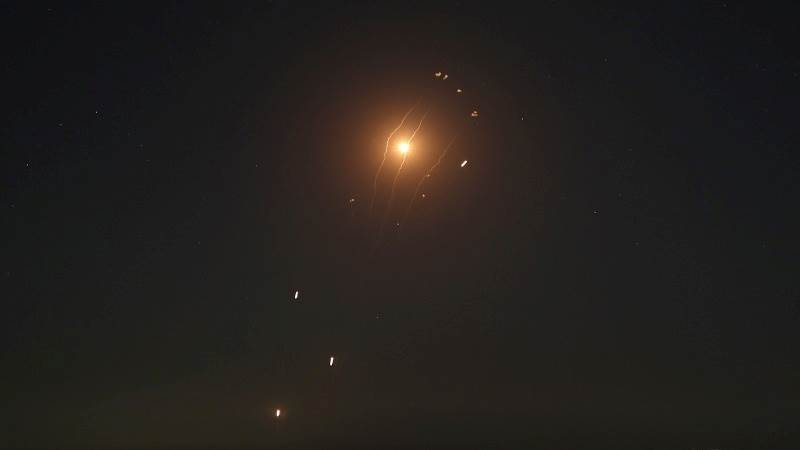
Iran's Islamic Revolutionary Guard Corps (IRGC) claimed on Wednesday to have launched "devastating" missile strikes targeting a US military base in Jordan. The IRGC asserted that these strikes resulted in "heavy damage" to US forces. The Iranian state-affiliated news agency News18 reported the claims, which did not specify the exact location of the alleged US base within Jordan. These assertions by the IRGC mark a significant escalation in regional tensions.
Missile Barrage Details
Iranian state media reported that ballistic missiles were launched at the Al-Azraq base in Jordan. These reports emerged following claims by Iran's Islamic Revolutionary Guard Corps (IRGC) regarding "devastating" strikes on a US military installation. The specific type and number of missiles used in the alleged attack were not detailed in the reports from Iranian sources. The IRGC's claims of a successful strike on a US military facility show the ongoing volatility in the Middle East.
Some Iranian outlets further identified the target as Muwaffaq al-Salti Air Base, located within Jordan’s Zarqa governorate. This base is known to host US military personnel and assets, making it a strategic location in the region. The reporting from Iranian state media did not provide independent verification of the strikes or any immediate evidence of damage, relying solely on the IRGC's assertions. The location specified by these outlets is a significant military facility in the region, regularly utilized by US forces for various operations and training exercises.
Retaliation and Pretext
The IRGC described the strikes as a "punitive operation," asserting they were a direct response to recent US actions against Iranian vessels. This framing by the IRGC suggests a retaliatory motive for the alleged missile attack. The US military had previously stated it destroyed five Iranian crude oil carriers following missile attacks by the IRGC on a US Navy warship. These incidents involving Iranian vessels and a US warship had already heightened tensions between the two nations.
US Central Command confirmed the warship successfully evaded both attacks, resulting in no injuries to American personnel. This detail from US Central Command directly contradicts any Iranian claims of damage or successful engagement of the US warship. Following these incidents, Iranian state media reported that two tankers were struck in the latest US operation, one near Jask and another near Kharg Island. These reported strikes on Iranian tankers further fueled the narrative of escalating tit-for-tat actions. Subsequently, Iran issued a warning to oil tankers operating near ports in Kuwait and Bahrain, instructing them to evacuate their vessels or face potential targeting. This warning indicated Iran's readiness to expand its response to perceived US aggression against its shipping interests.
IRGC's Damage Claims
The Islamic Revolutionary Guard Corps (IRGC) asserted that its strikes targeted areas utilized for the maintenance, preparation, and deployment of US F-35, F-16, and F-15 fighter jets. This specific detailing of targets by the IRGC aims to convey a precise and impactful operation. The IRGC further claimed that aircraft shelters were also hit during the operation, implying significant damage to critical military infrastructure. Separately, some Iranian outlets reported that cluster munitions were employed in the alleged missile strikes against the US base in Jordan. The use of cluster munitions, if confirmed, would raise additional concerns regarding the nature of the attack. These claims from Iranian sources have not been independently verified, and no evidence has been presented by the IRGC to substantiate the extent of the damage or the types of munitions used.
Jordan's Interception Efforts
Jordan's army stated it intercepted 18 of 20 ballistic missiles launched from Iran towards Jordanian territory. This high interception rate notes the capabilities of Jordan's air defense systems. Two of the ballistic missiles reportedly fell in unpopulated areas within Jordan, indicating that while the majority were intercepted, some projectiles did impact Jordanian soil. Jordan's army confirmed these events, stating, "Jordan’s air defense systems engaged 20 ballistic missiles launched toward Jordanian territory, successfully intercepting and destroying 18 of them, while two missiles fell in unpopulated areas." This interception effort by Jordanian forces was detailed in their official statement regarding the alleged missile strikes, providing a factual account from a neutral party regarding the trajectory and fate of the incoming projectiles. The statement from the Jordanian army offers a key counterpoint to the IRGC's claims of devastating and successful strikes.