The United States launched attacks on five Iranian oil tankers located in the Gulf of Oman and near Kharg Island, marking a significant escalation in the ongoing tensions between Washington and Tehran. These strikes come amid a period of heightened confrontation in the Gulf, now six months into the US and Israel’s war on Iran. Iran's IRIB state broadcaster confirmed an attack occurred near Kharg Island, a key hub for the nation's oil exports. In response to the US actions, Tehran also claimed additional strikes on at least two US vessels and eight tankers in the region. The Islamic Revolutionary Guard Corps (IRGC) stated its naval forces targeted "2 American vessels and 8 tankers in the region, causing great damage to them," asserting these were "fierce missile strikes." The IRGC further claimed its operation inflicted "significant damage… to these vessels" and was conducted "in a complex intelligence and operational action," suggesting a sophisticated approach to their retaliatory actions. This exchange of fire shows the volatile situation in the region, which has seen Tehran close the Strait of Hormuz and Washington enforce a naval blockade on Iranian ports, further restricting Iran's access to international shipping lanes.
US Accusations and Strikes
The United States accused Tehran of launching ballistic missiles at a US warship twice in two days, according to US Central Command (CENTCOM). CENTCOM stated Iran’s Islamic Revolutionary Guard Corps (IRGC) attempted to target a US warship twice over the past two days, an action that significantly heightened the stakes in the Persian Gulf. According to CENTCOM, the US warship successfully evaded the attempted Iranian attacks, preventing any direct hits. CENTCOM confirmed that "No American personnel were harmed" during these incidents, a testament to the defensive capabilities of the US naval forces in the area. These alleged missile attempts by the IRGC served as a direct precursor to the subsequent US military response.
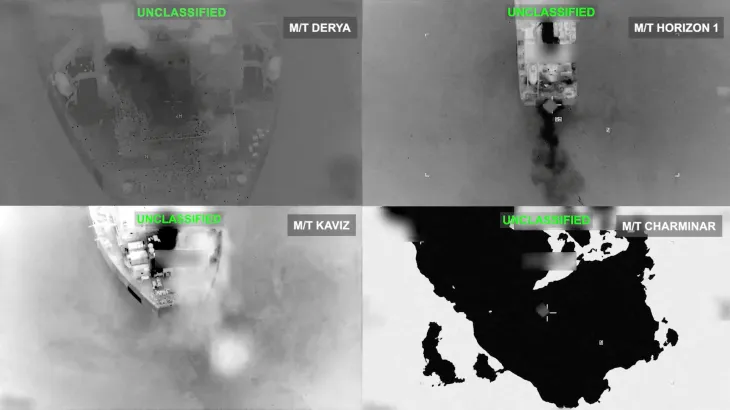
In response to these perceived aggressions, CENTCOM struck and destroyed five Iranian oil carriers. These targeted vessels included the M/T Kaviz, M/T Charminar, M/T Horizon 1, and M/T Riesco, all located in the Gulf of Oman. Additionally, the M/T Derya was struck near Kharg Island, a strategic location for Iran’s oil infrastructure. Prior to the strikes, CENTCOM stated that "American forces directed the crews to abandon ship before the vessels were struck and rendered inoperable," indicating an attempt to minimize casualties while achieving military objectives. The destruction of these tankers represents a severe blow to Iran's shipping capabilities and its ability to export oil.
This recent series of events follows previous engagements between the two nations. The US had previously attacked three Iranian oil tankers on September 5, causing one to sink, signaling a pattern of maritime confrontation. Tehran said it responded on September 5 by attacking three commercial ships and three US-linked ships, demonstrating a tit-for-tat escalation. Iran's IRIB state broadcaster confirmed an attack occurred near Kharg Island, reinforcing the strategic importance of this location in the conflict. The IRGC claimed its naval forces targeted "2 American vessels and 8 tankers in the region, causing great damage to them," asserting these were "fierce missile strikes." The IRGC further claimed its operation inflicted "significant damage… to these vessels" and was conducted "in a complex intelligence and operational action," suggesting a coordinated and deliberate military response. These US actions and Iranian claims highlight a dangerous cycle of attacks and counter-attacks in the region's vital waterways.
Iranian Retaliation and Claims
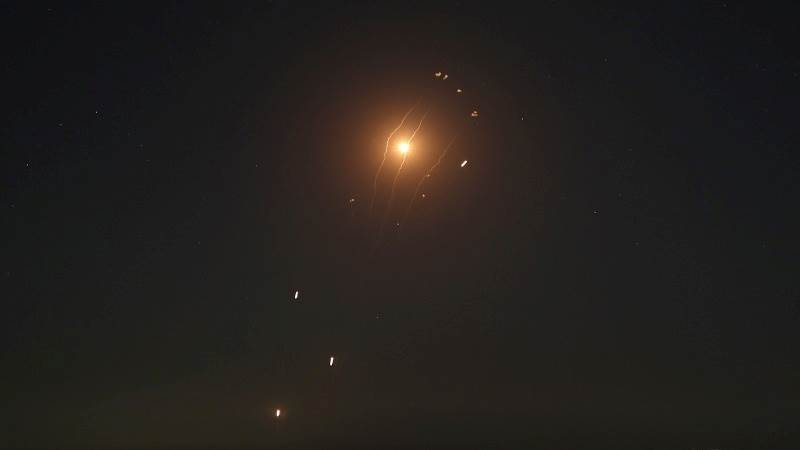
Iran responded to the US strikes by firing missiles at US forces stationed at the Al Azraq base in Jordan. This move marked a significant geographical expansion of the conflict, bringing a land-based US military installation into the crosshairs. The Islamic Revolutionary Guard Corps (IRGC) claimed it retaliated by subjecting Al Azraq base in Jordan to "fierce missile strikes," showing the intensity of their response. Additionally, the IRGC claimed ballistic missile attacks on the US Navy destroyers DDG-119 and DDG-53, indicating a multi-pronged assault targeting both land and naval assets. The IRGC further claimed that hangars used by US fighter jets were destroyed in the attacks on Al Azraq base, suggesting an aim to degrade US air capabilities in the region.
Jordan’s Armed Forces provided their account of the incident, confirming that two missiles "fell in unpopulated areas" within Jordan. This statement partially corroborated Iran's claims of missile launches while downplaying their impact. The US military, however, offered a different perspective, stating that two missiles launched by Iran "malfunctioned" and landed in unpopulated desert areas in Jordan. The US military also reported that a "defective drone" was deployed during the incident, further suggesting operational failures on the Iranian side. These differing accounts highlight the challenges in verifying claims during active hostilities.
The chief of staff of Iran’s Armed Forces, Ali Abdollahi, had previously issued a stern warning that Tehran would strike US military installations across the region if Iranian tankers were targeted. This warning, made in advance of the recent missile launches, now appears to have been a direct precursor to Iran's retaliatory actions, demonstrating a clear intent to respond to any perceived aggression against its economic lifelines. In a separate development that adds to the complex maritime picture, the IRGC claimed the capture of an unmanned US submarine at the entrance to the Strait of Hormuz, further asserting its presence and capabilities in the strategic waterway.
The IRGC also reiterated its earlier claims regarding naval engagements, stating its naval forces targeted "2 American vessels and 8 tankers in the region, causing great damage to them," asserting these were "fierce missile strikes." The organization further stated its operation inflicted "significant damage… to these vessels" and was conducted "in a complex intelligence and operational action," reinforcing their narrative of successful and deliberate military action against US and US-linked assets. These claims, while difficult to independently verify, contribute to the escalating rhetoric and perceived successes from the Iranian perspective.
Context and Wider Implications
The exchange of fire between the United States and Iran comes amid escalating tensions in the Gulf, six months into the US and Israel’s war on Iran. This prolonged conflict has severely impacted regional stability and disrupted global energy markets. Tehran had previously closed the Strait of Hormuz, a critical choke point for global oil shipments, a move that sent shockwaves through international shipping and energy sectors. In response, Washington was enforcing a naval blockade on Iranian ports, tightening economic pressure on the Islamic Republic. Kharg Island, a key oil terminal, handled some 90 percent of Iran's oil exports before the conflict, making it an indispensable asset for the Iranian economy and a prime target in any military confrontation. The attacks on tankers near this island directly threaten Iran’s primary source of revenue.
Iran plans to announce a restricted zone outside the Strait of Hormuz, according to officials, which could further complicate international navigation and potentially lead to more confrontations. Iran’s Ministry of Foreign Affairs condemned the US attacks on its tankers, describing them as a violation of the United Nations charter and a "war crime." This strong diplomatic condemnation shows Iran's view of the US actions as illegal and aggressive, setting the stage for potential appeals to international bodies.
In a separate incident that added to the technological dimension of the conflict, the US military stated that an underwater drone captured by Iran had "malfunctioned." The military further clarified that the 'defective drone' had not collected sensitive data prior to its capture by the Islamic Revolutionary Guard Corps, attempting to mitigate concerns about intelligence breaches. Amid these developments, oil prices rose to $99.49 a barrel in early trading on Wednesday, reflecting market concerns over the escalating tensions in the region and the potential for disruptions to global oil supplies. The economic ramifications of these military actions are significant, impacting not only the warring parties but also the global economy.
Official Statements and Reactions
US Central Command (CENTCOM) confirmed that "No American personnel were harmed" during the recent incidents, a statement aimed at reassuring the public and international allies about the safety of US forces. US Secretary of State Marco Rubio stated Washington's firm stance, asserting, "Iran continues to try to hit US naval ships, and for every time they do that or try to do that, they’re going to lose tankers." This uncompromising declaration from Secretary Rubio signals Washington's intent to maintain a strong deterrent posture and to respond forcefully to any further Iranian aggression against its naval assets.
Jordan’s Armed Forces reported its air defenses engaged 20 ballistic missiles that were launched towards its territory. The forces added that they were "successfully intercepting and destroying 18 of them," demonstrating a high success rate for their air defense systems. The remaining two missiles "fell in unpopulated areas," causing no casualties, according to the Jordanian military. This official report from Jordan offers a key third-party perspective on the scale and impact of the Iranian missile barrage, confirming the intensity of the attack while also noting the effectiveness of defensive measures and the fortunate avoidance of human loss. The claim that the attacks did not cause any casualties is a significant detail amidst the high-stakes military exchanges.