The United States launched fresh strikes on Iran on Sunday, with US Central Command stating the actions were in response to an Iranian attack on a vessel in the Strait of Hormuz. These new military actions mark a significant escalation in the ongoing tensions between the two nations. US Central Command forces initiated the strikes after Islamic Revolutionary Guard Corps forces attacked the M/V GFS Galaxy, a Cyprus-flagged container ship transiting the critical waterway. The attack on the M/V GFS Galaxy prompted a swift and forceful response from US forces, aiming to deter further aggression in the strategically vital maritime corridor. Following these US strikes, Iran subsequently carried out its own retaliatory attacks, specifically targeting American interests in several Gulf countries.
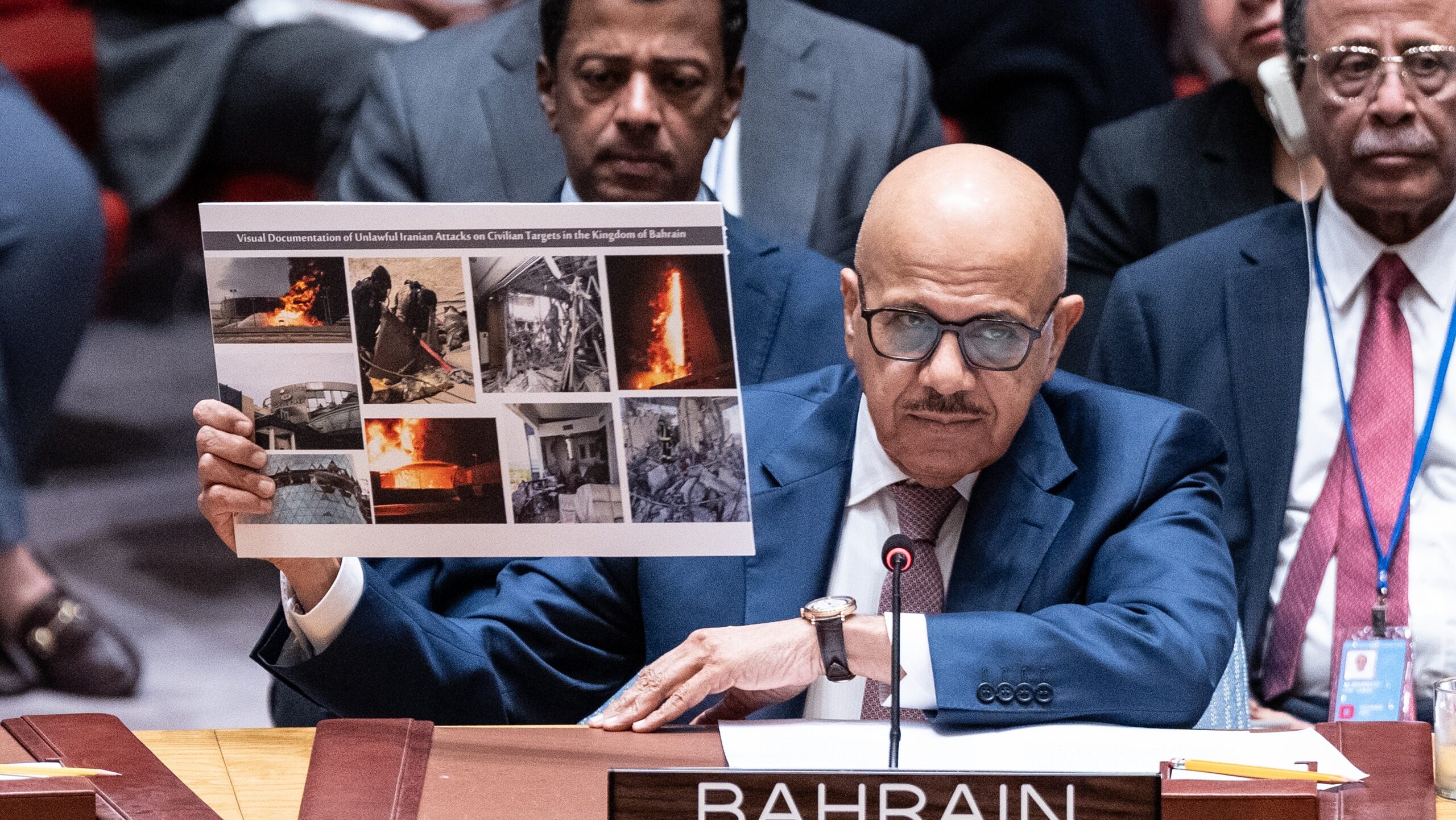
US Central Command provided a detailed account of the recent engagement, reporting, "At 7:15 p.m. ET today, U.S. Central Command forces began launching the third round of strikes this week against Iran after Islamic Revolutionary Guard Corps forces blatantly attacked M/V GFS Galaxy, a Cyprus-flagged container ship transiting the Strait of Hormuz." The statement further elaborated on the severity of the attack on the commercial vessel, noting, "A civilian crew member is missing, and the vessel is unable to continue the journey due to an onboard fire and significant engine room damage." This incident, which occurred in the critical global shipping lane, immediately heightened concerns about the safety of international maritime traffic. The retaliatory attacks by Iran specifically targeted American interests located in Qatar, Bahrain, Kuwait, Oman, and Jordan, intensifying regional tensions across a broad geographic area. These Iranian actions showed the widening scope of the conflict, drawing in multiple nations in the Gulf region.
Escalation in the Strait
The attacks, which US Central Command reported began at 7:15 p.m. ET, unfolded rapidly, leading to immediate and severe consequences for the M/V GFS Galaxy. Following the strike, a civilian crew member from the M/V GFS Galaxy was reported missing, raising serious humanitarian concerns. The vessel itself sustained an onboard fire, which spread through parts of the ship, along with significant engine room damage. This extensive damage rendered the container ship unable to continue its journey through the Strait of Hormuz, effectively crippling its operations and disrupting its scheduled transit. The United States has consistently accused Iran of engaging in aggressive actions against commercial ships traversing the Strait of Hormuz, a critical waterway for global oil shipments and international trade. These accusations highlight a pattern of behavior that Washington views as destabilizing to regional security and the global economy.
Conversely, Iran has presented its own interpretation of events, accusing the US of attempting to establish a corridor within the Strait that would allow ships to pass without Iranian approval. Tehran asserts that a Memorandum of Understanding (MoU) mandates its explicit approval for the free passage of vessels through the Strait, emphasizing its sovereign rights over the waterway. This long-standing disagreement over maritime passage rights forms a key backdrop to the current military confrontations. The recent US strikes are reportedly the heaviest since this Memorandum of Understanding was signed in mid-June, indicating a significant escalation in the level of force employed by the United States in response to Iranian actions. The intensity of these strikes suggests a departure from previous responses and a heightened commitment to ensuring freedom of navigation.
On Saturday, prior to the latest round of strikes, US Central Command (CENTCOM) disclosed that its forces had targeted a substantial number of Iranian military objectives. Specifically, CENTCOM reported that its forces had hit 140 Iranian military targets, demonstrating a broad and sustained campaign against Iran's military infrastructure. Separately, and further escalating tensions, the Islamic Revolutionary Guard Corps (IRGC) announced on Saturday that the Strait of Hormuz was closed "until further notice." This declaration from the IRGC, a powerful branch of the Iranian military, signaled a direct threat to international shipping and an immediate increase in the risk profile for vessels operating in the region. The closure announcement by the IRGC showed the volatile nature of the situation and the potential for severe disruption to global maritime commerce, particularly oil transit.
Iranian Retaliation and US Response
In a direct confirmation of the impact of the US military actions, Iran stated that United States forces attacked five cities within its Bushehr province. The specific cities targeted in the Bushehr province were identified as Asaluyeh, Dir, Bushehr, Dashti, and Tangestan. These strikes by US forces were not confined to the Bushehr province alone; they also resulted in casualties in other regions of Iran, with at least two people wounded in Kerman province. The confirmed injuries in Kerman province show the widespread nature of the US military operations and their human cost within Iran.
The escalating tensions extended beyond Iranian borders, directly impacting US interests and personnel in the region. In Qatar, a key US ally and host to significant American military assets, at least three individuals sustained injuries. These injuries were caused by debris originating from intercepted missiles, noting the broader and potentially unintended consequences of the ongoing conflict and the risks posed to those in proximity to military engagements. Following these critical developments, US President Donald Trump issued a definitive statement, declaring that the ceasefire between the two countries had concluded. This declaration marked a formal end to any prior agreements to de-escalate or pause military actions. This declaration came after President Trump had announced plans for US Central Command (CENTCOM) to strike Iran just last week, signaling a clear intent to intensify military pressure.
President Trump further intensified the rhetoric surrounding the conflict, issuing a stark threat. He stated that the United States possessed the capability to denuclearize Iran even without a formal agreement. This powerful statement shows the heightened rhetoric accompanying the military actions and suggests a willingness to consider extreme measures if diplomatic solutions are not found. The series of events, encompassing direct military engagements, confirmed strikes on Iranian cities, and the resulting injuries in both Iran and Qatar, marks a significant escalation in hostilities. These developments, coupled with strong diplomatic pronouncements from the US President, indicate a substantial shift in the status of the relationship between the two nations, moving from a state of simmering tensions to overt conflict. The widening scope of the conflict is evident in the geographic breadth of the strikes and the casualties reported across multiple locations.
Broader Context and Future Implications
The current wave of hostilities is also deeply intertwined with a prior, significant event that continues to fuel Iranian resolve. Iran's Supreme Leader, Ayatollah Mojtaba Khamenei, has publicly vowed to avenge his father, Ali Khamenei. This solemn pledge by Ayatollah Mojtaba Khamenei follows the death of Ali Khamenei, who was tragically killed during a joint attack by the United States and Israel in February. This declaration from the Supreme Leader notes the deep personal and political stakes involved in the ongoing hostilities between Iran and the US, transforming the conflict into a matter of national honor and retribution for some within Iran. The commitment to avenge his father could signal a potential for further, more broad retaliation from Iran, extending beyond the immediate responses seen in the Strait of Hormuz and the attacks on American interests in the Gulf countries. This vow suggests a long-term commitment to seeking justice, as interpreted by the Iranian leadership, for the loss of a revered figure.
The February incident, described as a joint US-Israel attack, represents a significant prior escalation that laid a foundational layer for the current tensions. This event is not merely a historical footnote but a critical antecedent that directly informs the present state of affairs. Ali Khamenei's death in this operation marked a critical point in the trajectory of US-Iran relations, contributing significantly to the cycle of violence and retaliatory actions witnessed today. The subsequent pledge by Ayatollah Mojtaba Khamenei to avenge his father shows the deeply rooted nature of the conflict, suggesting that Iran's responses are not merely strategic calculations but are also driven by a perceived need for retribution and a sense of profound grievance. This historical context provides essential insight into Iran's current actions and future potential responses, indicating a broadened scope of conflict that could encompass various targets, methods, and timelines in the pursuit of avenging the Supreme Leader's father. The intertwining of personal vengeance with national policy suggests a protracted and potentially unpredictable period of instability in the region.