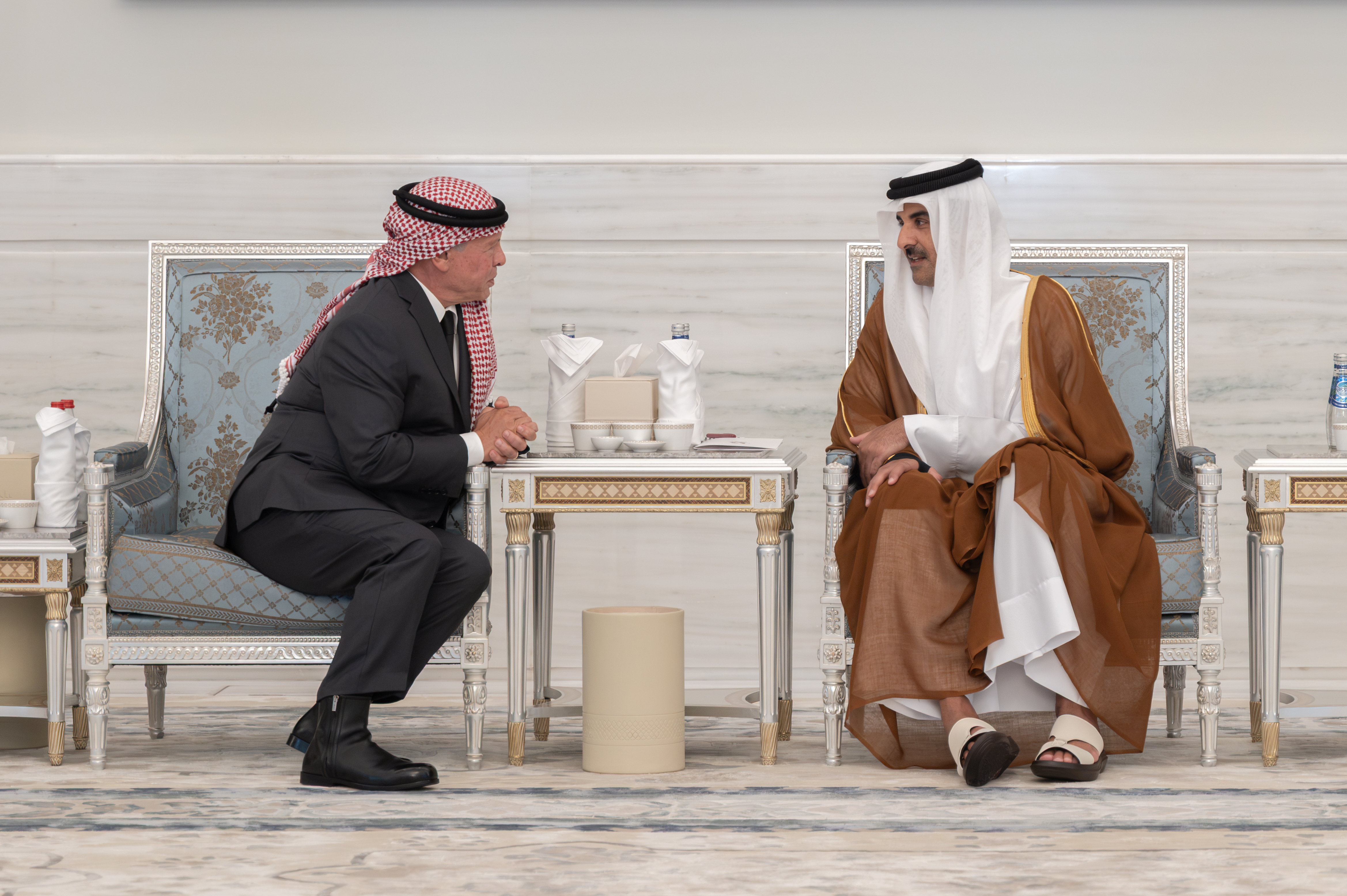
His Highness The Amir Sheikh Tamim bin Hamad Al Thani received HM King Abdullah II Ibn Al Hussein of the Hashemite Kingdom of Jordan on July 15, 2026. The significant meeting, held at the distinguished Lusail Palace, saw the two esteemed leaders convene to discuss a range of matters of mutual interest and to reinforce the strong fraternal bonds between their nations. A primary purpose of King Abdullah II's visit was to extend his heartfelt condolences on the passing of His Highness The Late Father Amir Sheikh Hamad bin Khalifa Al Thani, a gesture that showed the deep personal and diplomatic ties shared by the two royal families and countries.
Key Dignitaries Present at the High-Level Meeting
The important discussions were attended by several prominent figures from both sides, noting the significance of the encounter. From Qatar, His Highness The Deputy Amir Sheikh Abdullah bin Hamad Al Thani was present, demonstrating the high level of representation. Also in attendance was HH Sheikh Jassim bin Hamad Al Thani, who holds the key position of Personal Representative of The Amir, further emphasizing the importance of the gathering. The Qatari delegation also included other notable members of the royal family, with HH Sheikh Abdullah bin Khalifa Al Thani and HH Sheikh Mohammed bin Khalifa Al Thani participating in the proceedings. HE Sheikh Jassim bin Khalifa Al Thani was also among the distinguished attendees, contributing to the full representation.
Adding to the high-level participation were key government officials. HE Sheikh Mohammed bin Abdulrahman bin Jassim Al Thani, who serves in the dual capacity of Prime Minister and Minister of Foreign Affairs, played a central role in the discussions, reflecting the strategic nature of the bilateral engagement. HE Hassan bin Abdullah Al Ghanim, the esteemed Speaker of the Shura Council, completed the list of key figures at the gathering, ensuring legislative representation and a broad spectrum of perspectives were brought to the table. The presence of such a distinguished assembly showed the depth of the relationship between the Hashemite Kingdom of Jordan and Qatar.
Context of the Meeting: A Gesture of Solidarity and Respect
King Abdullah II Ibn Al Hussein of the Hashemite Kingdom of Jordan extended his sincere condolences on the passing of His Highness The Late Father Amir Sheikh Hamad bin Khalifa Al Thani. The Jordanian monarch conveyed his sympathies during his visit to Lusail Palace, where he met with His Highness The Amir Sheikh Tamim bin Hamad Al Thani. This expression of condolences formed a key and poignant part of the discussions held between the two leaders, noting the enduring personal and diplomatic ties between the two nations and their royal families. The gesture showed the profound respect for the late Father Amir's legacy and his significant contributions to Qatar and the wider region. Such acts of solidarity are a testament to the strong fraternal relations that have long characterized the bond between Jordan and Qatar, offering comfort and support during a time of mourning.
Broader Diplomatic Ties and Regional Cooperation
Beyond the immediate purpose of extending condolences, the meeting between King Abdullah II Ibn Al Hussein and His Highness The Amir Sheikh Tamim bin Hamad Al Thani also served as a key occasion to reinforce the established and strong diplomatic relationship between the Hashemite Kingdom of Jordan and Qatar. Discussions extended beyond the immediate purpose of condolences, encompassing various aspects of bilateral cooperation across multiple sectors. The leaders engaged in full reviews of regional developments, emphasizing the critical importance of coordinated efforts to address shared challenges and promote stability and prosperity throughout the Middle East.
Both nations have previously engaged in regular high-level exchanges aimed at strengthening economic, political, and cultural ties, and this meeting further cemented these ongoing initiatives. The visit showed a mutual commitment to advancing these relations, reflecting a broader strategy to foster understanding and collaboration within the region. Such interactions are a consistent feature of their foreign policy agendas, aiming to support common interests, enhance security, and facilitate economic growth. The constructive dialogue at Lusail Palace reaffirmed the shared vision of both leaders for a more stable and prosperous future for their peoples and the region at large.