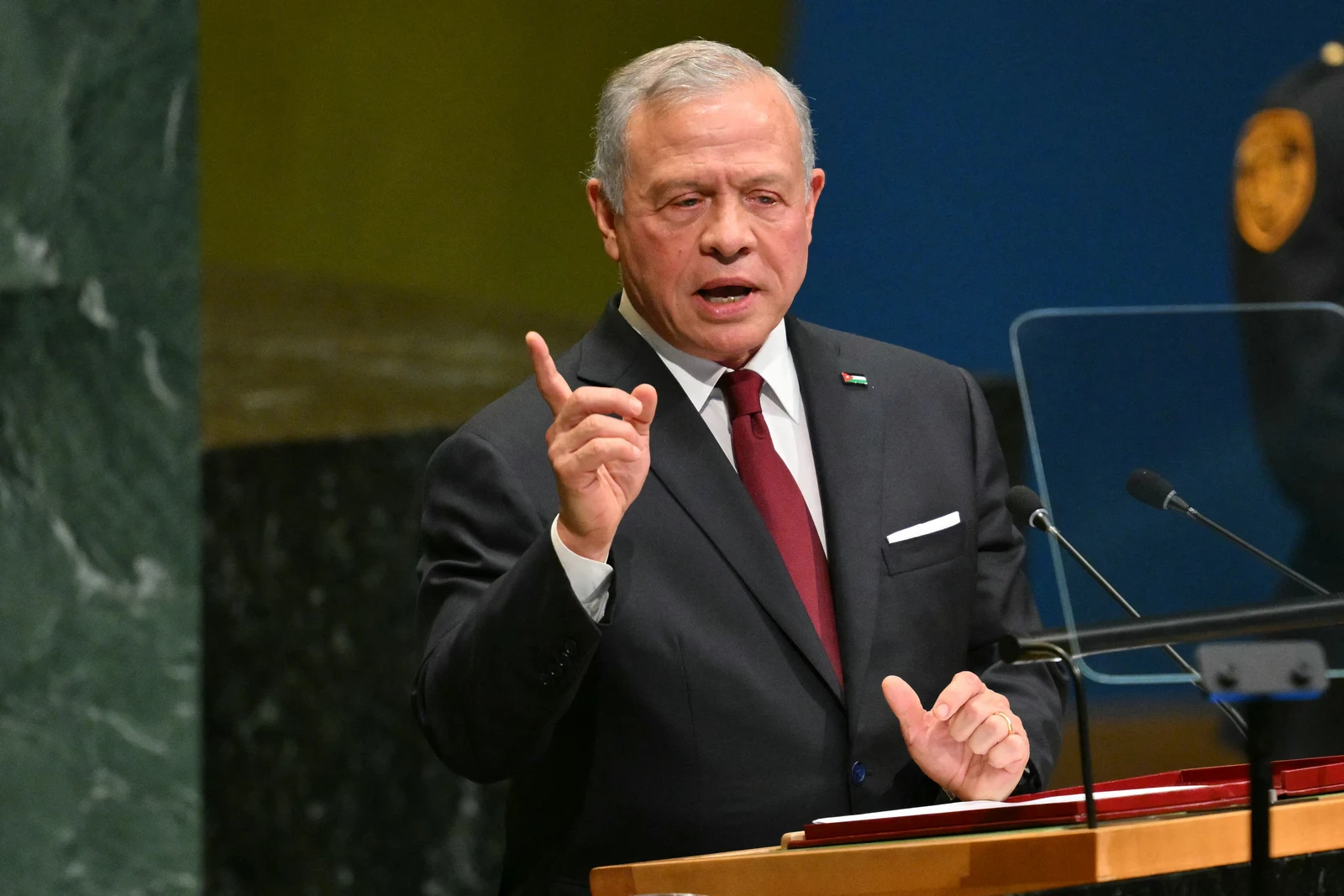
Jordan's King Abdullah spoke at the UN General Assembly late last month, issuing a stark warning about the future of relations with Israel. He stated that the current Israeli government's continued presence would likely lead to a "downward spiral" in ties between the two nations. King Abdullah emphasized that an oppressive occupation is deeply entrenched in the West Bank, including East Jerusalem, a situation he views with profound concern. This oppressive occupation, he stressed, is not merely a transient phase but a deeply entrenched reality impacting the daily lives of Palestinians.
Addressing the assembly, King Abdullah declared, "that this Israeli leadership’s rejection of Palestinian statehood is a position that might yet change. It is not. It is being cemented on the ground." He also challenged perceptions by stating that "the Arab world never sought peace," directly refuting a common misconception. The King further articulated potential responses to the ongoing situation, listing "sanctions, asset freezes, embargoes, diplomatic isolation" as measures the international community should consider. His address at the UN General Assembly served as a critical platform to convey Jordan's escalating concerns to a global audience.
Historical Ties and Current Tensions
Jordan signed a peace agreement with Israel in 1994, establishing formal diplomatic relations between the two countries. This peace agreement remains a matter of mutual interest and benefit for both nations, serving as a cornerstone of regional stability despite current strains. The agreement has historically provided a framework for cooperation and dialogue, even as political landscapes shift. Israel and Jordan share a 300 km land border, showing their geographical proximity and the inherent importance of their bilateral relationship. This shared border means that developments in one nation inevitably impact the other. Jordan hosts a large Palestinian population, many of whom maintain strong connections to families residing in the West Bank and Gaza. This demographic reality often influences Jordanian policy and public sentiment regarding the Israeli-Palestinian conflict, making the plight of Palestinians a deeply personal issue for many Jordanians.
Abdullah's UN Address and Warnings
King Abdullah II of Jordan, addressing the UN General Assembly, warned against three "false illusions" he believes are preventing peace. These illusions include the notion of separately addressing the West Bank and Gaza, which he argued ignores the interconnectedness of the Palestinian issue. He also challenged the idea that the Israeli leadership's rejection of Palestinian statehood is a changeable position, asserting that it is being solidified on the ground. Finally, he directly confronted the belief that "the Arab world never sought peace," noting historical efforts and ongoing aspirations for a just resolution. King Abdullah stated, "that this Israeli leadership’s rejection of Palestinian statehood is a position that might yet change. It is not. It is being cemented on the ground." His remarks come amid an escalating conflict that has resulted in the deaths of tens of thousands of Palestinians in the Gaza Strip, a humanitarian catastrophe that has profoundly impacted regional sentiment and Jordan's own policy considerations. The King's speech showed the urgency of the situation and the need for immediate international action.
Concerns are growing in Amman that the Israeli government might attempt to push Palestinians eastward, across the Jordan River, a scenario that Jordan views as a severe threat to its national security and demographic stability. Jordan also maintains custodianship over the Muslim and Christian holy sites in Jerusalem, a role that includes a historic responsibility for preserving their legal status quo. This custodianship is a deeply cherished and historically significant responsibility, placing Jordan at the forefront of efforts to protect Jerusalem's multi-religious character. The Jordanian monarch previously articulated potential responses to the ongoing situation, listing "sanctions, asset freezes, embargoes, diplomatic isolation" as possible actions, emphasizing the range of tools available to the international community.
The Downward Spiral
King Abdullah has called on the international community to employ various tools, including sanctions, asset freezes, embargoes, and diplomatic isolation, to pressure Israel towards a two-state solution and halt actions that undermine peace. The Jordanian monarch previously stated that "this Israeli leadership’s rejection of Palestinian statehood is a position that might yet change. It is not. It is being cemented on the ground," challenging the perception that "the Arab world never sought peace." He articulated potential responses to the ongoing situation, listing "sanctions, asset freezes, embargoes, diplomatic isolation" as possible actions, showing the severity of the situation and the need for concerted international pressure. He firmly believes that if the current Israeli government remains in power, the trajectory of relations with Jordan is likely to be a downward spiral, characterized by increasing tensions and diminishing trust. This stark warning reflects a deep-seated apprehension within Jordanian leadership regarding the long-term viability of peace under current Israeli policies.
Adding to the tensions, former Israeli Finance Minister Avigdor Lieberman suggested that Jordan should administer Judea and Samaria (Areas A and B of the West Bank). Lieberman stated, "We need to reach an understanding with the Jordanians for them to administer Judea and Samaria. They should take security and administrative responsibility. We can’t leave a vacuum." This proposal, viewed by many as an attempt to shift responsibility and potentially undermine Palestinian aspirations for statehood, has been met with skepticism and concern in Amman. Separately, Israel refused to renew a 2021 water agreement, under which it had annually supplied 50 million cubic meters of water to Jordan, further straining bilateral relations. This decision on water, a vital resource in the arid region, has been interpreted as a punitive measure and has exacerbated mistrust between the two nations, noting the fragile nature of their peace agreement amidst growing political discord.