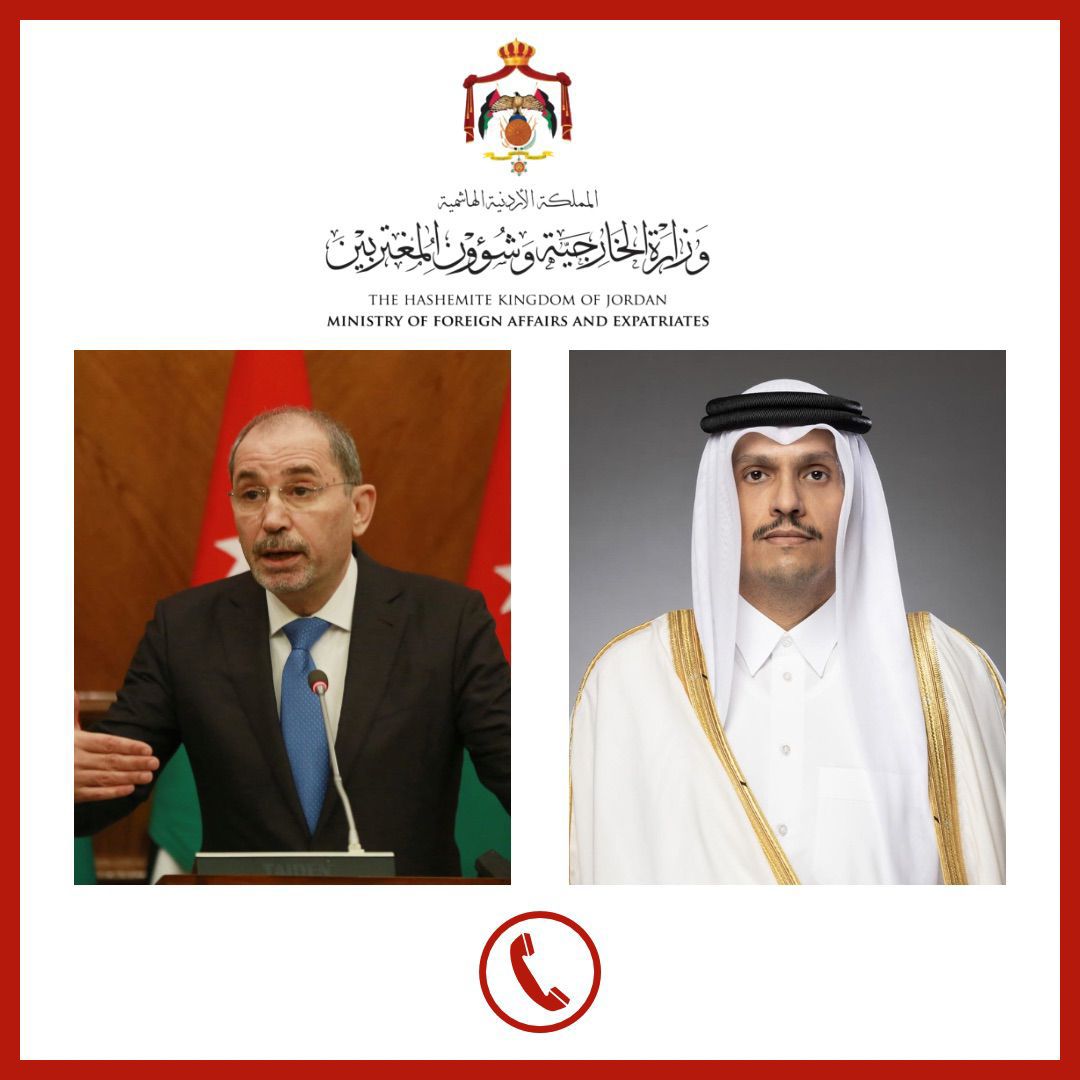
Jordanian Deputy Prime Minister and Minister of Foreign and Expatriate Affairs Ayman Safadi held a telephone conversation on Tuesday with Qatari Prime Minister and Foreign Minister Sheikh Mohammed bin Abdulrahman Al Thani. The two top diplomats discussed regional de-escalation efforts, with a particular focus on the U.S.-Iran ceasefire, according to officials. Their talks centered on current developments in the region and ways to promote stability, aiming to coordinate positions between Jordan and Qatar on pressing regional issues and broader de-escalation efforts. The conversation, which took place on Tuesday, showed the urgency of addressing regional tensions through concerted diplomatic action. Officials noted that the high-level exchange noted the shared commitment of both nations to fostering peace and security in a volatile environment.
Ceasefire Diplomatic Efforts
Ayman Safadi and Sheikh Mohammed bin Abdulrahman Al Thani reviewed ongoing diplomatic efforts concerning a ceasefire in the region. Their discussions specifically addressed the diplomatic initiatives tied to the U.S.-Iran ceasefire. The ministers showed the necessity of a sustainable agreement to resolve the crisis. They emphasized the need for a sustainable agreement that addresses the root causes of the crisis and forecloses the possibility of renewed escalation.
According to officials, both diplomats emphasized that any resolution must address the fundamental causes of the crisis to prevent future escalations. This full approach is deemed key for establishing a durable peace. The discussions noted the shared commitment of Jordan and Qatar to promoting regional stability through full and lasting solutions. Their exchange focused on ensuring that diplomatic initiatives lead to a durable peace, moving beyond temporary arrangements. This approach aims to secure a more stable environment for all parties involved and avert the recurrence of conflict in the future. The ministers stressed that a lasting ceasefire requires addressing underlying issues to prevent future outbreaks of violence and ensure regional stability.
Bilateral Relations Strengthened
The Jordanian Deputy Prime Minister and Minister of Foreign and Expatriate Affairs, Ayman Safadi, and Qatari Prime Minister and Foreign Minister, Sheikh Mohammed bin Abdulrahman Al Thani, reaffirmed the strong historical ties between their respective nations during their recent discussions. Officials stated that the ministers emphasized the enduring relationship that connects Jordan and Qatar, showing its significance for regional stability and cooperation. This reaffirmation of historical bonds served as a foundation for their broader discussions on regional and bilateral matters.
The two top diplomats pledged to deepen bilateral cooperation across multiple sectors. Their commitment extends to enhancing collaboration in various fields, aiming to further solidify the partnership between Amman and Doha. This pledge reflects a shared vision for expanding joint initiatives and strengthening the strategic alliance between the two countries, according to officials familiar with the discussions. The focus on bilateral cooperation is expected to lead to new avenues for partnership, reinforcing their collective approach to regional challenges and opportunities. This includes potential collaborations in economic, cultural, and political spheres, further cementing the strong relationship between the two Arab states.
Regional Stability Focus
The conversation between Jordanian Deputy Prime Minister and Minister of Foreign and Expatriate Affairs Ayman Safadi and Qatari Prime Minister and Foreign Minister Sheikh Mohammed bin Abdulrahman Al Thani specifically addressed the U.S.-Iran ceasefire. This discussion was part of broader efforts to promote regional de-escalation, according to officials familiar with the talks. Both ministers emphasized the importance of reducing tensions across the region to foster a more stable environment. Their exchange noted a shared commitment to diplomatic solutions aimed at preventing further conflict and ensuring lasting peace. Officials indicated that the focus on the U.S.-Iran ceasefire shows the interconnected nature of regional security challenges, recognizing that stability in one area can significantly impact the broader Middle East. The ministers reiterated their belief that sustained dialogue and adherence to international law are critical for achieving long-term regional peace.