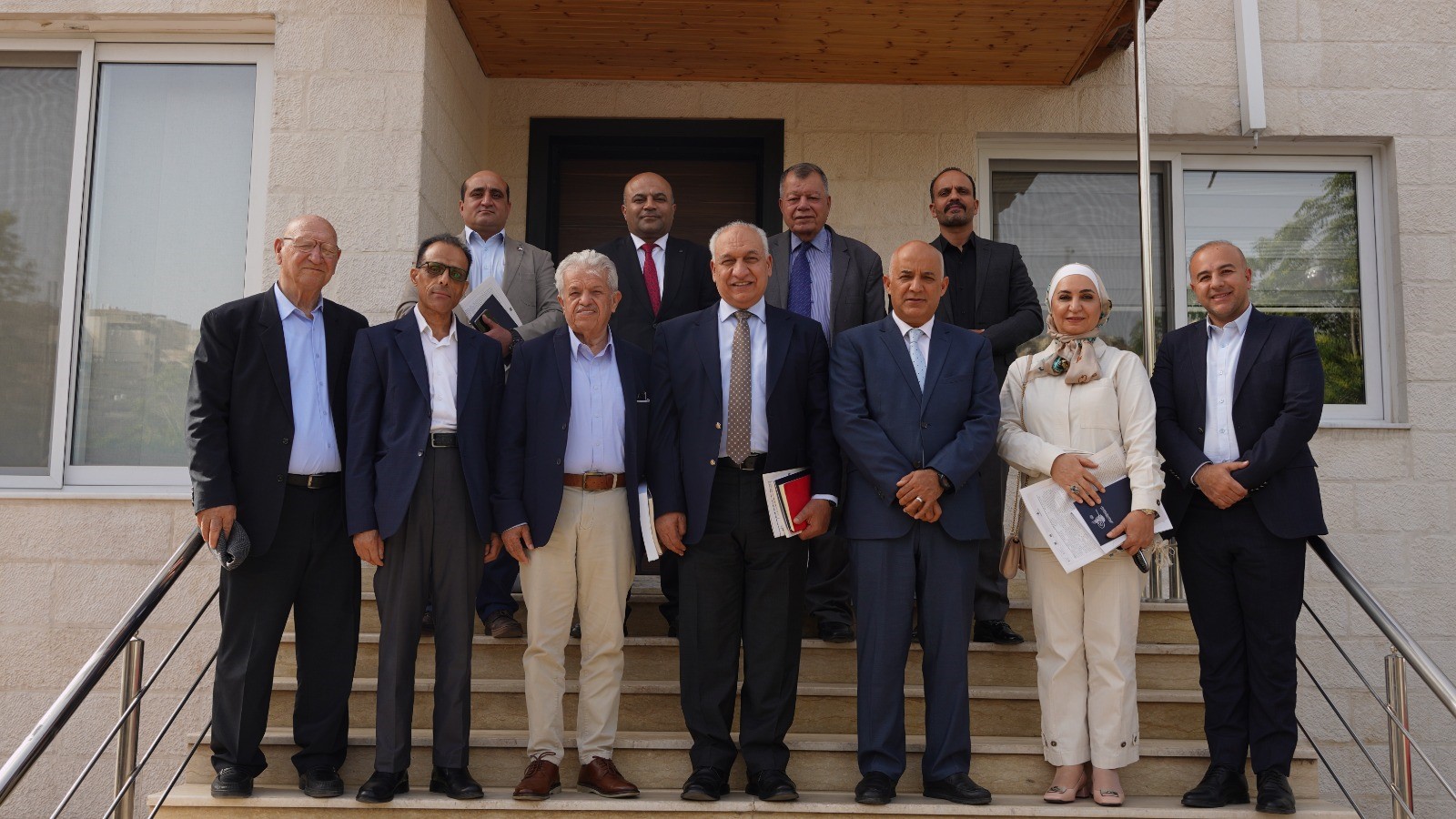
The Royal Hashemite Documentation Center (RHDC) convened a panel of historians and technical experts on Sunday, May 17, 2026, in Amman, Jordan, to review progress on a national narrative project. Bassam Al Btoush confirmed that approximately 70% of the core documentation project has been completed, according to a report published on May 17, 2026, at 21:32:27. This significant milestone shows the advanced stage of the extensive initiative aimed at meticulously chronicling Jordan's modern history. Al Btoush stated, "Al Btoush detailed the committee's research milestones, outlining individual archival efforts alongside the institutional challenges encountered while managing complex historical datasets." He added, "The upcoming phase will focus on cross-referencing and analyzing expansive, multi-layered data to finalize the project in accordance with rigorous academic and archival standards." The progress reflects a concerted effort by numerous scholars and technical specialists dedicated to preserving and presenting the nation’s historical record.
Project Progress and Next Steps
The National Narrative Project is an ongoing state-backed initiative designed to document Jordan's modern history from official primary sources. This ambitious undertaking seeks to provide a full and authoritative account of the kingdom's development and key historical events. Bassam Al Btoush stated that the upcoming phase will focus on cross-referencing and analyzing expansive, multi-layered data to finalize the project. He added, "The upcoming phase will focus on cross-referencing and analyzing expansive, multi-layered data to finalize the project in accordance with rigorous academic and archival standards." This stage involves a detailed examination of diverse historical information, ensuring accuracy and coherence across various sources. The technical committee involved in the project has provided specific methodological guidelines to optimize the broader national historical database. These guidelines are key for standardizing data input, ensuring consistency in historical interpretation, and facilitating efficient information retrieval as the project moves towards completion. Adherence to these guidelines is expected to enhance the reliability and accessibility of the final historical database.
Key Figures and Committee Oversight
The academic session of the Committee on the History of the Great Arab Revolt and the Jordanian State was chaired by Zeidan Kafafi. His leadership provided a critical framework for the discussions and evaluations during the session. Muhannad Mubaideen, RHDC Manager, and Bassam Al Btoush, who leads the historical research team, attended the session, according to reports. Mr. Mubaideen reaffirmed that the RHDC has made its entire archival repository accessible to the designated research teams. This commitment ensures that researchers have unfettered access to the foundational documents necessary for their work. The oversight panel emphasized the necessity of relying strictly on verified primary and secondary source materials for the project. This rigorous approach is designed to uphold the highest standards of historical accuracy and academic integrity. Mr. Al Btoush detailed the committee's research milestones, outlining individual archival efforts alongside the institutional challenges encountered while managing complex historical datasets. He added that the upcoming phase will focus on cross-referencing and analyzing expansive, multi-layered data to finalize the project in accordance with rigorous academic and archival standards. The session was attended by committee members and prominent Jordanian historians, including George Tarif, Baker Khazer Al-Majali, Fathi Al-Daradkeh, Muntaha Al-Abdallat, Faisal Al-Ghoween, Ghazi Al-Lababdeh, and Rabie Al-Farajat, all contributing their expertise to the project's direction.
RHDC Support and Archival Access
Muhannad Mubaideen, Manager of the Royal Hashemite Documentation Center (RHDC), confirmed the center's commitment to facilitating the project's research. He stated that the RHDC has made its full archival repository available to the designated research teams. "The RHDC has made its entire archival repository accessible to the designated research teams," Mr. Mubaideen affirmed, noting the direct access provided to historical materials. This access is key for the careful research required by the National Narrative Project, enabling researchers to consult primary sources stored at the center. The availability of these extensive archives significantly streamlines the research process, allowing historians to delve deep into original documents and records.
Beyond archival access, the RHDC actively supports the ongoing project through its established national publishing program. This program serves as a vital platform for disseminating scholarly work and research findings related to Jordanian history. The center also extends its support via the peer-reviewed Raghadan Academic Journal. The journal provides an additional avenue for academic discourse and publication, ensuring that the research conducted for the National Narrative Project reaches a wider scholarly audience. These platforms contribute to disseminating scholarly work related to Jordanian history, aligning with the project's goals of documenting and presenting the nation's modern narrative. The dual approach of providing direct archival access and strong publishing opportunities shows the RHDC's full involvement in the initiative, solidifying its role as a key enabler of historical scholarship in Jordan.