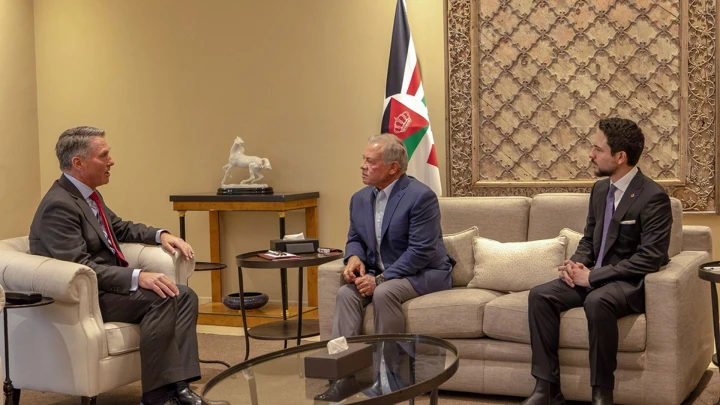
Jordan’s King Abdullah II on Tuesday urged intensified international efforts to ensure a sustainable ceasefire between the United States and Iran. The King’s remarks came during a meeting in Amman where discussions focused on recent regional developments, bilateral relations, and strengthening cooperation in military and security sectors. The talks also covered ways to bolster collaboration between Jordan and the United States. This emphasis on a lasting ceasefire reflects Jordan's consistent advocacy for de-escalation and stability in a volatile region. King Abdullah II showed the critical need for sustained diplomatic engagement to prevent the resurgence of hostilities and to foster an environment conducive to long-term peace. Such international efforts are seen as essential for managing complex regional dynamics and mitigating potential escalations.
Regional Security Dialogue
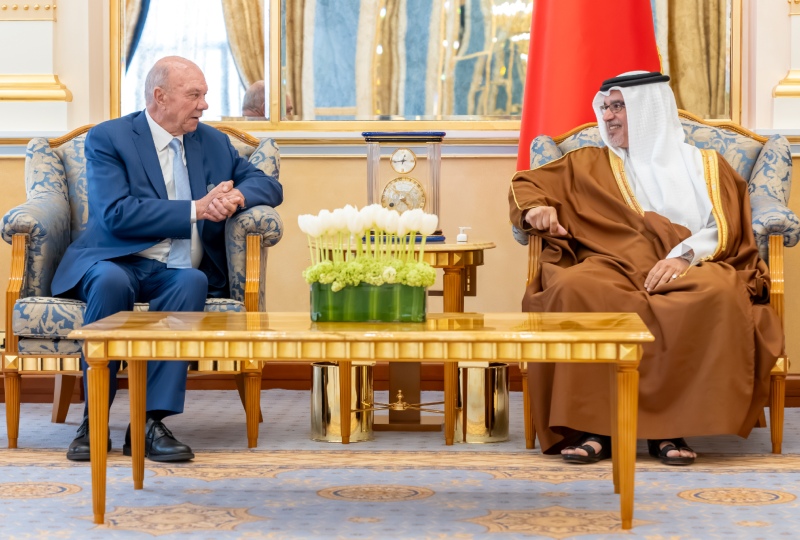
The remarks from Jordan's King Abdullah II were delivered during a meeting with Australian Deputy Prime Minister and Minister of Defence Richard Marles. This high-level bilateral engagement took place in Amman, serving as a platform for key discussions on the evolving geopolitical landscape. The discussion between King Abdullah II and Mr. Marles centered on ongoing regional developments, including the need for security guarantees for Arab states in the event of war endings. The meeting also addressed bilateral relations between Jordan and Australia, with a focus on strengthening cooperation across various sectors. Military and security collaboration was a key topic, as both nations explored avenues to enhance their joint efforts in areas such as defense training, intelligence sharing, and regional security initiatives. The King emphasized the importance of a coordinated approach to regional stability, particularly concerning the broader implications of conflicts and their resolution on neighboring countries and the international community. The dialogue showed the shared commitment to fostering peace and security in the Middle East, noting the strategic partnership between Jordan and Australia in addressing common challenges.
Call for Ceasefire Sustainability
King Abdullah II reiterated the need to maintain regional de-escalation and to respect the sovereignty and security of Arab states. These remarks showed Jordan's consistent position on the importance of stability in the Middle East, which is viewed as critical for the prosperity and well-being of its people. The King's emphasis on de-escalation aligns with broader international efforts to prevent further regional conflicts from erupting or expanding, recognizing the interconnectedness of security challenges. Ensuring the sovereignty of Arab states is a cornerstone of Jordan's foreign policy, advocating for non-interference and mutual respect among nations as fundamental principles of international law. The call for respecting the security of these states notes concerns about potential spillovers from existing conflicts and the need for strong mechanisms to safeguard regional peace and prevent destabilization. Jordan continues to advocate for diplomatic solutions and collaborative security frameworks to address the complex challenges facing the region, reinforcing its role as a proponent of stability and a key player in regional mediation efforts.
Arab State Security Imperative
King Abdullah II stressed that any agreement to end conflicts must guarantee the security of Arab states. The Jordanian monarch emphasized the imperative for full security assurances for these nations as a fundamental condition for lasting peace and stability in the region. He showed that the outcomes of war resolutions directly impact the sovereignty and well-being of surrounding countries, making strong security provisions non-negotiable. King Abdullah II's statement noted Jordan's consistent position on the need to protect the interests and territorial integrity of Arab states in any post-conflict arrangements, ensuring their resilience against future threats. This stance reflects a broader concern for regional stability and the prevention of future escalations, reinforcing the importance of a coordinated approach to security that takes into account the legitimate concerns of all affected parties. The King's message serves as a reminder that sustainable peace requires not only an end to fighting but also a credible framework that safeguards the long-term security and integrity of nations in the region.