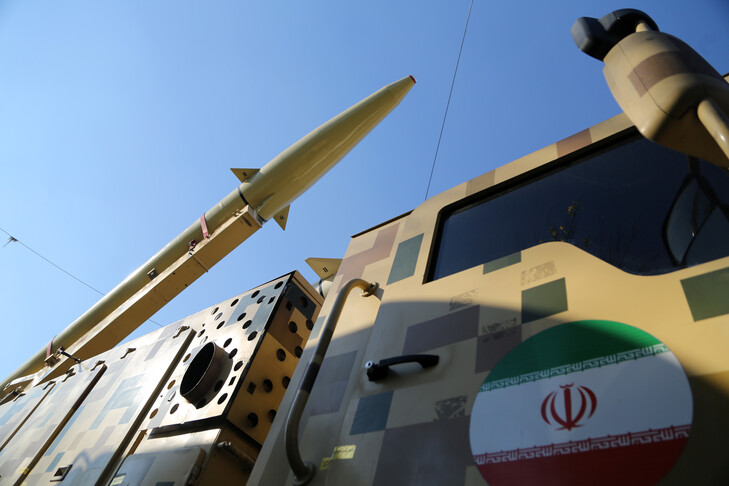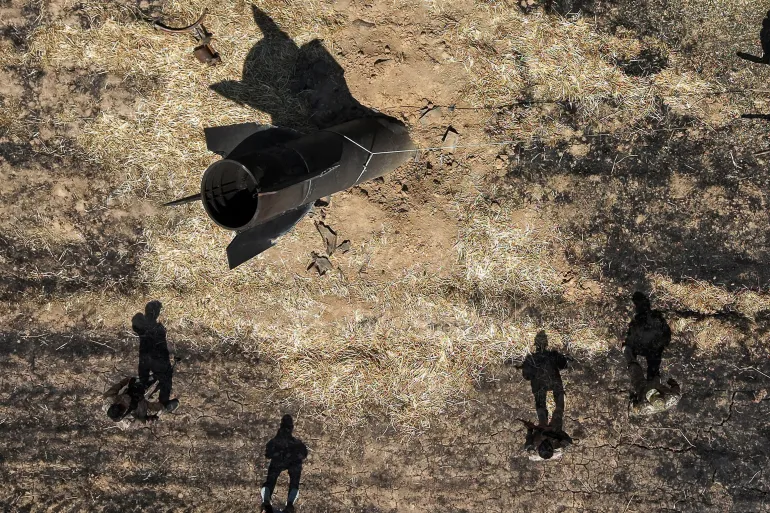
Iran's Islamic Revolutionary Guard Corps (IRGC) claimed it launched 12 ballistic missiles targeting Jordan's Al-Azraq air base, according to the group. The IRGC described the operation as a proportional response to attacks on US forces and international commercial shipping transiting regional waters, as detailed by CENTCOM. The US Central Command (CENTCOM) had previously characterized its own operations as a proportional response to ongoing attacks targeting US forces and international commercial shipping traversing vital regional waterways. Al-Azraq air base, formally known as Muwaffaq Salti Air Base, is situated in Jordan's Zarqa province. This location is approximately 100 kilometers from the capital Amman and hosts US aircraft.
Details of the Alleged Attack
The Islamic Revolutionary Guard Corps (IRGC) asserted that its missile attack targeted positions where American F-35, F-16, and F-15 fighter aircraft were stationed. The IRGC further claimed the operation resulted in the destruction of facilities and a significant number of fighter aircraft at the Jordanian base. These specific claims regarding the extent of damage and the number of destroyed aircraft could not be independently verified by external sources.
Al-Azraq air base, formally known as Muwaffaq Salti Air Base, serves as the home for the Jordanian Air Force's 1st, 2nd, and 6th Fighter Squadrons. Its strategic importance is showed by its historical use by the United States and its NATO allies for various operations. These operations included carrying out strikes against the Islamic State group during the conflict in Syria, noting the base's role in regional security efforts. The base's infrastructure and geographical position make it a critical asset for both Jordanian and allied military operations in the broader Middle East.
Retaliation and Escalation Cycle
Iran's Islamic Revolutionary Guard Corps (IRGC) stated the missile strikes were in retaliation for what it described as US attacks on sites inside Iran. These alleged targets included a recreational facility, an industrial complex, and areas near military installations around Karaj, Nazarabad, and Pishva, along with a local IRGC base. The broader exchange was triggered by the downing of a US Army Apache helicopter over the Strait of Hormuz on Tuesday. This incident prompted US Central Command (CENTCOM) to conduct initial self-defense strikes on Iranian targets, setting off the current cycle of retaliatory attacks across Jordan, Kuwait, and Bahrain.
CENTCOM later affirmed its forces had "completed self-defence strikes against Iran." The command elaborated that these operations targeted Iranian air defense systems, ground control stations, and surveillance radar sites close to the Strait of Hormuz. US Air Force and Navy fighter jets reportedly utilized precision munitions during these actions, emphasizing the targeted nature of the US response. The US military stated that these strikes were conducted to degrade Iran's ability to threaten regional stability and to protect US personnel and interests. The IRGC has issued a warning, asserting that its operations would continue for as long as what it termed "enemy aggression" persists, signaling a potential for further escalation in the region. This ongoing exchange of strikes shows the volatile security situation in the Middle East.
Regional Reactions and Unverified Claims
Claims made by the Islamic Revolutionary Guard Corps regarding the success and impact of its missile strike could not be independently verified by international observers or media outlets. This lack of independent confirmation is typical in rapidly evolving conflict situations where information is often controlled by involved parties. Amidst the regional tensions, the US Embassy in Amman issued an alert instructing American citizens to seek shelter and to monitor security notifications. The embassy cited reports of drones or missiles detected in Jordanian airspace, showing the immediate threat perception. This advisory noted the need for US citizens in the area to remain vigilant and follow official guidance for their safety.
Separately, Kuwait's General Authority for Civil Aviation announced a temporary closure of Kuwaiti airspace. The authority further stated that flights would be diverted to alternative airports, attributing the measure to Iranian attacks. This decision by Kuwait to close its airspace reflects the widespread concern among regional nations about the potential for collateral damage or unintended escalation from the ongoing military actions. The closure caused significant disruption to air travel, affecting both commercial and cargo flights operating in and out of the region. Such measures illustrate the broader impact of the current tensions on civilian infrastructure and daily life across the Middle East. The situation remains fluid, with international bodies calling for de-escalation to prevent a wider conflict.