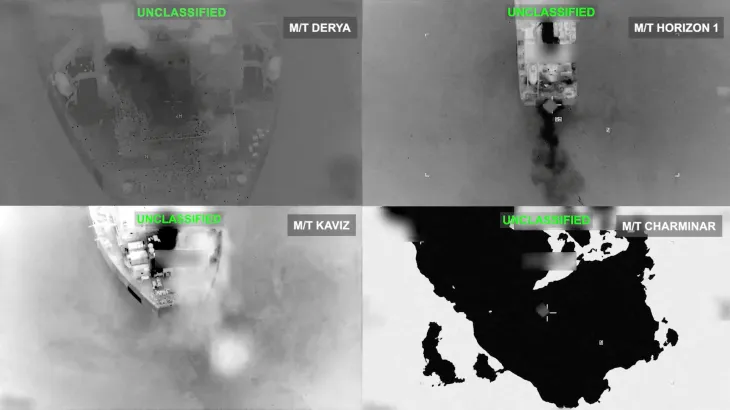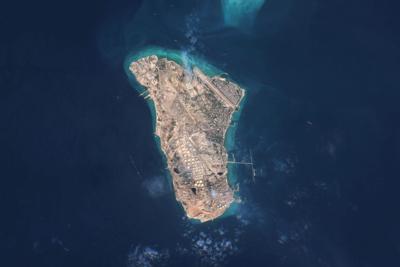
The US military struck five Iranian tankers on Tuesday, sinking one of the vessels in a significant escalation of tensions in the Middle East. The actions followed recent missile attacks on a US warship and a military base in Jordan, prompting a direct response from American forces. One crude oil carrier was struck near Kharg Island, a key oil terminal in the Persian Gulf, showing the strategic nature of the targets. Separately, the M/T Riesco, a vessel identified in reports, was reported to be on fire and sinking in the Gulf of Oman, further noting the scope of the maritime incidents. The strikes occurred amidst heightened tensions in the Middle East, though specific details regarding the rationale for targeting these particular vessels were not immediately available beyond the general context of recent aggressions.
The series of US military actions represents a direct response to what American officials described as provocative Iranian behavior. The strikes on the tankers illustrate a broadening of the conflict, moving beyond direct military-on-military engagements to target economic assets. The Persian Gulf, a critical waterway for global energy supplies, has become a focal point for these confrontations, with Kharg Island playing a central role in Iran's oil export infrastructure. The reported sinking of one vessel and damage to others could have implications for regional shipping and oil markets, although the immediate impact remains under assessment.
US Retaliation and Iranian Actions
Four crude oil carriers were struck in the Gulf of Oman during the recent US military action, in addition to the vessel targeted near Kharg Island. Kharg Island, a significant hub for Iranian oil exports, is strategically located in the Persian Gulf, making any activity in its vicinity highly sensitive. Prior to initiating the strikes, US forces instructed the crews of the targeted vessels to abandon ship, a measure that officials indicated was taken to minimize potential casualties. This protocol suggests an attempt to focus the punitive action on the vessels themselves rather than their personnel.
The US military stated that these strikes were conducted in response to two Iranian attempts to attack a US Navy ship over the preceding two days. These attempts, which involved missile launches, marked a direct challenge to US naval presence in the region and necessitated a strong response. The nature of these attempts, though not fully detailed, indicated a deliberate effort to engage American assets. Separately, US forces had hit three Iranian crude oil carriers over the weekend, indicating a pattern of escalating maritime interdictions and retaliatory actions even before the most recent incidents. These earlier strikes suggest a sustained campaign by the US to counter Iranian maritime activities deemed hostile or destabilizing.
The targeted vessels, including the M/T Riesco which was reported to be on fire and sinking, are part of Iran's extensive fleet involved in crude oil transportation. The Gulf of Oman, a vital maritime corridor, has become an increasingly contested area, with both Iranian and US forces operating in close proximity. The US military's decision to issue warnings to the crews before striking shows a tactical approach aimed at achieving military objectives while attempting to avoid loss of life among non-combatants. This aspect of the operation was noted by various observers as a procedural detail in line with international norms, even in a hostile environment. The precision of the strikes and the focus on specific vessels highlight the sophisticated capabilities employed by the US forces in these operations.
Jordanian Defense Against Missile Barrage
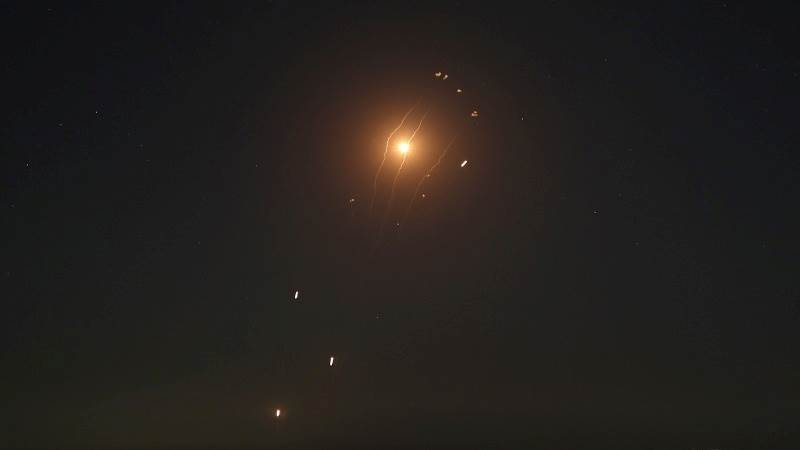
In a separate, but related, development noting the widespread nature of the current regional tensions, Iran launched a missile barrage toward Jordan, specifically targeting Muwaffaq Salti Air Base. This base is a critical facility in Jordan's defense infrastructure and hosts international forces, including those from the United States. The Jordanian army's air defenses, demonstrating advanced capabilities, intercepted the incoming projectiles, dealing with a total of 20 ballistic missiles. The sheer volume of the missile attack showed the intensity of the Iranian aggression.
Of these, an impressive 18 ballistic missiles were successfully destroyed by the air defenses before they could reach their intended targets, preventing what could have been significant damage and casualties at the air base. The successful interception rate by the Jordanian forces showcased their preparedness and the effectiveness of their missile defense systems against a substantial threat. However, two ballistic missiles from the barrage ultimately fell in unpopulated areas within Jordan, causing no reported casualties or significant damage. This outcome, while fortunate in terms of human cost, still represents a serious breach of Jordanian sovereignty and a direct military action against the kingdom.
The targeting of Muwaffaq Salti Air Base by Iran signifies a concerning expansion of the conflict's geographical scope, drawing in other regional actors. Jordan, a key US ally, found itself directly in the crosshairs of Iranian military action, further complicating the already volatile security landscape of the Middle East. The incident prompted immediate condemnation and noted the urgent need for de-escalation efforts in a region already grappling with multiple crises. The effective response by Jordanian air defenses was widely praised as a key factor in mitigating the potential impact of the large-scale missile attack.
Escalating Tensions and Threats
Iran also fired ballistic missiles at a US Navy warship, marking a direct military engagement that shows the heightened state of alert in the region. The US ship successfully evaded the incoming missiles, preventing any damage or casualties from the assault. This incident, along with the attacks on tankers and the Jordanian air base, paints a clear picture of an increasingly confrontational environment. The ability of the US warship to successfully evade the ballistic missiles demonstrated advanced defensive capabilities and crew readiness in the face of direct threats.
Amidst these confrontations, Iran issued threats to target oil tankers operating near Bahraini and Kuwaiti ports, signaling a potential expansion of maritime hostilities in the region. Such threats, if acted upon, could severely disrupt global oil supplies and further destabilize international shipping lanes. The warnings extended to tankers in the vicinity of these key Persian Gulf nations indicate Iran's willingness to broaden its targets beyond direct military assets. The implications of such actions would be broad, affecting not only regional stability but also global economic interests reliant on the free flow of oil.
Separately, Iranian state media reported that the crews of two vessels involved in the recent incidents were safely taken ashore in lifeboats, indicating efforts to mitigate casualties during the attacks or their aftermath. This detail, reported by official Iranian sources, suggests a narrative of concern for human life even amidst escalating military actions. Previously, the Trump administration implemented measures against 27 Iranian airlines and nine associated service providers and sales agents, reflecting a broader strategy of economic pressure against Tehran. These earlier sanctions targeted key sectors of Iran's economy, including its aviation industry, as part of a full approach to curb its regional influence and nuclear ambitions. The current military escalations represent a significant departure from, or an addition to, these earlier economic pressures, indicating a shift towards more direct and kinetic responses in the ongoing standoff.