A senior US official on Tuesday denied reports that missiles had been launched toward US bases in Jordan, stating unequivocally that Washington possessed no information to corroborate such claims. This firm denial came after Israel's Channel 12 reported allegations that Iran had fired missiles specifically targeting an American military installation in Jordan. The US official's statement emphasized the absence of any intelligence or evidence suggesting such an attack had occurred, directly addressing the claims circulating in the Israeli media. The situation unfolded amidst heightened regional tensions, making official verification of such incidents key for international stability.
Jordanian Army Details Incident
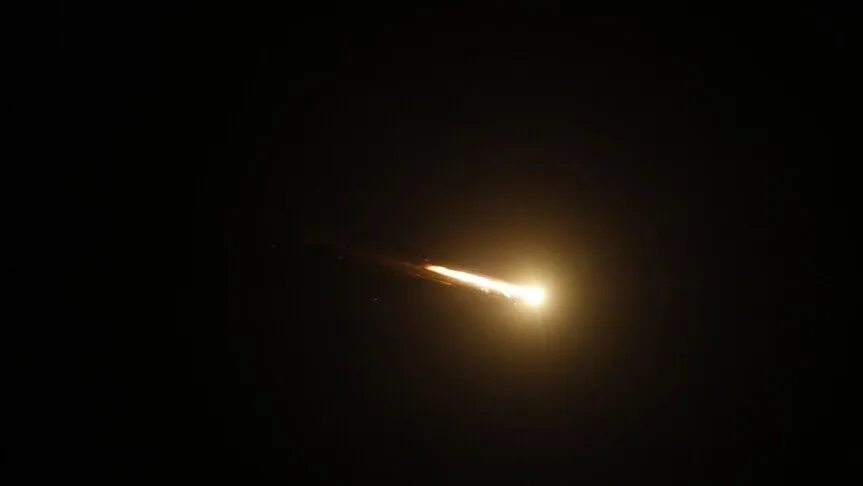
The Jordanian army, offering its official account, reported that a total of 13 Iranian ballistic missiles entered the kingdom's airspace on September 2. According to the army's detailed statement, three of these missiles subsequently fell in remote, unpopulated areas within Jordan. Crucially, the Jordanian authorities confirmed that no casualties resulted from the incident, nor was there any significant damage reported from the impact sites of these three projectiles. This information provided a factual basis regarding the presence of Iranian missiles over Jordanian territory, even as their ultimate intent remained a subject of international discussion.
Conflicting Reports Emerge
An Israeli report from Channel 12 claimed that Iran had specifically targeted a United States military base in Jordan with missiles. This assertion, disseminated by the Israeli media outlet, directly contradicted earlier statements from a senior US official, who denied any knowledge of such an attack and explicitly stated that Washington had no information to corroborate the claims of a targeted strike on its facilities. The discrepancy arose following initial reports of Iranian ballistic missiles entering Jordanian airspace. The differing accounts show the challenges inherent in verifying information during periods of heightened regional tension and the potential for misinterpretation or conflicting narratives. While the Jordanian army confirmed the entry of 13 Iranian missiles and the fall of three in remote areas, neither the US nor Jordan had previously confirmed any specific targeting of American installations, adding to the ambiguity surrounding the incident's true nature. The lack of corroborating evidence from US sources directly challenged the Israeli media's specific claims about the missiles' intended destination.
Official Statements and Context
The Jordanian army further detailed the incident, providing important clarifications regarding the trajectory and fate of the projectiles. Their statement confirmed that 10 of the 13 Iranian ballistic missiles that entered the kingdom's airspace on September 2 were successfully intercepted. This clarification followed initial reports that three of these missiles had fallen in remote areas within Jordan, providing a more complete picture of the defensive measures taken. The army's statement provides additional context to the events, particularly in light of conflicting international reports regarding the missiles' intended targets and the specific claims made by Israel's Channel 12. While the Jordanian authorities confirmed the interception of the majority of the projectiles, they did not specify the method or agency responsible for these interceptions, leaving some operational details undisclosed. The incident has drawn significant attention due to its regional implications, the involvement of Iranian-origin missiles, and the varying accounts from different official sources, noting the complex geopolitical landscape.
Uncertainty and Next Steps
There was no immediate official confirmation from Iran or Jordan regarding the Israeli report concerning the alleged missile launch specifically targeting a US base. The lack of direct statements from Tehran or Amman that corroborated the Israeli media's specific targeting claim contributed to the ongoing uncertainty surrounding the incident and the differing accounts from regional sources. This absence of confirmation from the directly involved parties, Iran as the alleged launcher and Jordan as the host nation of the alleged target, made it difficult to definitively ascertain the full scope and intent of the missile activity. The incident continues to be monitored for further official statements or developments that might shed more light on the conflicting narratives.