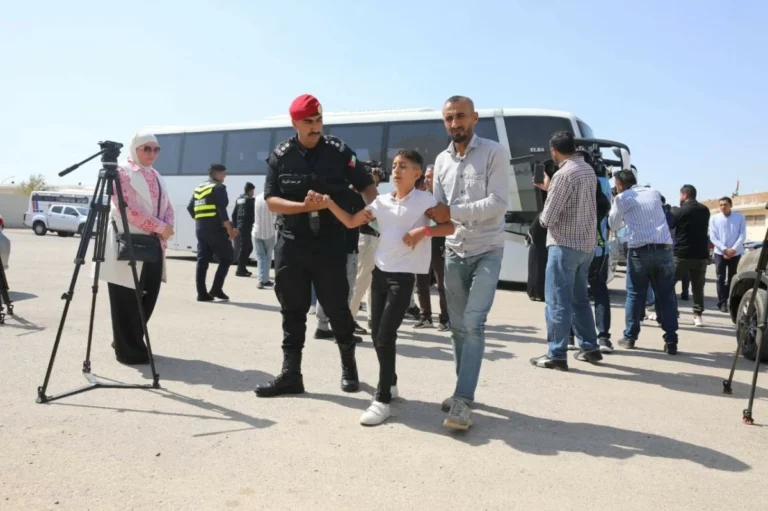
Twenty children from the Gaza Strip were evacuated to Jordan for urgent medical treatment, a critical humanitarian gesture facilitated by Jordanian authorities in close cooperation with international agencies and various United Nations humanitarian relief organs. The children, all suffering from severe ailments, including advanced oncological tumors, renal failure, and congenital anomalies, were identified as requiring specialized medical attention unavailable within Gaza. Upon their arrival in Jordan, these young patients were promptly distributed among specialized medical institutions in the capital, Amman. These included the renowned King Hussein Cancer Center and the full King Hussein Medical City, ensuring they received immediate and appropriate care tailored to their complex conditions. This humanitarian effort directly addresses critical medical needs amidst the region's escalating healthcare challenges and the severe limitations faced by local medical facilities.
Broader Jordanian Aid Efforts
Jordan has consistently extended its humanitarian assistance to the region through other significant and ongoing initiatives. The Kingdom has deployed military field hospitals to provide key and sustained medical support in Palestinian territories, offering vital services on the ground. Concurrently, Jordanian forces have conducted tactical airdrops, delivering essential pharmaceutical and nutritional aid directly to those in urgent need within Gaza. These aerial operations complement the medical evacuations, collectively addressing the widespread humanitarian crisis and the acute shortages faced by the population. The full and multi-faceted approach shows Jordan's unwavering commitment to alleviating suffering in the Gaza Strip and other Palestinian areas that are grappling with severe shortages and a collapsing healthcare system. These efforts are part of a broader strategy to deliver essential supplies and medical care, reflecting the urgent requirements on the ground for immediate intervention and support.
Urgent Need for Treatment
The initiative to evacuate these children is specifically designed to offer therapeutic protocols and advanced medical interventions that are currently unavailable within Gaza. The local healthcare infrastructure has been crippled by numerous challenges, including widespread hospital shutdowns, severe shortages of critical medical consumables, and depleted intensive care units. These conditions have rendered local facilities incapable of providing the necessary specialized care. Relief organizations have issued stark warnings that the ongoing blockade of medical imports is expected to accelerate mortality rates significantly among individuals suffering from chronic conditions. These organizations emphasize that without consistent access to essential medications, life-saving equipment, and specialized care, patients with long-term illnesses face a heightened and unacceptable risk of premature death. The dire situation shows the critical necessity for external medical interventions and the establishment of consistent supply chains to address the escalating health crisis in the region effectively.
Diplomatic Push for Access
Jordanian diplomatic channels are actively pressuring the international community to establish permanent humanitarian corridors, according to official statements from Amman. These key corridors are sought to facilitate the safe and unimpeded exit of injured civilians, vulnerable children, and the elderly from Gaza, enabling them to access external medical treatment. The Kingdom's persistent diplomatic efforts aim to secure consistent and reliable pathways for these vulnerable populations to receive healthcare services that are entirely unavailable within the besieged territory. This push notes the ongoing need for sustained international cooperation and concerted action to address the critical medical needs arising from the severely strained healthcare infrastructure in Gaza, ensuring continuous access to specialized care for those most affected by the ongoing crisis.
International Health Crisis
The World Health Organization (WHO) reports that the local clinical demands in Gaza significantly and vastly exceed the available logistical resources and medical capacity. This severe disparity has resulted in thousands of chronic patients being placed on agonizingly long waiting lists for necessary medical care, according to the organization's full assessments. The WHO's assessment further shows the ongoing and severe strain on the region's healthcare system, where essential services struggle immensely to meet the widespread and urgent health needs of the population, leading to tragic outcomes for many.