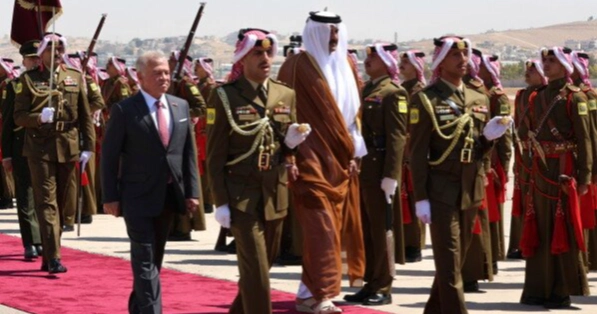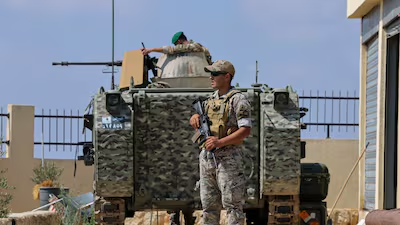
France is set to host a meeting this month in Paris with King Abdullah II of Jordan, aimed at supporting Lebanese security forces and facilitating the disarmament of Hezbollah. Representatives from the United States and Saudi Arabia are also expected to attend the discussions, showing the international significance of the initiative. The meeting is hoped to take place in Paris on September 17. This critical diplomatic gathering is anticipated to precede a larger, dedicated conference focused on providing full support to the Lebanese army. The initiative seeks to bolster stability in Lebanon by strengthening its official security apparatus and addressing the persistent challenge posed by non-state armed groups. This diplomatic effort builds upon the framework of the Aqaba Process, an initiative launched in 2015 by King Abdullah II. The Aqaba Process was established to enhance regional military and security cooperation, and its principles are being applied to address the complex security challenges facing Lebanon's security sector, particularly concerning the presence and activities of Hezbollah.
Context of Regional Tensions
Hezbollah, an Iran-backed militia, continues to refuse to lay down its weapons amidst ongoing hostilities with Israel. This refusal is a central point of contention in the region, complicating efforts to establish lasting peace and stability. Israel occupies approximately seven percent of Lebanese territory, a long-standing issue that fuels regional tensions. The Israeli government is considered unlikely to make concessions on Lebanon before elections scheduled for October, further contributing to the current diplomatic stalemate. Hezbollah, for its part, appears to have tightened its alliance with Iran during this period of heightened tension, a development that has significant implications for regional power dynamics and security.
Recent events have exacerbated the already volatile situation. Israel has engaged in military actions, including bombing and invading south Lebanon, resulting in the destruction of several border villages in the area. These actions highlight the urgent need for effective security arrangements and a clear delineation of responsibilities in the border regions. Under existing agreements, Israel is supposed to withdraw from designated "pilot zones" along the border. These zones are critical areas intended for a phased withdrawal and subsequent deployment of official forces. The Lebanese army is meant to deploy its forces into these specific zones once Israel withdraws, asserting state sovereignty and control. Concurrently, Hezbollah is meant to withdraw its fighters and assets from these same zones as part of the broader security arrangements, a key step towards reducing the presence of non-state actors in sensitive border areas. The ongoing conflict, including the Iran war which commenced in late February, provides a challenging backdrop to these already complex regional dynamics.
French-Led Support Mission
France had initially planned a conference in March to support the Lebanese army, indicating a long-standing commitment to the country's security forces. France is currently leading efforts alongside Italy to establish a support mission dedicated to the Lebanese army. This initiative comes as the United Nations Interim Force in Lebanon (UNIFIL) is slated for withdrawal in December, creating a potential security vacuum that the proposed mission aims to fill. The withdrawal of UNIFIL necessitates a strong and well-supported Lebanese army to maintain peace and security in its operational areas.
Interest in joining the proposed mission extends beyond France and Italy, with more than 10 European Union states, including Ireland, indicating their willingness to participate. This broad European interest shows the international recognition of the critical need to bolster Lebanon's official military capabilities. France has also been actively supporting the establishment of a broader European Union security and defense policy mission, reflecting a wider European strategy to engage in regional stability efforts. The timing of these efforts coincides with significant developments in the region, making the support for the Lebanese army even more pressing.
An Israeli bombing campaign in 2024 resulted in the deaths of most of Hezbollah's mid- and high-ranking officials, a significant event that reshapes the internal dynamics of the militia and potentially the security landscape. Domestically, Joseph Aoun was elected president in early 2025. Mr. Aoun is a former army chief, a background that could significantly influence the direction of Lebanese security policy and the role of the armed forces. His experience and leadership are seen as vital in navigating the complex security challenges facing the nation. The French-led mission aims to bolster the capabilities of the Lebanese army, which is seen as key for stability as UNIFIL's mandate approaches its end and in the context of recent regional military actions. The involvement of multiple EU states signals a concerted international effort to strengthen Lebanon's official armed forces, providing them with the necessary resources and training to effectively carry out their mandate. This collective support is intended to empower the Lebanese army to become the sole legitimate armed force capable of maintaining order and defending the nation's borders.
Diplomatic Efforts and Challenges
The upcoming meeting in Paris on September 17 is anticipated to precede a larger conference dedicated to supporting the Lebanese army, which will bring together a wider array of international partners and stakeholders. French President Emmanuel Macron's special envoy for Lebanon, Jean-Yves Le Drian, indicated that this meeting is expected to convene in Paris on September 17. Mr. Le Drian stated, "A new initiative is being launched under the Aqaba Process, under the auspices of the King of Jordan. I hope it will take place in Paris on September 17." This statement notes the continuity of the Aqaba Process as a framework for regional cooperation and the central role of King Abdullah II in fostering such initiatives. Lebanese President Joseph Aoun is also slated to attend the Paris meeting, adding a significant national presence to the discussions and demonstrating Lebanon's commitment to these international efforts. The attendance of President Aoun, a former army chief, is particularly noteworthy given the focus on strengthening the Lebanese armed forces.
The diplomatic efforts unfold amid stalled talks concerning the designated "pilot zones" along the Israel-Lebanon border, where Israeli forces are meant to withdraw and the Lebanese army to deploy. These stalled negotiations represent a significant hurdle to de-escalation and the implementation of existing agreements. Hezbollah, a key player in Lebanon, has signaled its rejection of US-brokered negotiations, further complicating efforts to de-escalate tensions and implement border agreements. This rejection by Hezbollah shows the deep-seated political and security divisions that continue to plague the region. These diplomatic challenges are set against a backdrop of regional conflict, specifically the Iran war, which commenced in late February, adding another layer of complexity and urgency to the situation. The broader regional instability makes it even more imperative to find pathways for dialogue and resolution in Lebanon.
Jean-Yves Le Drian, who now serves as France's special envoy for Lebanon, has a history of vocal concern regarding Lebanon's stability. In 2020, while serving as France's foreign minister, he famously described Lebanon as “the Titanic without the orchestra,” a remark reflecting the country's severe challenges across political, economic, and security fronts. His continued involvement shows France's commitment to addressing the multifaceted crisis in Lebanon, demonstrating a sustained diplomatic engagement. The Paris meeting aims to gather international support for the Lebanese armed forces, which are seen as key for maintaining internal security and asserting state authority in the absence of a disarmament agreement with non-state actors. The focus remains on strengthening official institutions to navigate the complex security landscape and ensure future stability, thereby enabling the Lebanese state to fully exercise its sovereignty and protect its citizens. The international community recognizes that a strong, unified, and nationally representative Lebanese army is fundamental to achieving long-term peace and preventing further destabilization in a highly volatile region.