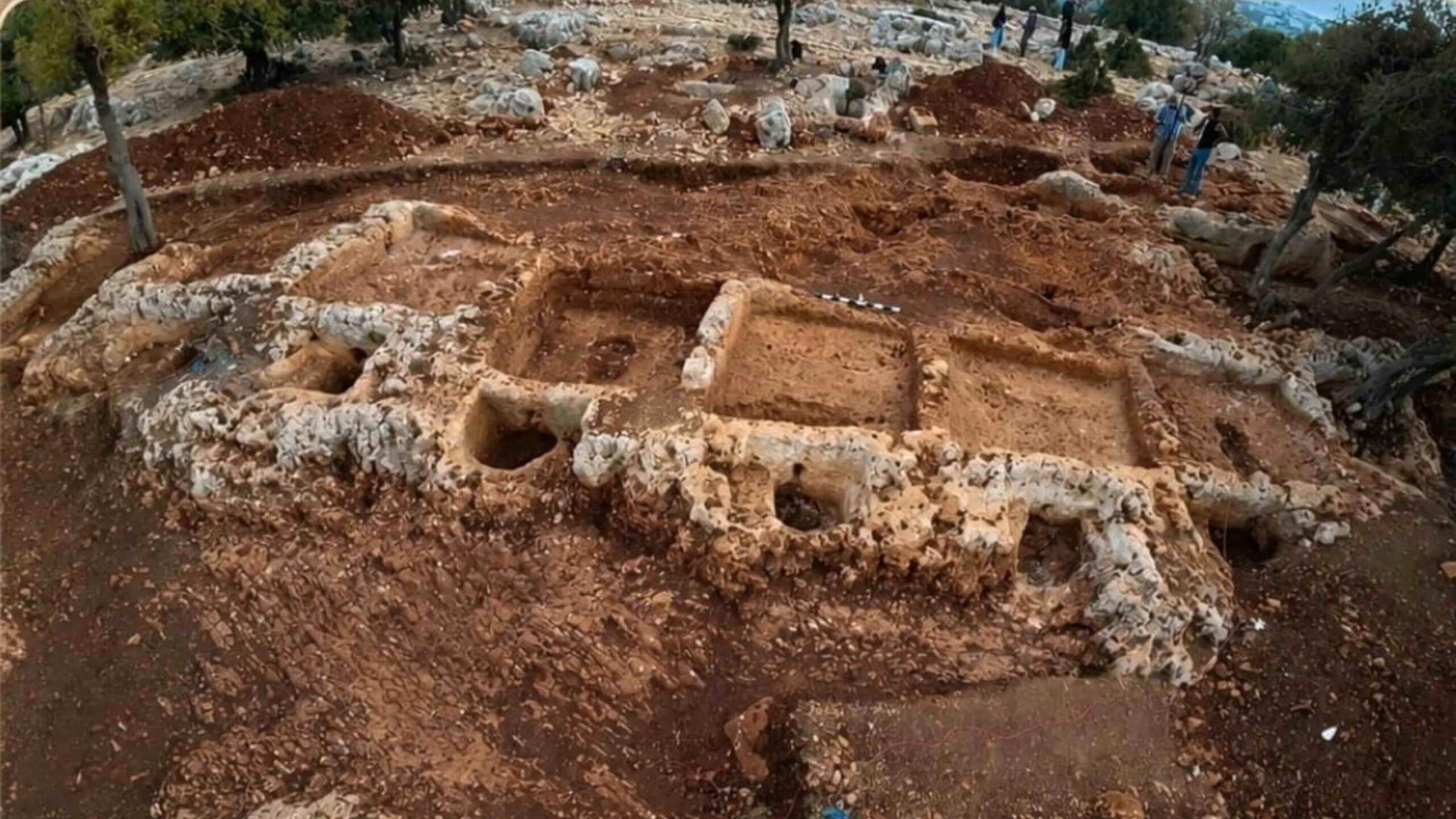
Archaeologists from Yarmouk University’s Faculty of Archaeology and Anthropology recently unearthed a Byzantine-era wine press in northern Jordan. The discovery was made at Khirbet Qabla, an archaeological site located southwest of the town of Zoubia in Irbid governorate. This significant find was made during ongoing excavation efforts, shedding new light on the region's ancient history. The wine press, carved directly into limestone rock, represents a significant find for understanding historical agricultural practices in the region, particularly during the Byzantine period. Its strong construction suggests a well-established and organized wine production industry in the area centuries ago.
Key Discoveries Detailed
The discovered wine press consists of a connected series of basins designed for pressing, settling, and collecting grape juice, which are linked by carved channels. This intricate design facilitated an efficient process for wine production. Khaled Al-Bashayreh, dean of Yarmouk University’s Faculty of Archaeology and Anthropology, confirmed the structure's details, stating, "The wine press is made up of a connected series of basins used for pressing, settling, and collecting grape juice, linked by carved channels." This sophisticated layout indicates a advanced understanding of viticulture and fermentation processes among the ancient inhabitants. The systematic process of wine production enabled by this design notes the agricultural sophistication of the settlement.
Alongside the wine press, excavators at Khirbet Qabla also uncovered individual graves and family tombs. These burial sites date back to both the Roman and Byzantine periods, indicating prolonged human activity and settlement at the site. The discovery of these diverse archaeological features provides insights into the historical agricultural practices and burial customs of the inhabitants of northern Jordan during these eras. The presence of both individual and family burial structures offers a glimpse into the social organization and familial bonds within the ancient community. These findings show the continuous occupation and evolving cultural practices at Khirbet Qabla over several centuries.
Further enhancing the understanding of the site, tombs and the remains of a small church that had never been documented before were also uncovered. This previously unknown church adds a key dimension to the religious and social history of Khirbet Qabla. Preliminary findings from the ongoing excavations indicate that the site was continuously inhabited across three distinct historical eras. Evidence suggests human activity at Khirbet Qabla during the Roman, Byzantine, and early Islamic periods, showcasing its enduring importance as a settlement.
Archaeological Significance and Training
The Byzantine wine press and the newly found church remain the most significant structures uncovered so far at the Jordan site. These discoveries are key for understanding the daily life, economy, and spiritual practices of the ancient communities in northern Jordan. The church building itself had an earlier life, initially serving as an olive press before its conversion into a place of worship. Khaled Al-Bashayreh stated, "the church building had an earlier life as an olive press before it was converted into a place of worship, reflecting how structures at the site were repurposed over time." This repurposing indicates a dynamic settlement history at Khirbet Qabla, where buildings were adapted to meet changing community needs and priorities. The transformation from an olive press to a church speaks volumes about the economic and religious shifts occurring within the settlement over time.
The excavation season provided invaluable hands-on training for students during the 2026 summer semester. Students from archaeology, heritage conservation and management, and anthropology programs participated in the fieldwork. This practical experience offered them direct engagement with archaeological methods and historical interpretation in a live field environment. The opportunity allowed future professionals to develop essential skills in identifying, preserving, and documenting significant historical findings. Such field training is key for fostering the next generation of archaeologists and heritage specialists, providing them with real-world experience beyond classroom learning.
Expert Commentary and Future Outlook
Preliminary findings from the ongoing excavations indicate that the site was continuously inhabited across three distinct historical eras. Evidence suggests human activity at Khirbet Qabla during the Roman, Byzantine, and early Islamic periods. These discoveries provide further insight into the historical occupation and cultural evolution of the region over several centuries, painting a full picture of life in ancient northern Jordan. The presence of both burial sites and an undocumented church adds to the archaeological understanding of the settlement's population and religious practices, noting the spiritual and social dimensions of the community. The ongoing work aims to further delineate the timeline and nature of human presence at Khirbet Qabla, with archaeologists anticipating more revelations as excavations progress. These efforts will continue to deepen our understanding of this historically rich region.