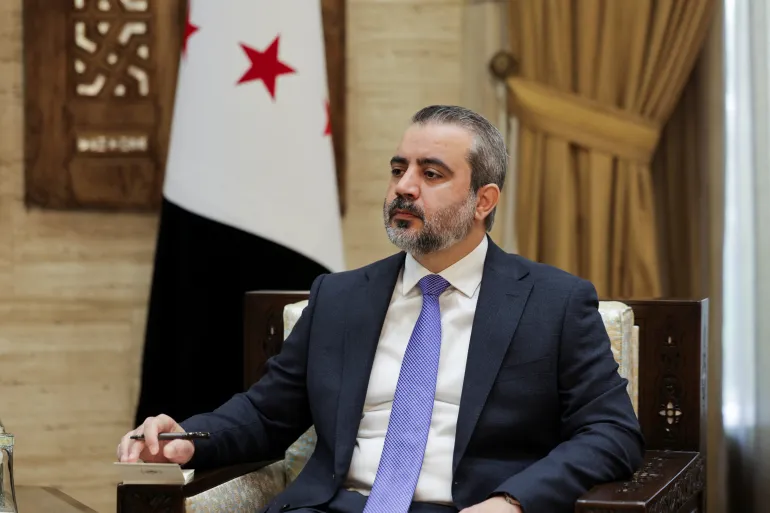
Syria’s Foreign Minister Asaad al-Shaibani met with a high-level Israeli delegation, including the chief of Israel’s Mossad intelligence agency, Roman Gofman, in Jordan this week for US-mediated talks. These significant diplomatic discussions occurred amid escalating tensions following a recent Israeli airstrike. Israel bombed the Abu Duhur airbase in northwestern Idlib on Thursday, an action that further showed the volatile security situation in the region. The Israeli government claimed this attack was conducted to prevent Turkish troops from deploying at the base, citing concerns over potential shifts in regional military alignments. However, both Syria and Turkiye denied Israel's claim regarding the Abu Duhur airbase attack, challenging the stated justification for the aerial bombardment. The involvement of such senior officials from both nations, facilitated by the United States, notes the urgency and complexity of the issues at stake.
De-escalation and Security Mechanisms
Discussions between Syria and Israel focused on establishing practical mechanisms intended to halt Israeli attacks, arrests, and targeting operations, according to sources familiar with the talks. These mechanisms are key for de-escalating the ongoing cycle of violence and establishing a more stable environment. The dialogue also covered the potential revival of negotiations aimed at achieving a lasting security agreement between the two nations, a long-term objective that has eluded previous diplomatic efforts. These talks represent a significant diplomatic effort to address ongoing hostilities and establish a framework for future stability in the region, seeking to build bridges between historically adversarial states. The full nature of the discussions, encompassing immediate de-escalation tactics and broader security frameworks, shows the seriousness of the current diplomatic initiative.
Syria's immediate priorities at the negotiating table included an Israeli withdrawal to positions held before Bashar al-Assad’s overthrow in December 2024. This demand reflects Syria's desire to restore its territorial integrity and reverse changes that have occurred during its recent tumultuous period. Additionally, Damascus sought the full restoration of a 1974 disengagement agreement, which was signed following the 1973 Yom Kippur War. The 1974 agreement established a demilitarized zone and outlined principles for military separation along the Syrian-Israeli border, serving as a foundational document for security arrangements between the two countries. Syria's insistence on these points indicates its focus on re-establishing pre-conflict territorial arrangements and formalizing security protocols, viewing these as essential steps toward any lasting peace. The negotiations signify a complex endeavor to bridge deep-seated divisions and address security concerns from both sides in a structured, US-mediated format, aiming to lay the groundwork for a more peaceful coexistence. The Syrian delegation, led by Foreign Minister Asaad al-Shaibani, emphasized these core demands as non-negotiable foundations for any future agreement, reflecting the nation's long-standing grievances and strategic objectives.
Broader Regional Context and History
The United States has actively worked to broker a security agreement between Israel and the government of Syrian President Ahmed al-Sharaa for over a year, demonstrating a sustained commitment to regional stability. This diplomatic effort comes amidst a volatile period, as Israel has conducted hundreds of strikes on Syria since the fall of Bashar al-Assad in December 2024. These persistent military actions highlight the ongoing security challenges in the region, which US mediation seeks to address through structured dialogue, aiming to prevent further escalation and loss of life. The frequency and scale of these Israeli operations show the profound security concerns that Israel holds regarding developments within Syria, particularly since the change in leadership.
Recent developments have seen Israeli forces enter a United Nations-patrolled buffer zone, historically separating Israeli and Syrian forces in the Israeli-occupied Golan Heights. This move into the sensitive area, which had long maintained a delicate separation, has drawn international attention to the fragility of existing security arrangements and the potential for miscalculation. The incursion by Israeli troops into the buffer zone shows the heightened tensions and the complex security landscape both nations are navigating, adding another layer of urgency to the ongoing diplomatic efforts. This action was perceived by many as a significant breach of established protocols, further complicating the already strained relationship between the two countries.
Following this incident, Israeli Prime Minister Benjamin Netanyahu and Turkish President Recep Tayyip Erdogan exchanged sharp criticisms, indicating broader regional implications of the current instability. Their public disagreements reflect the interconnectedness of regional actors and the potential for localized events to escalate into wider diplomatic disputes, drawing in other powerful nations. The exchange of barbs between the two leaders suggests that the current situation in Syria has ramifications extending beyond its immediate borders, affecting the delicate balance of power across the Middle East. Such high-level public spats often signal deeper underlying geopolitical rivalries that can easily be ignited by events on the ground.
Earlier US-mediated talks between Syria and Israel had resulted in an agreement to establish a joint mechanism for intelligence sharing and tension reduction. That previous arrangement aimed to prevent misunderstandings and de-escalate potential conflicts through direct communication and coordination, demonstrating a prior willingness to engage in practical security cooperation. The renewed diplomatic efforts are building upon past attempts to foster stability and security cooperation between the two historically adversarial nations, indicating a recognition that dialogue, even if intermittent, is essential. This earlier mechanism, though ultimately stalled, provided a blueprint for how future cooperation could be structured, offering hope that the current talks might yield more enduring results.
Syrian Stance and Diplomatic Outlook
The United States mediated the talks between Syria and Israel, which also addressed efforts to ease tensions between Israel and Turkiye and prevent their rivalry from spilling onto Syrian territory. The presence of the chief of Israel’s Mossad intelligence agency, Roman Gofman, alongside Syria’s Foreign Minister Asaad al-Shaibani, showed the critical security dimensions of these discussions. During the discussions, Israeli media reported that officials adopted several "red lines," which are non-negotiable conditions for any future agreement. These included preventing Turkish military activity in Syria, a clear indication of Israel's concerns about Turkish influence in the region. Another key red line was ensuring the Syrian side of the Golan Heights remains demilitarized, a long-standing Israeli security demand related to its northern border. Israel's red lines further included guaranteeing the security of Syria’s Druze community, a minority group with ties across the border, and preventing the Syrian army from acquiring certain strategic weapons systems that could pose a threat to Israeli security. These conditions reflect Israel's full security posture and its determination to shape the post-conflict landscape in Syria to its advantage.
Syrian officials, for their part, stressed Syria's sovereignty and its right to rebuild its national army and determine its alliances, asserting fundamental principles of national self-determination. They emphasized that any agreement must respect these core tenets, noting the nation's resolve to maintain its independence and strategic autonomy. Despite initial progress, those negotiations froze at the end of February when the US and Israel launched their war on Iran, diverting diplomatic attention and resources to a new, broader conflict. This abrupt suspension demonstrated how quickly regional dynamics can shift and impact ongoing peace efforts. Israeli media subsequently reported that the talks had been positive before their suspension, suggesting that genuine progress was being made and that the potential for a breakthrough existed prior to the external intervention. The current resumption of talks, therefore, carries the weight of past efforts and the renewed hope that a path to a lasting security framework might still be found, despite the numerous challenges and deeply entrenched positions of both sides. The continued mediation by the United States notes the international community's recognition of the critical need for stability in this volatile part of the world.