A migrant who fled Ireland following the killing of an American woman has been arrested in Jordan. Irish officials received notification of the arrest on Monday. The individual’s arrest comes as Jordan does not have an extradition treaty with Ireland, significantly complicating potential efforts to return the suspect for prosecution in Ireland. This lack of a formal agreement between the two nations presents a substantial hurdle for Irish authorities seeking to bring the individual back to face charges related to the woman's death.
The man, whom Irish police described as a "person of interest" in the murder investigation, was detained within the past 48 hours by Jordan's Public Security Directorate. This development marks a critical turn in the ongoing inquiry, as investigators track the movements of the individual suspected in the case. The notification to Irish officials on Monday initiated a series of diplomatic and legal considerations, noting the complexities inherent in international law enforcement cooperation without existing bilateral treaties.
Victim Identified, Timeline of Events
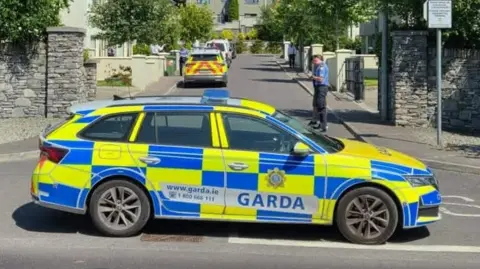
Jamey Carney, 43, a New York native who had moved to Ireland in 2021, died from suffocation after sustaining head injuries. Carney was discovered deceased at her residence in Killarney, County Kerry. Detectives investigating the case believe Carney was killed around 11 p.m. On Monday. Her 13-year-old daughter found her body at approximately 1:30 p.m. The following day, Tuesday. The discovery of Ms. Carney's body by her daughter added a tragic dimension to the unfolding events in the quiet Irish town. The investigation into the precise circumstances of Carney's death is ongoing, with forensic teams and detectives meticulously gathering evidence from the scene and surrounding areas in Killarney. The post-mortem examination, which confirmed the cause of death as suffocation coupled with head injuries, provided key information for the investigators. Authorities have been working to piece together a detailed timeline of Ms. Carney's final hours and the events leading up to the discovery of her body.
Suspect's Background and Departure
The man traveled approximately 200 miles by bus to Dublin Airport and boarded a flight to Istanbul before Ms. Carney's body was discovered. He had arrived in Ireland in 2024 and reportedly had been refused asylum, but remained in the country while appealing the decision prior to the murder. This status meant he was legally present in Ireland during the appeal process, despite the initial refusal of his asylum application. The individual possessed his passport, which enabled him to depart Ireland before the victim's body was found. His ability to travel internationally using his own documentation allowed him to leave Irish jurisdiction swiftly and without immediate detection by law enforcement, who at that point had not yet identified him as a person of interest.
According to acquaintances, the man had expressed a strong desire to relocate to the United States. He reportedly told these acquaintances that Ms. Carney was assisting him in pursuing U.S. Residency, a detail that has become relevant to the investigation. This alleged motivation and the assistance from Ms. Carney could potentially shed light on the nature of their relationship and provide context for the events leading to her death. This facilitated his departure from the country before law enforcement could identify him as a person of interest in the ongoing investigation, as his travel was seemingly unconnected to the then-undiscovered crime. The significant time gap between his departure and the discovery of Ms. Carney's body allowed him to establish considerable distance from Ireland. Investigators believe the Jordanian national was with Ms. Carney on Monday evening, the night she was fatally assaulted, before her body was discovered the following day. This places him at the scene during the critical timeframe identified by detectives.
Irish Police Response and Legal Hurdles
The man, whom Irish police described as a "person of interest" in the murder investigation, was indeed detained within the past 48 hours by Jordan's Public Security Directorate. This detention marks a significant development for the Gardaí, Ireland's national police force, who have been actively pursuing leads since the discovery of Ms. Carney's body. Irish police confirmed their awareness of the development, stating they were "of the arrest of a male in Jordan by the Jordanian authorities, but did not identify the man or confirm he was the person of interest in the investigation." This cautious statement reflects the delicate diplomatic and legal procedures involved in international cases, particularly when an extradition treaty is not in place.
Despite the arrest in Jordan, Irish police clarified their current stance on the matter. They confirmed that they "have not made any request to the Jordanian authorities for the arrest of any person at this time," indicating the preliminary nature of the proceedings from their perspective. This statement shows the procedural steps that must be followed before a formal extradition request can be initiated. The absence of an extradition treaty between Ireland and Jordan means that any attempt to return the suspect to Ireland for trial would necessitate a more complex and potentially lengthy legal process. This could involve direct diplomatic negotiations, mutual legal assistance requests, or even the possibility of the suspect being tried in Jordan, depending on the evidence and the legal frameworks of both countries. The Irish authorities are now faced with the challenge of navigating these international legal complexities to ensure justice for Jamey Carney. The investigation continues to gather and consolidate evidence, which will be key in any future legal proceedings, whether in Ireland or abroad.