Gulf countries have experienced a week of sporadic missile and drone fire following renewed tensions between the United States and Iran, disrupting flight schedules across the Middle East. This week of sporadic missile and drone fire has showed the volatile security situation. On Thursday, Jordan and Kuwait intercepted a fresh wave of missiles and drone fire, adding to the regional instability. Earlier on Tuesday, two United Arab Emirates supertankers were attacked, resulting in the death of one crew member and eight injuries. The attack on the supertankers notes the direct impact of the conflict on commercial shipping and personnel. This current flare-up marks the worst in the region since the Memorandum of Understanding to end the conflict was signed by the US and Iran on June 17. US President Donald Trump stated the ceasefire was "over" last week, indicating the formal end of the agreement. The article was updated with the latest information on Thursday, July 16, 2026.
Regional Attacks and Diplomatic Efforts
Several consecutive days have seen US strikes on Iran, occurring simultaneously with Iranian attacks targeting US-linked facilities and assets across the region. Iranian forces have struck targets in Qatar, Oman, Kuwait, Bahrain, and Jordan. Additionally, several cargo ships in the Strait of Hormuz have been subjected to Iranian attacks. These attacks on maritime targets raise concerns about global trade routes and energy supplies. Earlier in the week, Bahrain, Oman, and Qatar were also specifically targeted in separate incidents, showing the broad scope of the current hostilities and the widespread impact on Gulf nations. The persistent targeting of various regional states and assets indicates a significant escalation in the conflict.
Amidst this escalation, regional mediators Qatar and Pakistan are intensifying their diplomatic efforts. Both nations are actively engaging in discussions aimed at de-escalating the heightened tensions and preventing further conflict in the Middle East. Their involvement signifies the urgent need for a diplomatic resolution to the ongoing hostilities. These diplomatic initiatives are key in attempting to restore stability to a region heavily impacted by the renewed US-Iran tensions.
Major Carriers Adjust Operations
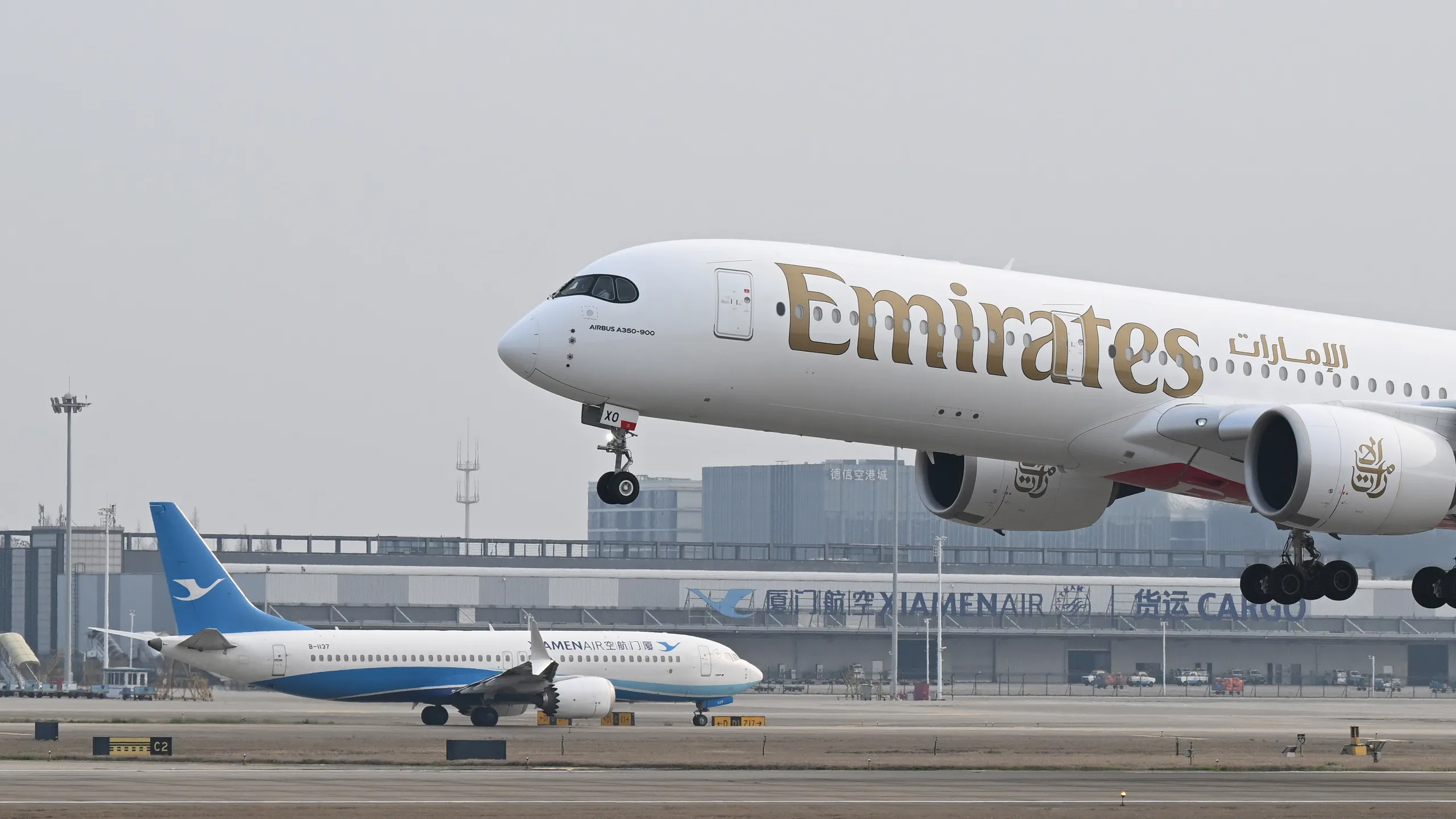
Emirates has issued a special advisory for families traveling, urging them to arrive at the airport at least three hours before departure, clear security with 90 minutes to spare, and be at their gate one hour before the scheduled departure time. This advisory reflects the increased security measures and potential for delays. The airline advised customers to "check your flight status, even after you have checked in," emphasizing the dynamic nature of current flight operations. Emirates is currently flying to 137 destinations across 72 countries worldwide, which represents 96 percent of its previous global network. More than 1,300 flights are operating each week for Emirates, reaching approximately 75 percent of its pre-war capacity. The airline is offering customers booked to travel after April 2 one complimentary date change across cabins to accommodate potential disruptions. This flexibility is a direct response to the uncertainty faced by passengers.
Etihad Airways is operating a schedule to 80 destinations. The airline has stated that passengers with flight tickets issued on or after Friday, March 6, for travel scheduled up to March 31, 2027, may change their booking once without incurring a rebooking fee. This policy aims to provide peace of mind to travelers booking future flights. Qatar Airways has resumed flights to the United Arab Emirates, including routes to Dubai, Sharjah, and Abu Dhabi, signaling a partial return to normalcy for some key routes. Its flight network now covers more than 160 destinations, demonstrating its efforts to maintain extensive global connectivity. Qatar Airways confirmed that those with confirmed travel dates are eligible for a complimentary date change up to October 31, 2026, offering significant flexibility for its customers.
Flydubai is operating flights across its network with a reduced schedule, as stated by the airline. Flydubai also noted that "flight durations and transit times in Dubai" might be longer due to the rerouting of flight paths, an operational adjustment to avoid conflict zones. Gulf Air's global flight network has been restored to 75 percent of its pre-war capacity. The Bahraini national carrier is now flying to 40 destinations in 24 countries, showcasing its recovery efforts despite regional challenges. The adjustments by these major carriers reflect the ongoing need for flexibility and adaptation in response to the current regional instability, prioritizing passenger and crew safety while striving to maintain essential air links.
Other Airlines' Responses and Route Status
Gulf Air confirmed bookings up until June 30 are eligible for one free rebooking until March 31, 2027, providing an extended window for passengers to modify their travel plans. Air Arabia is operating scheduled flights connecting Sharjah, Abu Dhabi, and Ras Al Khaimah with several international destinations, maintaining key links from the UAE. Air India and Air India Express have restored their full flight network across the GCC, indicating a return to their regular service levels in the Gulf Cooperation Council region. Air India's reinstated flights to Kuwait and Salalah, Oman, mark the final destinations to be implemented, completing its former West Asia network with around 780 weekly flights between India and the region. This full restoration shows the importance of these routes for Indian carriers. IndiGo is operating select flights to and from the Middle East, adjusting its schedule based on demand and safety assessments.
Iraqi Airways is running both domestic and international flights, with international routes including Cairo, Istanbul, and Amman, connecting Iraq to key regional hubs. Aegean Airlines reinstated its route to Beirut on Tuesday, May 12, providing a renewed air link to the Lebanese capital. The airline also commenced flights to Riyadh and Amman on Thursday, May 21, expanding its Middle East presence. However, Aegean Airlines flights to Dubai remain cancelled until August 31, reflecting continued concerns over that specific route. Its flights to Baghdad are cancelled until July 2, indicating persistent security challenges in Iraqi airspace.
Kuwait Airways has resumed a limited service from Kuwait International Airport's Terminal 4. The airline stated, "The situation will continue to be monitored and assessed on an ongoing basis, while maintaining adherence to the exceptional safety measures in place until further notice," noting the cautious approach taken by the national carrier. Jazeera Airways is currently flying to select destinations, including Delhi, Beirut, Mumbai, Damascus, Kochi, Istanbul, Amman, Dubai, and Cairo, focusing on high-demand and safer routes. Jazeera Airways noted the "intermittent closure of Kuwait International Airport and its airspace" as a factor in its operations, directly impacting its scheduling and flight paths.
International Airlines Suspend or Reduce Flights
On Monday, July 13, Jazeera Airways issued an update warning some flights could be disrupted by the "intermittent closure of Kuwait International Airport and its airspace." This ongoing issue affects multiple carriers operating to and from Kuwait. Flynas is currently operating daily flights to Dubai, Doha, and Bahrain, alongside several other international destinations, maintaining consistent service on these vital routes. Oman Air has resumed flights to and from Amman, Dubai, Bahrain, and Doha, re-establishing connections to key Gulf and Levant cities.
Turkish Airlines' Istanbul and Dubai flights restarted on June 9 after a three-month pause, signaling a return to service on a busy route. Its route to Abu Dhabi is set to be reinstated on July 1, further expanding its regional network. Turkish Airlines is increasing its Dubai flight frequency from seven weekly flights to 14, demonstrating confidence in the route's demand and operational viability despite regional tensions.
Conversely, several international carriers have announced suspensions. Air Astana suspended flights to the UAE on Monday, July 13, opting for a complete halt of services to the Emirates. Air Canada announced it will cease operating flights to Dubai and Tel Aviv up to and including September 7, reflecting a longer-term suspension for these destinations. AirBaltic has cancelled its routes to Dubai until October 24, indicating a prolonged disruption for its services. Air France has suspended all flights to Riyadh, Dubai, and Beirut until July 6, affecting multiple key cities in the region. British Airways has suspended flights to many destinations in the Middle East, including Dubai, Doha, Abu Dhabi, and Tel Aviv, due to safety concerns. In a more permanent move, British Airways will permanently drop its London-Jeddah route, indicating a strategic withdrawal from this specific market.
Extended Cancellations and Pauses
British Airways' scheduled London-Riyadh flights will be pared back to a single daily service when operations resume in August, a significant reduction from previous frequencies. Flights to Dubai, Bahrain, and Tel Aviv are slated to restart on October 25, also with a significantly reduced schedule, noting a cautious and scaled-back return. To Dubai, British Airways plans to operate just one flight per day, each way, a substantial reduction from its previous three daily services, reflecting decreased capacity and demand. Flights to Tel Aviv will be halved, with the airline operating only one flight each way, indicating a similar adjustment to market conditions and security assessments.
Cathay Pacific has cancelled all flights to and from Dubai and Riyadh until August 31, implementing a prolonged suspension for these routes. The airline stated, "We are monitoring the situation closely and will remain agile in our response. The safety of our customers and people guides every decision we make," emphasizing its commitment to safety as the primary factor in its operational decisions. KLM has also cancelled all flights to and from Dubai, Riyadh, and Dammam up until August 23, affecting major destinations in the Gulf. KLM confirmed that it "is currently not flying through the airspace of Iran, Iraq, and Israel, nor over several countries in the Gulf region," indicating a broad rerouting strategy to avoid perceived high-risk areas.
Japan Airlines has cancelled its Tokyo to Doha flights until July 31 and its Doha to Tokyo flights until August 1, affecting direct links between Japan and Qatar. Lufthansa is suspending all flights to Abu Dhabi, Amman, Beirut, Dammam, Riyadh, Erbil, Muscat, and Tehran until October 24, demonstrating a full pause on numerous Middle Eastern routes. Lufthansa's Dubai route is on pause until at least September 13, extending the suspension for one of its busiest regional connections. Norwegian's seasonal route to Dubai concluded on Wednesday, April 8, marking the end of its winter schedule and not being extended due to the prevailing conditions. These widespread cancellations and reductions by international carriers show the severity of the regional instability and its profound impact on global air travel.