Jordan's Reayah programme, a significant initiative aimed at expanding healthcare accessibility, was established through a landmark agreement signed in June 2025. This key agreement marked a new chapter in Jordan's efforts to ensure full health services for its citizens. The programme officially commenced coverage for its beneficiaries on January 1, 2026, a date that signified the operational launch of this extensive healthcare reform. From its inception, the Reayah programme has been designed to serve a substantial population, currently providing essential health coverage to more than 4 million citizens across Jordan. This broad reach shows the programme's ambition to create a universally accessible healthcare system, addressing long-standing needs within the country. The implementation of Reayah represents a strategic governmental effort to enhance public welfare by making critical medical services, particularly for severe illnesses, more readily available to a significant portion of the population.
Programme Funding and Scope
The Reayah programme represents a substantial financial commitment, valued at JD 132.5 million. This significant investment notes the dedication of the Jordanian government and its partners to addressing critical health challenges. The Jordanian government finances the majority of this funding, contributing JD 124 million to the programme's resources. This substantial governmental allocation shows the national priority placed on the Reayah initiative and its objectives. An additional JD 8.5 million is contributed by the King Hussein Cancer Foundation, demonstrating a key partnership between public and philanthropic entities in this endeavor. This collaborative funding model ensures a strong financial foundation for the programme's long-term sustainability and operational capacity.
The programme was specifically designed to address a critical societal challenge: the catastrophic health risk that was pushing thousands of households into poverty. Before Reayah, the financial burden of severe illnesses, particularly cancer, often led to immense economic hardship for families. This risk was then addressed through a pre-funded, mandatory insurance pool established by the Reayah programme. This innovative financial mechanism aims to mitigate the economic shock associated with unexpected and costly medical treatments, providing a key safety net for vulnerable populations. By creating this mandatory insurance pool, Reayah fundamentally shifted the financial responsibility from individual households, often ill-equipped to handle such expenses, to a collective, pre-funded system. This approach not only provides financial relief but also ensures that the focus remains on patient care rather than the prohibitive costs associated with it.
Citizen-Centric Delivery Model
The Reayah programme fundamentally restructured how Jordan funds cancer treatment, particularly for those previously uninsured or underserved. This initiative directed uninsured adults aged 20 to 60 towards public hospitals, establishing clear referral pathways to the King Hussein Cancer Center (KHCC) for specific medical cases. This strategic channeling ensures that patients receive appropriate initial care within the public health system, with smooth transitions to specialized facilities like KHCC when their condition requires advanced oncology services. The programme's design acknowledges the significant financial burden associated with late-stage cancer, which can cost four times as much to treat as early-stage disease. By promoting early diagnosis and structured referral, Reayah aims to reduce the incidence of late-stage presentations, thereby improving patient outcomes and managing overall healthcare costs more efficiently. This proactive approach is central to the programme's mission of providing effective and sustainable care.
Reayah aims to standardize access to care across varying demographics and locations, ensuring that geographical and socioeconomic factors do not impede access to quality medical services. A powerful illustration of this commitment is the fact that a seventy-year-old farmer in Tafilah can now present a digital card on his phone and receive the same standard of care as a diplomat in Amman. This capability shows the programme's goal of universal accessibility and equity in healthcare provision. By integrating digital solutions and clear referral systems, Reayah seeks to ensure equitable medical services regardless of a patient's geographic location or socioeconomic status. The system is designed to streamline patient journeys from initial diagnosis in public hospitals to specialized treatment at facilities like KHCC when medically appropriate. This approach minimizes delays in treatment while also managing costs associated with advanced disease, ensuring that all citizens, regardless of their background or location, can access the high-quality care they need without undue burden. The digital card system represents a tangible manifestation of this commitment to accessible and standardized care, breaking down traditional barriers to medical access.
Governance and Replicable Success
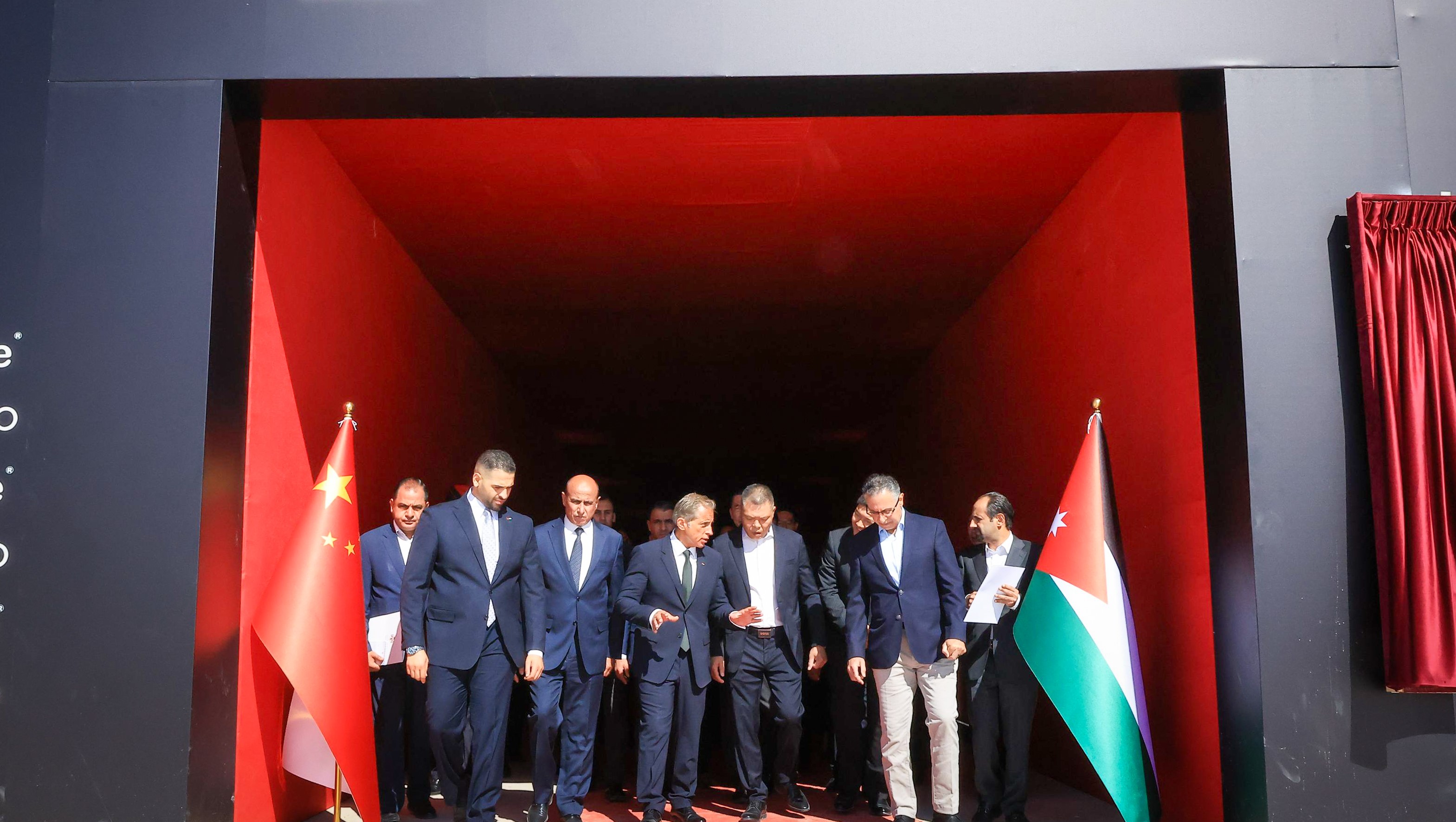
The Reayah programme's strong operational framework was established through a landmark agreement signed by Prime Minister Dr. Jafar Hassan and Her Royal Highness Princess Ghida Talal, Chairperson of the Board of Trustees of the King Hussein Cancer Foundation and Center. This high-level collaboration between the government and the King Hussein Cancer Center formed a foundational partnership for the initiative, showing the national importance and full support for Reayah. This partnership between the government and the King Hussein Cancer Center is a cornerstone of the programme's success, leveraging the expertise of a leading oncology institution with the reach and resources of the state.
The programme guarantees access to oncology care for specific demographic groups within Jordan, ensuring that the most vulnerable populations are protected. These groups include all Jordanians aged 60 and above, every child and adolescent under 19, and all beneficiaries of the National Aid Fund. This targeted approach ensures that those most susceptible to financial hardship or with specific medical needs are prioritized for full oncology services. The inclusion of these groups reflects a deep understanding of societal vulnerabilities and a commitment to social equity in health. For these defined populations, Reayah provides a critical safety net, ensuring that age or economic status does not prevent access to life-saving cancer treatment.
The programme's design focuses on ensuring full access to specialized medical services, particularly for cancer care. Its structure allows for a standardized approach to cancer treatment across the country, aiming to reduce disparities in care that might have existed previously. This partnership created a clear pathway for patients to receive necessary oncology services regardless of their initial location or socio-economic status, fostering a more equitable healthcare landscape. The collaborative governance model, involving both governmental and specialized medical institutions, allows for efficient resource allocation and expert oversight, contributing to the programme's effectiveness.
A significant aspect of the Reayah programme's implementation is the digitisation of the entire patient journey. This digital integration encompasses all stages, from initial eligibility checks to subsequent follow-up appointments. This full digital system is designed to streamline administrative processes, reduce bureaucratic hurdles, and significantly improve the efficiency of patient care delivery. The digital framework ensures that patient data and treatment plans are accessible, secure, and managed systematically, supporting the programme's overarching goal of equitable and timely medical intervention. This technological advancement not only enhances operational efficiency but also empowers patients with greater transparency and ease of access to their healthcare journey. The digitisation ensures continuity of care, reduces the likelihood of lost medical records, and facilitates better coordination among healthcare providers, ultimately leading to improved patient outcomes. The Reayah programme, through its innovative funding, citizen-centric delivery, and strong governance, serves as a benchmark for universal health coverage initiatives, demonstrating a replicable model for other nations striving to achieve similar healthcare equity and accessibility for their populations.