Jordan's exports of apparel and clothing accessories saw a modest increase in the first half of 2026, rising by 1.8 per cent year-on-year. The total value reached JOD 843.5 million, approximately $1.19 billion, during this period. This growth reflects the sector's performance in the initial six months of the year, indicating a steady, albeit slight, upward trend in international trade for these products. The figures show the ongoing importance of the apparel industry to the national economy.
Export Performance Details
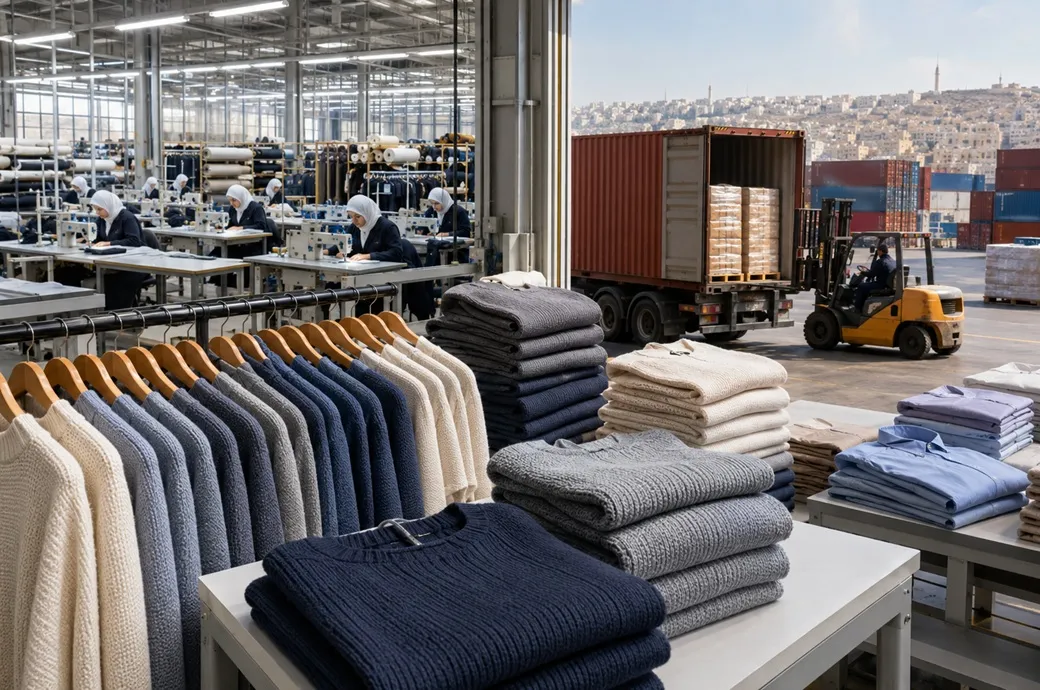
The Department of Statistics (DoS) reported that the total value of these exports in the first half of 2026 stood at JOD 843.5 million, an increase from JOD 828.7 million recorded in the corresponding period of 2025. This 1.8 per cent rise notes the sector's resilience and its capacity to maintain export volumes. A significant portion of this growth came from knitted or crocheted apparel. Exports of articles of apparel and clothing accessories, knitted or crocheted, experienced a 3.1 per cent rise, reaching JOD 717.1 million, up from JOD 695.5 million in the first half of the previous year. This sub-sector's strong performance was a key driver of the overall export growth. Conversely, the DoS indicated a decline in other categories. Woven apparel exports decreased by 3.1 per cent during the same reporting period, showcasing a shift in demand or production focus within the broader clothing industry. The differing performances between knitted and woven goods suggest evolving market dynamics.
Sector's Contribution to Economy
Clothing exports constituted a significant portion of Jordan's overall national exports during the first half of 2026. Data from the Department of Statistics (DoS) indicates that apparel and clothing accessories accounted for approximately 25.4 per cent of Jordan's total national exports, which reached JOD 3.32 billion between January and June 2026. This notes the sector's substantial role in the country's export economy, positioning it as a major contributor to foreign exchange earnings and economic stability. The consistent performance of clothing exports reinforces their strategic importance to Jordan's trade balance.
Within the clothing export category itself, knitted apparel was the dominant sub-sector. Knitted or crocheted articles of apparel and clothing accessories represented more than 85 per cent of Jordan’s total clothing exports during the six-month reporting period. This shows the particular strength and focus of the Jordanian apparel industry on knitted goods for its international markets, reflecting specialized manufacturing capabilities and established supply chains. This strong specialization suggests a competitive advantage in global markets for these specific product types.
Import Trends and Overview
Jordan's imports of apparel also saw an increase during the first half of 2026, according to official figures. Knitted and woven apparel imports collectively rose by 1.1 per cent over the reporting period. This growth in imports indicates continued activity within the domestic market for clothing goods, complementing the performance observed in the export sector. The Department of Statistics (DoS) data notes that while exports are a significant component of the industry, the import side also reflects specific trends in consumer demand or manufacturing inputs within the country. The modest rise in imports suggests a stable, though not rapidly expanding, domestic requirement for these categories of clothing, serving both local consumption and potentially as inputs for further processing. The balance between exports and imports is key for understanding the overall health of the sector.
Data Source and Context
The figures detailing Jordan's clothing exports and imports for the first half of 2026 originate from the Department of Statistics (DoS). This government agency is responsible for collecting, compiling, and disseminating official statistics related to various sectors of the Jordanian economy, including trade. The DoS provides full data on economic activities, offering insights into national performance. Its reports serve as primary sources for understanding trends in sectors such as manufacturing, trade, and employment within the Hashemite Kingdom. The reliance on DoS data ensures that the presented statistics are based on official government records and methodologies, providing a credible foundation for economic analysis and policy formulation. These official statistics are essential for stakeholders to gauge the economic trajectory of the country.