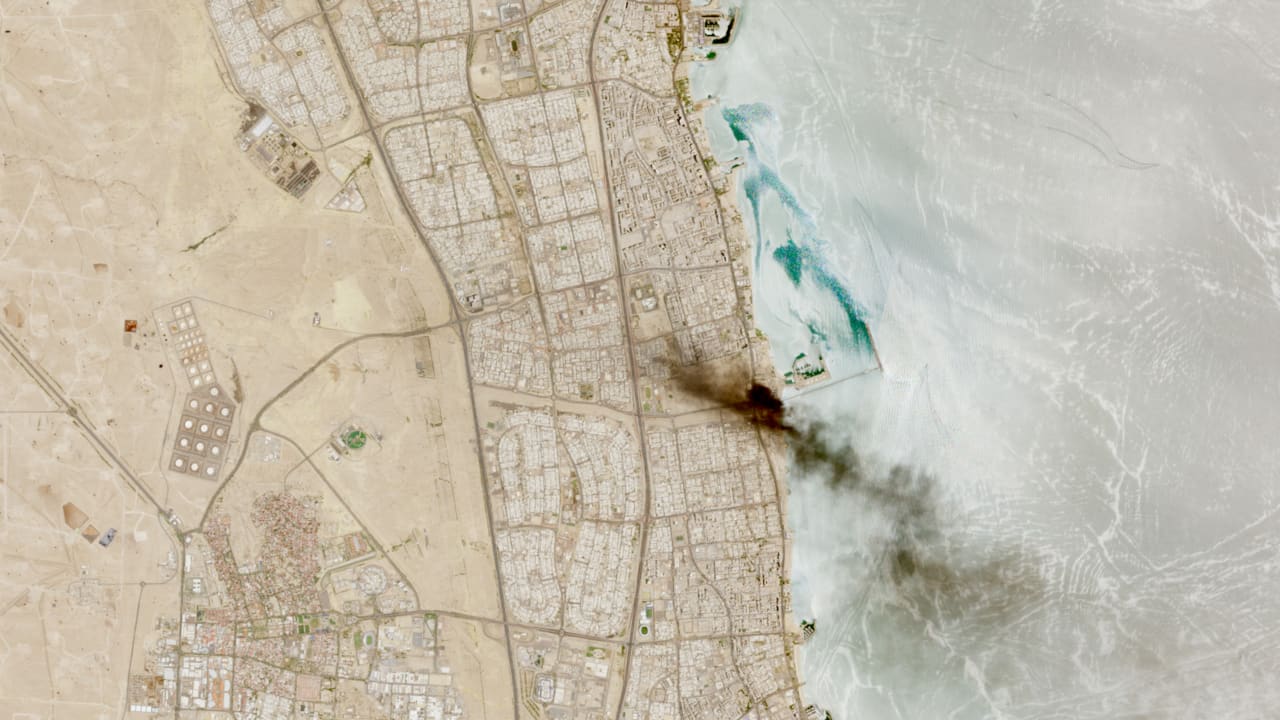
Jordan, which had largely avoided the direct onslaught Tehran aimed at places like Kuwait, Bahrain, and the United Arab Emirates since the Iran war began in February, has now seen a change in its status. Jordan's previous avoidance of attacks has shifted, indicating a new phase in the regional conflict. The country is now facing the kind of targeting seen in other Gulf nations, marking a significant escalation in the ongoing regional tensions. This development shows a broadening of the conflict's geographical scope, drawing in nations previously less directly impacted by the hostilities emanating from Tehran.
Initial Avoidance of Attacks
Jordan had previously avoided direct targeting by Iran since the conflict began in February, unlike other Gulf nations such as Kuwait, Bahrain, and the United Arab Emirates. For an extended period since the Iran war began in February, Jordan had largely been spared the kind of direct onslaught that Tehran had aimed at other nations in the Gulf region. The kingdom's strategic position and historical relationships contributed to this initial insulation from the direct hostilities that Tehran directed elsewhere. This period saw Jordan maintain a delicate balance, carefully navigating regional alliances and refraining from actions that might overtly draw it into the escalating regional war. The U.S. Presence in the region, including its strong security cooperation with Jordan, may have also deterred some immediate Iranian actions against Amman, providing a layer of security. However, Jordan's status has now shifted, indicating a new and more perilous phase in the regional conflict, challenging its long-held position of relative security amidst the turmoil.
Shift to Targeted Status
Jordan has recently experienced direct attacks, marking a definitive shift in its involvement in the regional conflict. A significant incident resulted in the deaths of three U.S. Soldiers, noting the severity of this new phase. The attack, which targeted U.S. Personnel stationed in the region, shows the changing dynamics of the war and Jordan's new designation as a target. This incident is a stark illustration of how Jordan's status of avoiding attacks has changed, moving it from a relatively safe haven to an active front in the broader conflict. Prior to these events, Jordan had largely been spared the direct hostilities that Iran had directed at other Gulf nations, such as Kuwait, Bahrain, and the United Arab Emirates since the war's commencement in February. The kingdom's previous avoidance of these attacks has now ended, signaling a new and more perilous phase in the ongoing conflict. The U.S. Military confirmed the casualties, further escalating tensions in the Middle East and prompting concerns about potential retaliatory actions. This shift has profound implications for regional stability and for Jordan's internal and external security posture.
Broader Regional Context
Jordan's strategic location positions it at a critical juncture in the Middle East, bordering several nations directly impacted by ongoing conflicts. The country shares extensive borders with Iran-allied Syria and Iraq, as well as Saudi Arabia, a significant regional rival of Iran. Its proximity to U.S. Military assets and personnel in the region has also made it a focal point in the broader geopolitical landscape. This geographical reality means that events in neighboring countries inevitably have repercussions for Jordan. While Kuwait, Bahrain, and the United Arab Emirates have long been targets in the regional power struggle, enduring various forms of pressure and direct attacks from Iranian-backed groups, Jordan's recent shift into the crosshairs indicates an expansion of the conflict's geographical scope. This development suggests a more integrated and widespread confrontation across the Gulf and Levant regions, where the lines between various conflicts are increasingly blurred. The involvement of Jordan directly in these hostilities complicates efforts for regional de-escalation and notes the interconnectedness of security challenges across the Middle East.