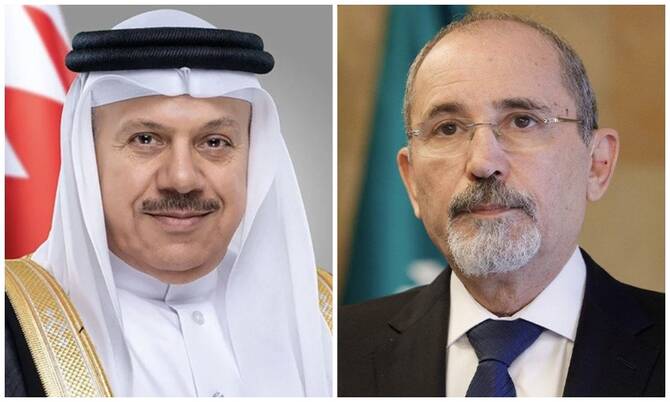
Jordan and Bahrain's foreign ministers reaffirmed their countries’ fraternal ties on Tuesday, showing a shared commitment to regional stability and bilateral cooperation. The two nations also welcomed a US-Iran stability pact, with Jordan describing the document as an important step toward restoring regional and international stability. This reaffirmation of strong diplomatic bonds comes amid ongoing regional tensions that have significantly impacted the Middle East. The discussions between the two foreign ministers noted the urgent need for concerted efforts to de-escalate conflicts and foster a more secure environment.
Bilateral Cooperation and Regional Dialogue
During their meeting, His Excellency Foreign Minister Ayman Safadi of Jordan and His Excellency Foreign Minister Abdullatif bin Rashid Al-Zayani of Bahrain engaged in full discussions regarding recent developments and their broad implications for regional and international peace and security. Their conversation also focused on strengthening Arab cooperation across various sectors and advancing the mutual interests of both the Hashemite Kingdom of Jordan and the Kingdom of Bahrain. Both nations have confronted significant regional security challenges and have been subjected to Iranian attacks since March, making these diplomatic exchanges particularly pertinent. The ministers emphasized the importance of unified Arab action to address these pressing issues and to protect the sovereignty and stability of their respective countries. The dialogue showed a shared vision for a more peaceful and prosperous region, free from external interference and aggression.
Escalating Regional Conflict
The current escalation of regional conflict began on Feb. 28, following actions by the United States and Israel. These actions resulted in the deaths of top Iranian regime officials, including Ayatollah Ali Khamenei. During this period, various vital military and civilian sites within Iran were also bombed, marking a significant increase in hostilities. In response to these strikes, Tehran launched a series of ballistic missiles and drones against at least 10 countries across the region, including direct attacks on Israel. Iran obstructed energy tankers from navigating the key Strait of Hormuz, a vital international waterway for global energy supplies. Last week, Iran further attacked both Jordan and Bahrain, targeting their territories in a clear demonstration of escalating aggression. These actions by Iran were reportedly taken in retaliation for the US strikes, contributing to a dangerous cycle of violence and counter-violence in the Middle East. The widespread nature of these attacks has raised alarms globally about the potential for broader regional destabilization.
Pact for Stability
In a significant diplomatic development, Jordan and Bahrain welcomed a memorandum of understanding announced this week between the United States and Iran. The two countries stated their belief that the US-Iran memorandum of understanding would pave the way for a permanent ceasefire in the region, offering a much-needed pathway to de-escalation. The pact is expected to facilitate the opening of the Strait of Hormuz for international navigation, ensuring the free flow of maritime traffic and vital energy shipments. Beyond immediate conflict resolution, the agreement is also anticipated to initiate detailed negotiations concerning Tehran’s nuclear program, addressing long-standing international concerns regarding its scope and peaceful nature. Bahrain specifically commended the extensive efforts made by Pakistan to mediate the Memorandum of Understanding between the United States and Iran, acknowledging the key role played by Pakistani diplomacy in reaching this potential breakthrough. The hope is that this pact will serve as a foundational step towards full peace and security in the Middle East.