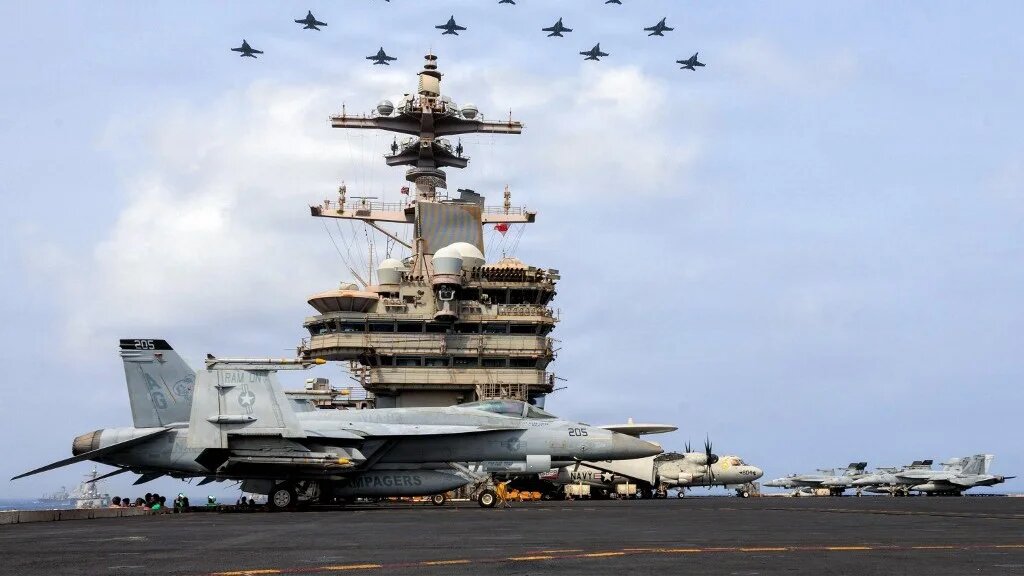
Iran's Revolutionary Guards claimed they destroyed "several US refuelling aircraft and fighter jets" and caused "serious damage to many more" in Jordan. The Guards' statement attributed these actions to recent US strikes. Concurrently, Jordan's military reported that its air defenses shot down three Iranian missiles, which had entered Jordanian airspace. This interception by Jordanian air defenses notes the increasing tension and direct military engagements in the region. Separately, Iranian state television indicated that road and railway infrastructure in Hormozgan province was targeted, resulting in the deaths of at least seven people. This marked a significant escalation, as vital transportation networks were directly impacted. The targeting of essential infrastructure in Hormozgan province, a critical region for Iran's transportation network, signifies a direct hit on the country's logistical capabilities and economic arteries.
Iranian Retaliation Claims and Regional Fallout
Iran's Revolutionary Guards claimed they attacked a US special operations command center at al-Tanf in Syria. This alleged strike on the al-Tanf base, a strategic location for US forces, shows the breadth of Iran's claimed retaliatory actions. Concurrently, Tehran launched missile attacks against US-allied nations, including Qatar. These attacks on regional allies signal a widening scope of conflict beyond direct US-Iran confrontations. Iranian officials have stated that US strikes have killed dozens of people and wounded hundreds of others, providing a grim assessment of the human cost of the ongoing military actions from their perspective. These claims from Iranian officials highlight a significant discrepancy in reported casualties compared to figures released by other sources, emphasizing the contested nature of information in the ongoing conflict. The assertion of "dozens killed and hundreds wounded" by Iranian officials paints a stark picture of the perceived impact of US military operations from Tehran's vantage point.
Separately, missile attacks launched by Tehran damaged a power and water desalination plant in Kuwait. This targeting of critical civilian infrastructure in Kuwait represents a severe escalation, impacting essential services for the population. The damage to the power and water desalination plant in Kuwait is particularly concerning as it directly threatens the provision of fundamental utilities to civilians, potentially leading to widespread humanitarian consequences. Despite the regional escalations and the direct interception of incoming projectiles, Jordan's military reported no casualties or damage from its recent missile incident, where its air defenses successfully intercepted Iranian missiles. The absence of casualties in Jordan, despite the missile threat, indicates the effectiveness of their defensive measures.
US Strikes Across Iran
US strikes on multiple locations in Iran resulted in the deaths of at least eight people. These fatalities show the lethal nature of the ongoing military operations. The United States expanded its airstrike campaign, targeting more bridges and electrical equipment within the country. This strategic targeting of infrastructure aims to disrupt Iranian logistical capabilities and potentially exert economic pressure. Southern coastal cities and islands in Iran came under US fire as part of these operations, indicating a broad geographical reach for the American military actions. The expansion of the airstrike campaign to include bridges and electrical equipment suggests a deliberate effort by the United States to degrade Iran's national infrastructure, impacting both military logistics and civilian life.
Explosions were reported in several Iranian areas, including Ahvaz, Qeshm, Bushehr, Dashti, Bostan, Sirik, and Bandar-e Lengeh. The widespread nature of these reported explosions illustrates the extensive scale of the US bombardment across various provinces. In Bandar-e-Khamir, three bridges situated near the city sustained strikes, further detailing the impact on transportation infrastructure. The Tapeh Allah Akbar neighbourhood in Bandar Abbas was also hit during the US actions, indicating that urban areas are not immune to the conflict. Further reports indicated an attack on an airport in Iranshahr, which caused damage and led to power outages in the vicinity, disrupting air travel and local services. Air strikes were additionally reported on Kish Island, a popular tourist destination, resulting in temporary disruptions to its power supply. These infrastructure attacks highlight a deliberate strategy to cripple key Iranian assets. New casualties were reported following Friday's strikes, adding to the growing number of victims in the escalating conflict. The reports of new casualties after Friday's strikes show the continuous human toll of the intensified military actions, contributing to the rising overall death count.
Context and Regional Impact
The interim ceasefire, established last month, has collapsed, signaling a return to full-scale hostilities after a brief period of de-escalation. This breakdown of diplomatic efforts shows the deep-seated tensions that continue to fuel the conflict. The collapse of the interim ceasefire, which had been agreed upon just last month, marks a significant setback for any prospects of de-escalation and signals a decisive return to overt conflict. Separately, the US military announced that it completed a withdrawal from its al-Tanf base in Syria during February. This withdrawal from a key strategic outpost could have implications for regional power dynamics and the US military's footprint in the Middle East. Further regional incidents include reports of explosions heard in both Irbil and Sulaymaniyah, cities located in northern Iraq. These incidents suggest that the conflict's ripple effects are extending beyond the immediate borders of Iran and Jordan, impacting neighboring countries. An official confirmed that an attack in Iraq specifically targeted the Iranian Kurdish dissident group Komala, resulting in the deaths of at least nine people and leaving others wounded. This attack notes the involvement of non-state actors and proxy conflicts within the broader regional instability. Amidst these developments, US President Donald Trump issued threats regarding the potential targeting of infrastructure, indicating a willingness to further escalate the scope and intensity of the conflict. These threats suggest that the US may continue to expand its targets to include civilian infrastructure, a move that could lead to widespread humanitarian consequences. The ongoing events paint a picture of a rapidly deteriorating security situation across the Middle East, with significant implications for international stability.