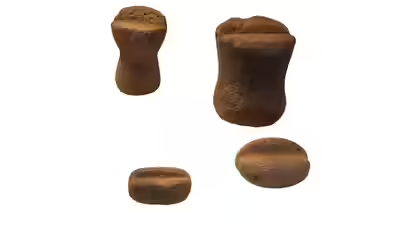
Charred flatbread remains discovered in 2018 in Jordan indicate that Late Epipalaeolithic people were baking before the advent of agriculture. The findings suggest a reevaluation of the timeline for complex cooking practices, previously thought to have emerged only in the post-agricultural period. These ancient food crumbs were found amongst ashes at the Shubayqa 1 excavation site, located in Jordan's Black Desert. The discovery challenges long-held assumptions that sophisticated culinary techniques, such as bread making, were a consequence of settled farming communities. According to researchers, the presence of flatbread predates the widespread adoption of agriculture in the Levant region, offering new insights into the dietary habits and technological capabilities of hunter-gatherer societies.
The remarkable discovery of these charred flatbread remains from Jordan in 2018 fundamentally reshaped archaeological understanding. It provided compelling evidence that Late Epipalaeolithic people were engaged in baking long before the widespread adoption of agricultural practices. This revelation directly contradicts the previously established timeline, which largely confined complex cooking methods to the era following the agricultural revolution. The charred food crumbs, meticulously preserved amongst ashes, were unearthed at the Shubayqa 1 excavation site, nestled within the arid expanse of Jordan's Black Desert. This particular location proved to be a treasure trove of information, offering a unique window into prehistoric human activity. The implications of this find are profound, as it directly challenges the long-held assumption that advanced culinary techniques, such as the intricate process of bread making, were exclusively developed by, or were a direct consequence of, settled agricultural communities. Instead, the evidence from Shubayqa 1 suggests a much earlier origin for these practices, placing them firmly within the domain of hunter-gatherer societies. The presence of flatbread at such an early date, significantly predating the widespread adoption of agriculture across the Levant region, offers invaluable new insights into the dietary habits, technological capabilities, and overall ingenuity of these prehistoric groups.
The Shubayqa 1 Excavation
A finding in the Black Desert of northeast Jordan changed the long-held concept that complex cooking practices emerged only after agriculture. These ancient crumbs, discovered at the Shubayqa 1 excavation site, date back to approximately 14,400 years ago. This specific dating places the culinary activities at Shubayqa 1 far earlier than the widely accepted timeline for the beginning of farming in Southwest Asia. The discovery at Shubayqa 1 directly redefines the understanding that complex cooking existed solely in the post-agricultural period. It demonstrates that advanced food preparation was not an exclusive domain of later, settled societies.
The residents of Shubayqa 1 belonged to the Natufian culture, a group of late hunter-gatherers in the Levant region. The Natufian culture did not practice farming, nor did they possess farming technology such as plows or domesticated plants. This key detail shows the significance of the flatbread discovery; it means that these people were producing a sophisticated food item without the agricultural infrastructure previously deemed necessary. This challenges previous assumptions that bread-making and similar sophisticated culinary techniques were exclusive to settled agricultural communities. Instead, it notes the innovative capacities of hunter-gatherer societies. The discovery provides new insights into the dietary habits and technological capabilities of hunter-gatherer societies, indicating advanced food preparation was possible without agriculture. The Natufian people, known for their semi-sedentary lifestyle and exploitation of wild cereals, clearly possessed the knowledge and skills to process these resources into complex foods. Their ability to create flatbread, a food item often associated with the stability and surplus of agricultural societies, pushes back the timeline for such culinary achievements by millennia. This finding forces a reconsideration of the sequence of human development, suggesting that certain technological and culinary advancements may have preceded, rather than followed, the agricultural revolution.
Challenging Historical Narratives
For many years, the established concept was that people started agriculture first, then developed baking. However, the discovery of ancient flatbread remains at Shubayqa 1 in Jordan offers a different perspective. This period, approximately 14,400 years ago, is much earlier than the time when farming started in Southwest Asia. The findings suggest that the development of complex food preparations, such as baking, predates the agricultural revolution in the region. This evidence from Shubayqa 1 fundamentally redefines the understanding that complex cooking existed solely in the post-agricultural period. It provides a tangible example of advanced food processing occurring within a hunter-gatherer context, challenging a long-held paradigm in archaeology and anthropology.
The presence of flatbread before widespread farming challenges the assumption that advanced culinary techniques were solely a product of settled agricultural communities. Instead, it suggests that a fascination with bread and complicated food could have been a driving force behind humans becoming farmers. This hypothesis shifts the understanding of early human innovation, positioning culinary development as a potential catalyst for, rather than a consequence of, agricultural practices. The desire to produce and consume such appealing and nourishing foods might have incentivized the systematic cultivation of wild cereals, leading gradually to agriculture. This alternative narrative suggests that the quest for diverse and palatable food sources played a more active role in shaping human history than previously acknowledged. The discovery provides new insights into the dietary habits and technological capabilities of hunter-gatherer societies, indicating advanced food preparation was possible without agriculture. It shows the ingenuity and adaptability of these early human groups, who, despite lacking domesticated crops and farming tools, were capable of complex food processing. This profound rethinking of the relationship between food, technology, and societal development opens new avenues for research into the origins of agriculture and the evolution of human civilization. The evidence from Shubayqa 1 compels researchers to consider a more nuanced and interconnected pathway for these critical transitions in human history.
Unearthing Ancient Baking Techniques
Scientists examined the microscopic structure and small bubbles preserved in the burned fragments. This detailed analysis was key for understanding the nature of the ancient food remains. Researchers then compared these preserved patterns to modern experimental food created from wild cereals, a technique often employed in archaeobotanical studies to identify ancient plant-based foods. This comparative approach allowed scientists to establish a clear baseline for identifying similar characteristics in the archaeological samples, ensuring the accuracy of their interpretations. These comparisons were vital in confirming the identity and processing methods of the ancient material.
Tests conducted on the ancient fragments ultimately revealed they were formed by a special baking procedure involving the creation of dough. This finding implies a more sophisticated culinary process than simply roasting grains. The ancient people of Shubayqa 1, a Natufian site, were found to have ground wild cereals. This initial step of grinding wild cereals was essential for transforming raw plant material into a usable flour. They subsequently used these ground cereals to make dough, which they then baked into flatbread over an open fire. The entire sequence—from grinding to dough creation to baking—demonstrates a complex understanding of food chemistry and thermal processing. This process demonstrates advanced food preparation techniques among hunter-gatherer communities long before the advent of agriculture. The careful preparation of dough, rather than merely cooking whole grains, indicates a deliberate and skilled approach to food production. This level of culinary sophistication points to a deep knowledge of available plant resources and the methods required to maximize their nutritional and palatability potential. The presence of these specific baking techniques further solidifies the argument that complex foodways were not exclusive to agricultural societies.
Broader Implications for Humanity
The discovery became an important reference point in archaeology, particularly for researchers studying ancient plant-human interactions. The charred flatbread remains from Jordan offer new perspectives on the development of human diet and technology. This finding provides critical data for understanding how early human societies processed and consumed plant resources before the establishment of agriculture. It challenges previous assumptions about the timeline for complex food preparation techniques. The evidence from Shubayqa 1 necessitates a re-evaluation of the traditional narrative surrounding the emergence of sophisticated culinary practices, placing them much earlier in human history.
The ancient bread fragments from Shubayqa 1 serve as a tangible link to the culinary practices of Late Epipalaeolithic people. Researchers studying the intricate relationship between early humans and the plant kingdom now have a clearer benchmark for assessing the sophistication of prehistoric foodways. The find indicates that advanced dietary practices were not solely a consequence of agricultural sedentism but may have spurred its development. The ability of hunter-gatherers to produce such complex foods suggests a level of ingenuity and resourcefulness that might have laid the groundwork for the eventual transition to farming. "For researchers studying ancient plant-human interactions, the charred bread from Jordan is an important reference point," stated an article, emphasizing the significance of the discovery in reshaping archaeological understanding. This discovery provides compelling evidence that the human relationship with food, and particularly with processed plant foods, was far more complex and evolved in the Late Epipalaeolithic than previously understood. It notes the potential for culinary innovation to act as a driver of broader societal change, rather than merely a byproduct. The implications extend beyond just food history, touching upon our understanding of early human cognition, technological development, and the very origins of settled life. The humble flatbread from Shubayqa 1 thus stands as a powerful testament to the enduring human capacity for creativity and adaptation, long before the dawn of agriculture.