The United States has escalated its military posture in the Middle East, increasing the number of refueling aircraft deployed to Israel and conducting its twelfth consecutive night of airstrikes against targets in Iran. These actions come as global oil prices have reached a seven-week high, reflecting heightened tensions in the region. The U.S. Maintains a substantial military presence, with approximately 50,000 forces currently stationed across the area. This significant deployment shows the strategic importance the U.S. Places on regional stability. The continuous operations and troop deployments show the U.S. Focus on regional stability amid ongoing conflict, signaling a strong response to the evolving security landscape. The decision to increase refueling aircraft in Israel directly supports potential long-range operations and enhances the operational reach of U.S. Air assets in the theatre. This move is a clear indication of the U.S.'s readiness to support its allies and project power in response to escalating threats.
Iran's Retaliation and Regional Attacks
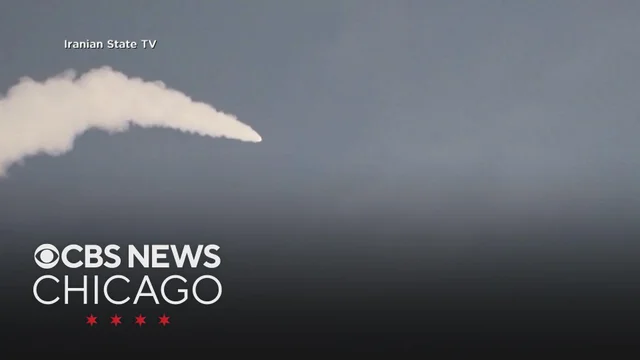
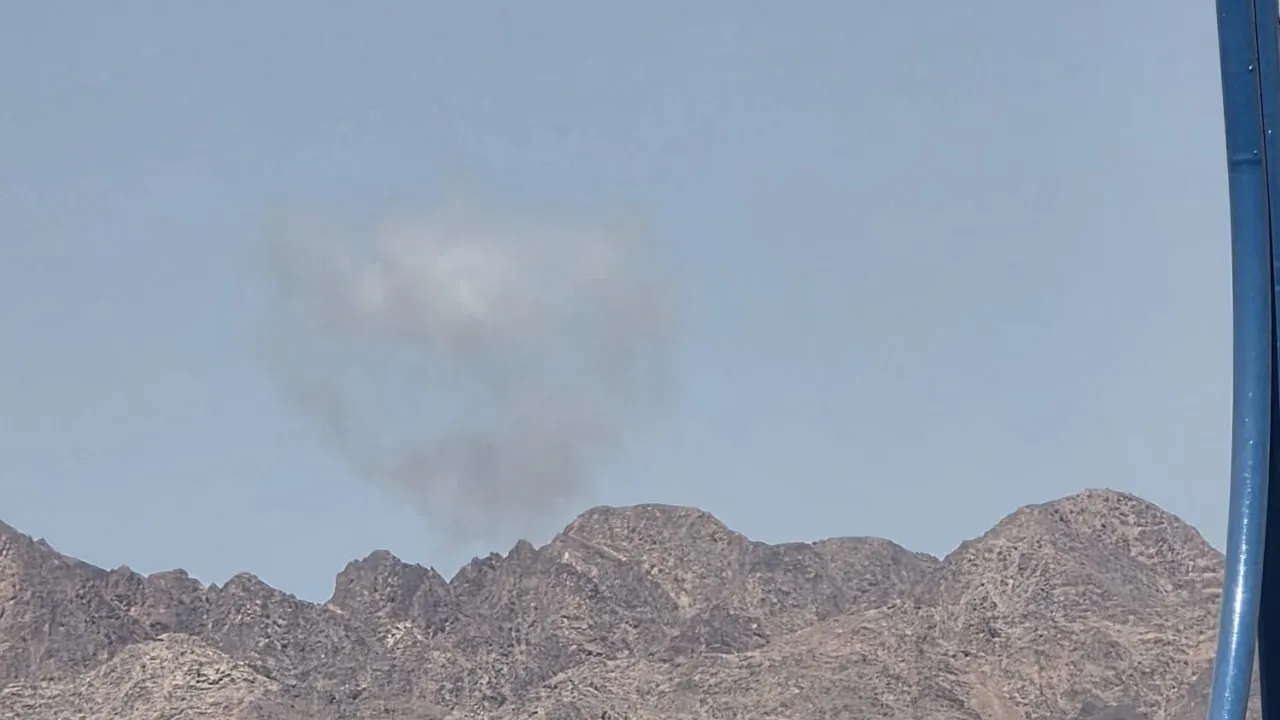
The regional situation saw a significant escalation with direct actions from Iran. Iran fired four missiles and six drones at Jordan on Thursday morning, marking a direct military engagement. The Jordanian army successfully intercepted three of the four missiles launched by Iran, demonstrating their defensive capabilities. The fourth missile, while not intercepted, fell in an area empty of residents within Jordan, preventing casualties or significant damage. This incident followed earlier defensive actions by Jordan’s forces, who had previously downed six Iranian drones on Wednesday evening, noting a sustained pattern of aerial incursions.
In a separate but coordinated series of actions, Iran's army claimed it launched heavy strikes with drones at three U.S. Bases in Kuwait on Thursday. The Iranian military stated its targets included specific infrastructure points: ammunition depots and logistics storage facilities at Camp Doha, fuel storage tanks at Ali Al Salem Air Base, and an ammunition depot at Camp Arifjan in Kuwait. These claims suggest a deliberate attempt to target U.S. Military assets and logistics in the Gulf region. In response to the detected threats, Kuwait's army confirmed it was actively working to intercept Iranian drones as they approached its airspace, indicating a heightened state of alert and defensive operations. The Kuwaiti army's rapid response notes the immediate and tangible threat posed by these drone attacks to regional security.
Concurrently, air raid sirens sounded in Bahrain, indicating a potential threat in that nation and suggesting a broader, coordinated campaign of intimidation or attack across multiple Gulf states. Amidst these regional developments, the main oil contract Brent North Sea continued climbing toward $100 a barrel on Thursday, reflecting market reactions to the escalating tensions and the perceived risk to oil supply routes. The simultaneous incidents across Jordan, Kuwait, and Bahrain show the widespread nature of the current regional instability and the interconnectedness of these security challenges.
Maritime Conflict and Economic Impact
The escalating tensions have profoundly impacted maritime navigation and global energy markets. Iran's Houthi allies in Yemen are actively attacking tankers traversing the Red Sea, directly contributing to increasing maritime instability. This campaign of attacks has led to significant disruptions in one of the world's most critical shipping lanes. As a direct consequence of these ongoing tensions, traffic through the Strait of Hormuz, another vital choke point for global oil supplies, has slowed significantly, reaching what analysts describe as a crawl. This slowdown has immediate economic repercussions for international trade and energy supply chains.
Further illustrating the direct threat to shipping, a vessel belonging to a Saudi company, the ENCELIA, was struck while transiting the Red Sea. The ENCELIA experienced a fire at its bow following the incident, a clear indication of a direct hit, but fortunately, all crew members onboard were reported safe. This incident notes the immediate dangers faced by commercial shipping in the region.
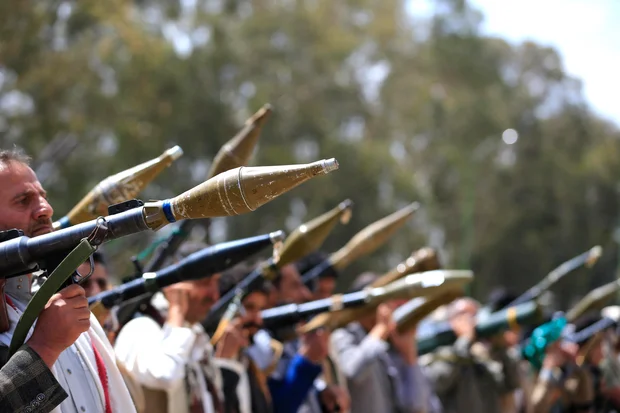
Adding to the maritime disruptions, Iran's Revolutionary Guard announced it had blocked three oil tankers from passing through the Strait of Hormuz. The Revolutionary Guard issued a stark warning, stating, "The Strait of Hormuz is under our control... And any ship that is deceived by the US and intends to pass without coordination with the Islamic Republic of Iran will suffer the same fate." This declaration shows Iran's intent to exert control over the vital strait and challenge international shipping norms. In a separate but related development, Yemen's Houthi rebels claimed responsibility for attacking two commercial oil tankers in the Red Sea on Wednesday, further cementing their role in the maritime conflict.
The U.K. Maritime Trade Operations Centre (UKMTO) received independent reports of a tanker hit by an 'unknown projectile' off the coast of Saudi Arabia in the Red Sea, which caused an onboard fire. This incident corroborates the pattern of attacks and the severe risks to vessels. The Houthis had previously issued threats of a maritime embargo against Saudi Arabia, making these attacks consistent with their stated intentions. In response to the escalating risks and the explicit threats, at least four ships heading toward the Bab al-Mandab strait have reportedly executed U-turns to avoid the waterway, demonstrating the immediate and tangible impact on shipping routes and the fear among commercial operators of traversing the dangerous waters. The cumulative effect of these maritime incidents has been a significant surge in global oil prices.
US Military Response and Strategy
In response to the multifaceted regional threats, the United States has maintained a strong military posture and engaged in sustained operations. American B-1 bombers have been tracked departing from bases in the United Kingdom, indicating their deployment to the Middle East theatre as the United States continues its military operations. These long-range strategic bombers are capable of delivering precision-guided munitions and represent a significant projection of U.S. Air power. U.S. Forces concluded their twelfth consecutive night of strikes against Iran around 10:30 p.m. ET on Wednesday, marking a prolonged and consistent campaign of military action. These U.S. Airstrikes on Iran have been relatively limited in scope, specifically targeting weapons and military infrastructure rather than broader targets.
U.S. Central Command provided details on the nature of these targeted strikes, confirming that its operations focused on 'maritime capabilities, missile and drone storage facilities, coastal surveillance sites, and air defense assets'. This strategic focus aims to degrade Iran's ability to project power and threaten regional stability. A statement from U.S. Central Command further asserted that these actions "further degrade Iran's ability to attack civilian mariners and commercial vessels," directly linking the military operations to the protection of international shipping. The ongoing military responses show the U.S. Strategy to counter threats in the region, particularly those affecting maritime navigation and the free flow of commerce. The sustained nature of these strikes, now in their twelfth consecutive night, demonstrates a determined effort by the U.S. To impose costs on Iran for its actions and those of its proxies.
Official Statements and Policy
The economic repercussions of the conflict have been immediate and pronounced. Brent crude prices surged by as much as 5%, exceeding $98 a barrel, after Houthi rebels claimed responsibility for striking two Saudi oil tankers in the Red Sea. This sharp increase reflects the market's sensitivity to disruptions in oil supply from the Middle East.
Secretary of State Marco Rubio described President Trump's policy on Iran as "a head for an eye," stating, "The president's policy is 'a head for an eye.' I mean, honestly, that's what it's going to be." This statement indicates a retaliatory approach to Iranian aggression, suggesting that any hostile action will be met with a proportionate, or even escalated, response. President Trump further elaborated on this policy by threatening to "bomb and destroy" an Iranian bridge or power plant for every new attack by Iran on a ship in the Strait of Hormuz. This strong rhetoric signals a significant escalation in potential U.S. Responses to Iranian actions in the critical waterway, moving beyond military infrastructure to potentially target civilian infrastructure.
Rubio further noted the Houthis' involvement, stating that "The Houthis largely were smart and stayed out of all this throughout the conflict … but they now apparently have gotten themselves suckered into this, going after Saudi Arabia and their ships." This assessment suggests that the Houthi rebels, by targeting Saudi shipping, may have inadvertently drawn themselves deeper into the broader regional conflict and exposed themselves to greater risks. The convergence of these military actions, economic impacts, and strong political rhetoric paints a picture of a rapidly intensifying conflict with significant regional and global implications. The U.S. Policy, as articulated by its leaders, indicates a firm stance against perceived Iranian aggression and a readiness to employ military and economic leverage to protect its interests and those of its allies in the Middle East.