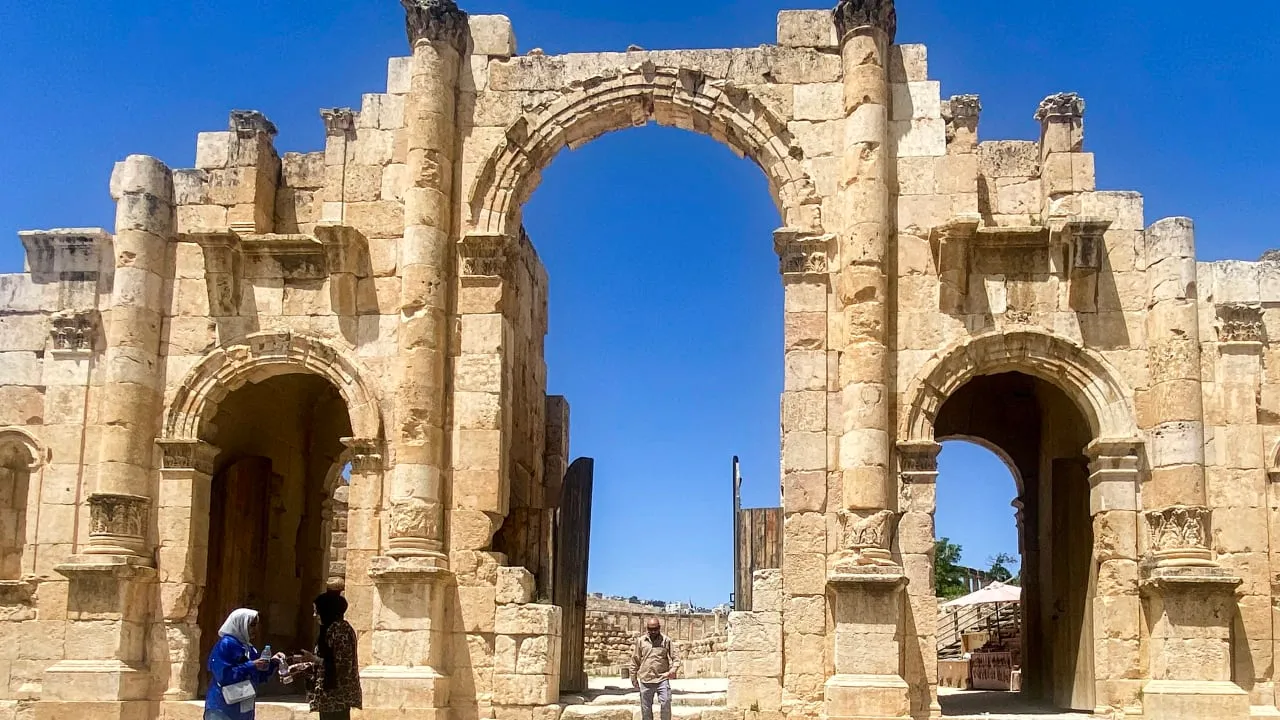
Tourism in Petra, Jordan, has been severely impacted by the ongoing US-Israel conflict involving Iran, leading to a sharp decline in visitors since the escalation of hostilities in February. This regional instability has created a challenging environment for Jordan's vital tourism sector. Jordan’s high tourism season was just beginning when the United States and Israel attacked Iran in late February, according to reports. This military action marked a significant turning point, immediately affecting travel sentiment and visitor numbers. Iran subsequently fired nearly 300 missiles and drones toward Jordan during a five-week conflict, which were mostly intercepted but created an immediate chilling effect on the sector. The aerial attacks, even though largely thwarted, showed the heightened tensions in the region and contributed to a perception of insecurity among potential travelers.
Petra, a UNESCO World Heritage site renowned for its ancient Nabataean architecture carved into rose-red cliffs, attracted over 112,000 foreign tourists in January and February of early 2025. These figures indicated a promising start to the year for the iconic destination. However, visitor numbers dropped significantly to between 28,000 and 30,000 by March and April, marking a decrease of over 80,000 visitors in just two months. This precipitous decline notes the immediate and severe consequences of the regional conflict on one of Jordan's most important tourist attractions. The sharp drop-off in arrivals has sent ripples throughout the local economy, which is heavily reliant on the influx of international visitors.
Economic Fallout for Petra
The economic repercussions of this downturn are profound and widespread within Petra. Many souvenir sellers in Petra have reported a staggering 90% drop in sales, indicating the severity of the crisis for local businesses. This dramatic reduction in revenue makes it exceedingly difficult for these small enterprises to sustain operations. Several hotels in the area are considering shutting down due to high cancellation rates following the recent decline in tourism. The prospect of hotel closures not only means job losses but also a significant blow to the infrastructure supporting the tourism industry in Petra. The reduced occupancy rates and lack of new bookings have made it economically unfeasible for some establishments to remain open.
Hussein al-Budool, a camel keeper, noted that tourism to Petra is currently at 1 percent of its previous levels, illustrating the near-complete standstill of activity. Al-Budool continued to work in Petra throughout March and April, despite the significant slowdown in visitors, a testament to the dedication of local workers even in the face of dwindling income. The once-bustling site now sees only a fraction of its usual crowds. Approximately 85 percent of Jordan's local population of about 40,000 people relies on tourism for their livelihoods, making the current crisis an existential threat to the community. This high dependency means that the economic struggles of the tourism sector directly translate into hardship for the majority of Petra's residents.
Petra recorded one million visitors in 2022, showcasing its immense appeal as a global tourist destination in a more stable period. However, tourist numbers for Petra dropped about 70 percent in late 2023 after the war in Gaza began, indicating that the current crisis is an exacerbation of an already challenging situation. The ongoing regional conflicts have created a prolonged period of uncertainty for the tourism sector. In a normal year, camels greeting visitors at Petra would have little rest, constantly engaged in ferrying tourists through the ancient city, indicating the current stark contrast in activity. The sight of idle camels shows the dramatic change in the rhythm of life and commerce in Petra.
The Petra park commission has responded to the crisis by deferring rent for local shops and restaurants, offering a key lifeline to businesses struggling with minimal income. This measure provides immediate financial relief, allowing businesses to retain funds that would otherwise go towards overheads. The commission also asked the government and central bank to defer loan payments for businesses affected by the downturn. Such deferrals are vital for preventing widespread bankruptcies and preserving the economic fabric of the community. To attract visitors, the Petra commission scheduled an electronic music festival at the archaeological site for the current month. This initiative aims to generate renewed interest and draw both domestic and international tourists, showcasing the site's adaptability and cultural vibrancy. A similar music festival held last year generated $1.5 million over two days, noting the potential economic impact of such events and the commission's hope to replicate that success.
Broader Tourism Impact and Causes
The challenges faced by Petra are emblematic of a broader crisis affecting Jordan's entire tourism sector. Regional tensions and security concerns are reportedly causing tourists to rethink their travel plans to Jordan. The perception of instability, even if the country itself remains safe, is a powerful deterrent for international travelers. Many airlines have canceled or altered flights to the country, citing safety concerns, according to reports. This reduction in air connectivity directly impacts visitor arrivals, making travel to Jordan more difficult and less appealing. Travel advisories issued by various governments have also raised concerns for potential visitors, leading some to choose alternative destinations perceived as safer or more stable. These advisories, while often reflecting caution, can have a significant chilling effect on tourism.
Tourism in Jordan has consequently dried up at some sites due to wars in the Middle East over the past two months. This widespread impact extends beyond Petra to other popular destinations across the country. Visitor arrivals from Europe dropped 27 percent in March compared with the same period last year, indicating a significant decline from a key source market. More than 6,000 flights were canceled in March and April, with several international airlines suspending flights until the fall. These mass cancellations severely limit access to the country and reflect the airlines' assessment of the demand and security situation. Tour operators have also canceled trips through the end of May, further compounding the problem and leaving many tour guides and associated businesses without work. As a result of these cancellations and concerns, there were no swimmers on the Jordanian side of the Dead Sea on one morning last month. This lack of activity is highly unusual, as predominantly Christian tourists normally pack the Dead Sea region around Easter, a period that typically sees a surge in religious tourism. The absence of visitors during such a peak season shows the depth of the crisis.
Jordan's Economic Vulnerability
Jordan's economy is highly dependent on its tourism sector, which accounts for 14 percent of the country's Gross Domestic Product (GDP). This substantial contribution notes tourism's critical role in the nation's overall economic health. The sector directly employs 60,000 people, providing direct livelihoods to a significant portion of the workforce. With an additional 300,000 individuals relying on tourism for their livelihoods across Jordan, the ripple effect of a downturn is felt by a vast segment of the population, including taxi drivers, artisans, food suppliers, and many others in the service industry. In 2024, the nation welcomed over 7 million visitors, generating $7.8 billion in revenue, figures that show the sector's immense capacity to contribute to the national economy when conditions are favorable. The Jordanian government derives a significant portion of its income from tourism, with up to 18 percent of its overall revenue coming from the industry. This makes the government's fiscal stability directly linked to the health of the tourism sector.
However, the country faces economic challenges exacerbated by external factors, making it particularly vulnerable to disruptions in tourism. Jordan imports 95 percent of its fuel, making it highly susceptible to fluctuations in global energy markets. This heavy reliance on imported energy means that geopolitical events impacting oil prices can have a severe effect on the national budget and the cost of living. In March alone, higher oil prices cost the Jordanian government an additional $200 million, demonstrating the substantial financial burden imposed by external market forces. This reliance on imported fuel adds to the financial pressures on the government, particularly as tourism revenues decline, creating a dual challenge for fiscal management. The interdependence of various sectors with tourism shows the broad economic impact of the current downturn, as reduced tourist spending affects everything from local markets to national infrastructure projects.
Official Response and Outlook
In navigating these complex regional dynamics, Jordan cooperates closely with the United States militarily and maintains a longstanding peace treaty with Israel. These alliances are key components of Jordan's foreign policy and security strategy. Jordan also hosts an important hub for the U.S. Air Force at Muwaffaq Salti Air Base, which further solidifies its strategic relationship with the United States. These partnerships, while providing security, also place Jordan in a sensitive geopolitical position amidst regional conflicts. In response to the tourism decline, the government initiated a campaign, “Our Jordan is Heaven,” to encourage domestic tourism. This campaign aims to mitigate some of the losses from international visitors by encouraging Jordanians to explore their own country, thereby supporting local businesses and preserving jobs.
The impact of the crisis is also felt by individual travelers. Economist Natalia Yashnk had planned to cancel her trip to Jordan, reflecting the widespread hesitation among potential visitors. Though her original April 14 flight was canceled, a common occurrence given the airline disruptions, she secured another flight three days later. Upon arrival, she noted, "But we are lucky to be here with so few people," a sentiment that, while perhaps appreciating the reduced crowds, also notes the stark reality of the tourism slowdown. The future of Jordan's tourism sector remains contingent on the de-escalation of regional tensions and a restoration of confidence among international travelers. Until then, the industry and the millions who depend on it will continue to face significant challenges.