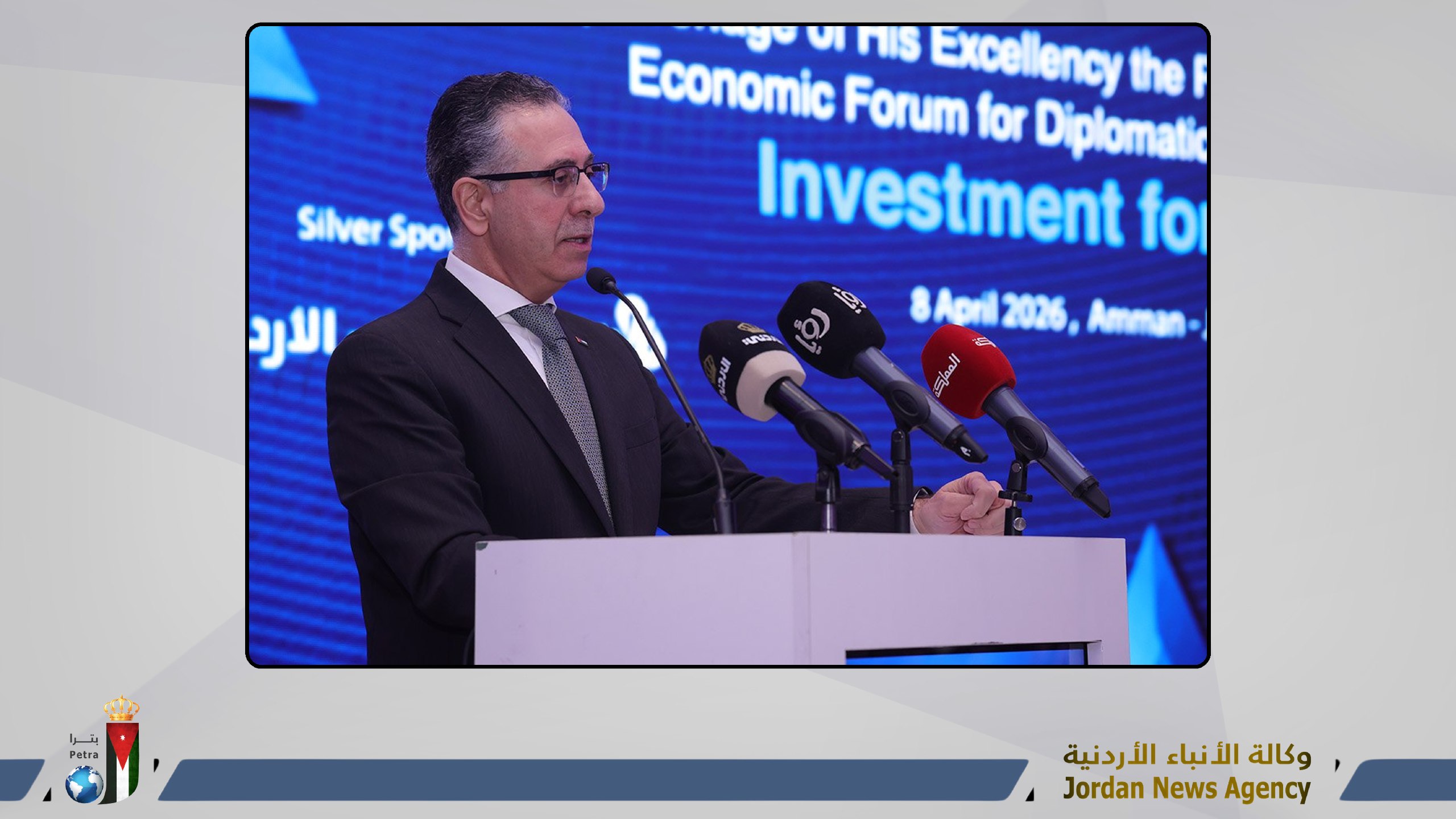
Jordanian officials affirmed the national economy's resilience and growth despite regional challenges during a recent forum in Amman that gathered ambassadors and diplomatic representatives. Minister of Industry, Trade, and Supply Yarub Qudah stated, "Jordan's economy continues to grow, remain resilient, and adapt despite regional tensions, supported by stronger partnerships with the private sector and with partner countries." The forum brought together envoys from the European Union, the United States, the United Kingdom, and several Arab and other countries. This gathering showed Jordan's commitment to fostering international cooperation and economic dialogue in a dynamic regional landscape.
Jordanian Businessmen Association President Ayman Alawneh added, "The national economy has demonstrated resilience and flexibility in absorbing shocks, backed by ongoing structural reforms and strong national resolve despite regional crises, supply-chain disruptions, and pressures on energy, food, and financing." Alawneh emphasized that "Jordan remains a model of stability and moderation and a reliable regional and international partner." He also noted that "the Kingdom has preserved an attractive investment environment based on the rule of law, clear legislation, and openness to the world, helping build investor confidence and long-term partnerships." Alawneh concluded that "the private sector is the main engine of growth and a core partner in implementing the Economic Modernization Vision, and said public-private partnership remains essential for delivering major projects in energy, infrastructure, industry, tourism, and technology." These statements collectively highlight the multifaceted approach Jordan is taking to ensure sustained economic development and stability.
Economic Performance and Growth Drivers
Jordan's economy demonstrated gradual acceleration throughout the previous year, with economic growth increasing from 2.6 percent in the first quarter of 2025 to 3 percent by the fourth quarter. This performance was supported by several key sectors, showcasing the intrinsic strength and adaptability of the national economy. The Aqaba Port, a key gateway for trade, maintained operating levels that were comparable to those recorded in the preceding year. This steady activity at the port helped ensure continuity in maritime logistics and trade flows despite regional conditions, serving as a vital artery for the country's commerce.
National exports registered a significant increase, rising 10 percent last year compared to 2024 figures. This growth in exports indicates an expanding reach for Jordanian goods in international markets, reflecting enhanced competitiveness and diversified trade relationships. Alongside direct exports, re-export activity also expanded, contributing further to the country's trade volume and economic output. The expansion of both national exports and re-exports suggests a strengthening of Jordan's position as a regional trade hub, capable of facilitating goods movement and adding value to international supply chains. This positive trend shows the effectiveness of Jordan's trade policies and its strategic geographical location.
Looking ahead, early indicators for 2026 showed continued positive momentum, suggesting that the economic trends observed in 2025 are likely to persist. This forward-looking data points to sustained growth and stability in the near term, providing confidence to both domestic and international stakeholders. The consistent performance of key economic drivers such as trade and port operations shows the resilience of the Jordanian economy in the face of ongoing regional challenges. The gradual increase in the growth rate over 2025 notes a strengthening domestic economy capable of absorbing external pressures and maintaining its development trajectory, reinforcing the nation's economic fortitude.
Strategic Projects and Investment Climate
Foreign investment in Jordan increased by more than 25 percent, reflecting growing confidence in the Kingdom's economic environment and its future prospects. This rise in investment coincides with the advancement of several major strategic projects across the country, designed to enhance national infrastructure and promote sustainable growth. These projects include the National Water Carrier, a critical initiative aimed at enhancing water security for the nation's growing population and agricultural needs, and the railway project, which is set to improve national logistics and connectivity, facilitating trade and internal movement. Additionally, the development of Amra City represents a significant urban development venture, poised to create new residential, commercial, and recreational spaces.
Jordan has consistently maintained a safe and attractive investment climate, which officials attribute to stable governance and clear regulatory frameworks. This environment supports a diverse range of investment opportunities available within the Kingdom, making it an appealing destination for global capital. Key sectors attracting investment include renewable energy, where Jordan aims to expand its clean energy capacity and reduce reliance on traditional fossil fuels, and mining, leveraging the country's natural resources for economic benefit. The information technology sector also presents significant growth prospects, driven by a skilled workforce and government support for innovation, alongside tourism, which continues to be a vital part of the economy, drawing visitors with its rich history and natural beauty. Logistics and infrastructure projects offer substantial opportunities for both domestic and international investors, as Jordan seeks to enhance its role as a regional hub.
Partnerships and Diplomacy
Local markets in Jordan have reported no shortages in goods throughout recent months, indicating stable supply chains and effective government oversight in ensuring the availability of essential commodities. The recent forum in Amman, attended by ambassadors and diplomatic representatives, aimed to deepen economic dialogue, build effective international partnerships, and reinforce Jordan's standing as an attractive investment destination. This diplomatic initiative is key for fostering greater understanding and cooperation on economic matters. The tourism sector saw strong growth exceeding 7 percent last year, contributing significantly to the country's economic expansion and job creation, further diversifying the national income streams.
Foreign Ministry Secretary-General Daifallah Fayez stated that economic diplomacy is becoming increasingly important as a practical tool to support national development goals. Fayez elaborated, "economic diplomacy is becoming increasingly important as a practical tool to support and accelerate implementation of the Economic Modernization Vision by attracting investment, opening new markets, building strategic partnerships, and facilitating knowledge and technology transfer." This strategic focus on economic diplomacy shows Jordan's proactive approach to engaging with the global economy.
National exports continued their upward trend, rising by more than 11 percent in January 2026. This growth further notes Jordan's expanding trade relationships and its ability to compete in international markets. Fayez also noted, "Under the guidance of His Majesty King Abdullah II, Jordan has maintained a safe and attractive investment climate that supports investor confidence and business sustainability." This leadership commitment is central to the Kingdom's economic strategy, ensuring a stable and predictable environment for investors and businesses alike. The ongoing efforts in economic diplomacy and policy implementation are designed to sustain this positive momentum, ensuring Jordan's continued prosperity and stability in the region.