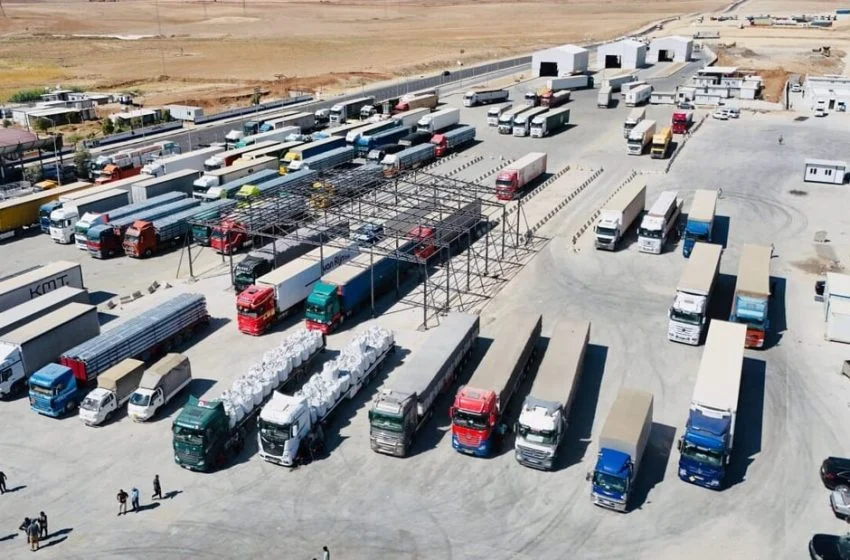
Iraq has shifted its trade routes to the Port of Aqaba, making the Jordanian port critical amidst disruptions in shipping through the Strait of Hormuz since February 28. Since the start of the conflict on February 28 and the obstruction of shipping via the Strait of Hormuz, Iraq has shifted to alternate economic routes, making the Port of Aqaba critical to its continued commerce. Iraq resumed its southern oil exports on Friday after a halt of over a month, caused by these interruptions. According to reports, the obstruction of the Strait of Hormuz affects one of the world's most important maritime channels for commerce and energy. The interruption of Hormuz is indeed one of the most important maritime channels for commerce and energy in the world, showing the severity of the current disruptions.
Aqaba: A New Gateway for Iraq
Jordan’s only Red Sea seaport, Aqaba, has developed into a major center for goods heading into Iraq. Important cities such as Baghdad and Basra now receive goods delivered by land from the port, traveling through Jordan and into Iraq. This route currently serves as one of the primary ways to supply Iraqi markets. Iraq has become dependent on overland supply channels to sustain the flow of necessities, as the disruptions in the Strait of Hormuz have effectively shut off the country’s principal naval connection to international markets. The closing of Hormuz has shut off the country’s principal naval connection to international markets, making these overland routes indispensable. Iraq is particularly vulnerable to supply interruptions, given its significant reliance on imports for food, consumer goods, and industrial resources. Iraq is especially vulnerable to supply interruptions since it depends largely on imports for food, consumer goods, and industrial resources, making secure trade routes vital for its stability.
Broader Regional Shipping Challenges
Beyond Iraq, Kuwait and Qatar are also encountering growing logistical difficulties due to the regional shipping challenges. Kuwait and Qatar are facing increasing logistical difficulties as a direct consequence of the regional shipping challenges. Saudi Arabia has attempted to alleviate some of the disruption by redirecting commerce toward its Red Sea ports, including Jeddah. However, these Red Sea routes are unable to fully match the scope and effectiveness of established Gulf shipping channels. Saudi Arabia has attempted to mitigate some of the disruption by directing commerce toward Red Sea ports like Jeddah, but these routes are unable to completely match the scope and effectiveness of Gulf shipping channels, noting the limitations of alternative options. Access ports along the Red Sea and overland passageways are generally viewed as short-term solutions, offering limited capacity and incurring higher prices compared to conventional marine routes. Red Sea access ports and overland passageways are generally seen as short-term fixes, with greater prices and restricted capacity compared to conventional marine routes, making them less sustainable for long-term trade. A corridor through Turkey provides a viable, though restricted, trade route for supplies to enter Iraq’s northern regions. A corridor in Turkey allows supplies to enter Iraq’s northern regions, providing an additional but limited trade route, which helps diversify supply lines but cannot fully compensate for the Strait of Hormuz.
Oil Exports Resume Amidst Ceasefire
Iraq resumed its southern oil exports on Friday after a halt of over a month, caused by disruptions in shipping through the Strait of Hormuz. Reports indicated that the Malta-flagged tanker Agios Fanourios 1, expected to load approximately 2 million barrels of Basra crude, entered the Gulf on Wednesday and has since anchored near Iraq's southern oil terminals to load the crude. The Agios Fanourios 1's successful transit was its second attempt, occurring during a ceasefire between the U.S. And Iran. The Agios Fanourios 1's transit attempt on Sunday was its second, occurring during the U.S.-Iran ceasefire, which seemingly facilitated its passage. Officials said another tanker is expected to arrive at Iraq's southern export terminals within two days. Another tanker will arrive at Iraq's southern export terminals within two days, signaling a potential stabilization of oil exports. The U.S. Mediated a 10-day ceasefire between Israel and Lebanon, according to reports.