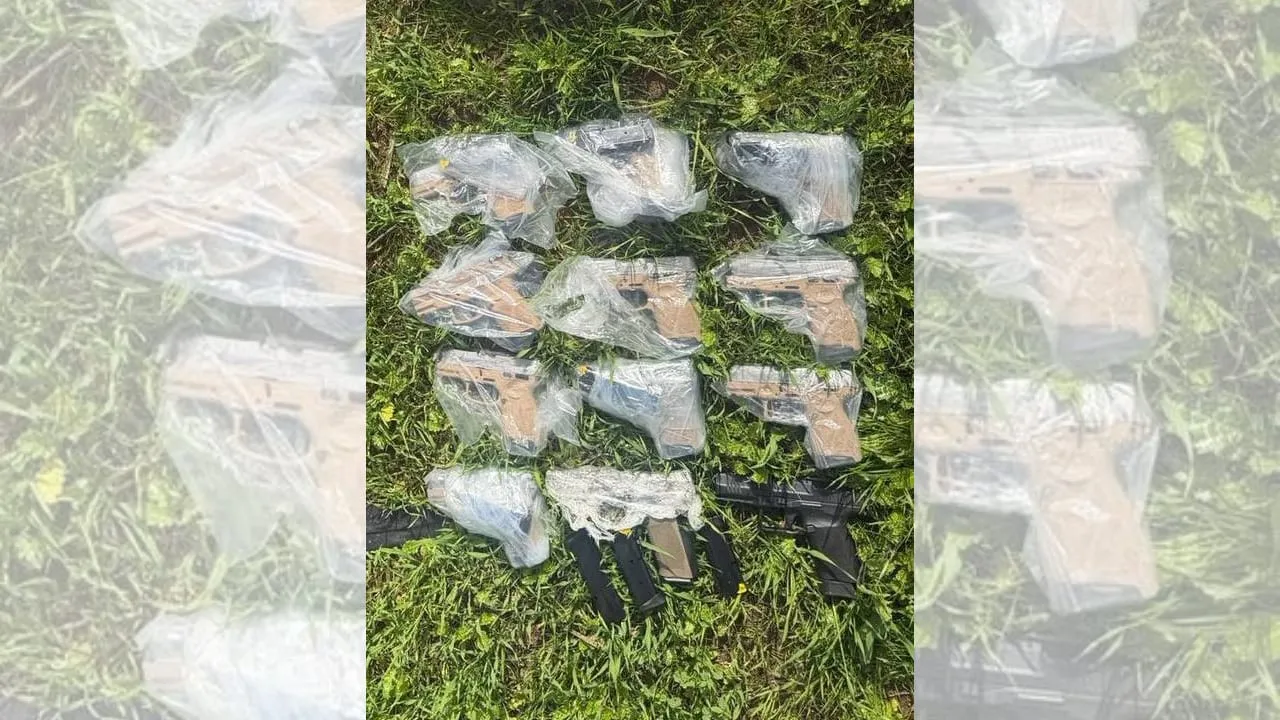
Three individuals were indicted in the Beersheba District Court on Thursday for their alleged involvement in a sophisticated drone smuggling operation that exported hashish to Jordan and imported Glock pistols into Israel. The indictments were formally filed in the Beersheba District Court on Thursday, detailing a complex scheme that reportedly ran from November 2025 through January 2026. The prosecution alleges that the defendants, identified as Ali al-Saraia, 28, from Kuseifa; Wahel al-Tzaraia, 24, from the Abu Juweid tribe; and Zaid Abu Guayad, 23, from the Negev, collectively exported approximately 120 kilograms of hashish to Jordan and imported about 44-48 Glock pistols into Israeli territory. This cross-border illicit trade leveraged advanced drone technology to bypass traditional security measures, presenting a significant challenge to law enforcement.
According to one indictment, Ali al-Saraia and Wahel al-Tzaraia allegedly used off-road vehicles and drones to carry out six hashish-smuggling runs in December 2025. Each of these clandestine operations reportedly involved the transfer of roughly eight to nine kilos of hashish across the border into Jordan. The prosecution stated that Ali al-Saraia described in detail how Wahel al-Tzaraia allegedly proposed the method of smuggling hashish to Jordan by drone. Ali al-Saraia's account further elaborated on how pistols were subsequently brought back from Jordan after the drugs were successfully delivered, indicating a direct exchange mechanism for the illicit goods. This specific indictment notes the operational details and the alleged roles of the individuals in coordinating these illicit activities.
Details of Smuggling Operations
The indictments further detail the specific smuggling runs conducted by the defendants. Ali al-Saraia and Zaid Abu Guayad allegedly conducted five similar smuggling runs in November and December 2025. During these operations, they reportedly employed an off-road vehicle to reach border areas and then utilized a drone to transport approximately eight kilograms of hashish into Jordan on each occasion. Following the successful delivery of the hashish, the drone allegedly returned to Israel carrying about four Glock pistols after each run. This series of operations alone is said to have accounted for the importation of approximately 20 pistols into the country. The repeated nature of these runs suggests a well-established and coordinated method for cross-border trafficking.
In January 2026, Ali al-Saraia and Wahel al-Tzaraia reportedly executed three additional drone-based smuggling operations, further expanding the scale of their alleged activities. During the first of these runs in January, drones allegedly returned carrying a significant haul of 10 pistols. A subsequent operation saw the return of seven pistols. The third and final run detailed in this specific indictment reportedly involved the importation of six or seven pistols, demonstrating a consistent pattern of weapons acquisition through this method. These operations show the alleged adaptability and persistence of the smuggling ring in utilizing drone technology for high-value contraband.
Reports indicated that some of the imported pistols were subsequently sold for tens of thousands of shekels within Israel's black market. Specifically, Ali al-Saraia and Wahel al-Tzaraia allegedly coordinated the sale of five or six of these illegally acquired pistols. These transactions reportedly took place near the Yatta area, a location frequently associated with illicit trade. Each pistol was reportedly sold for NIS 23,000, illustrating the substantial profits generated from these illegal arms dealings. The sale of these firearms after their importation completes the cycle of the alleged criminal enterprise, from acquisition to distribution.
The extensive investigation into this case was conducted jointly by the Southern District Central Unit and the Shin Bet (Israel Security Agency). The collaboration between these key security agencies shows the gravity with which Israeli authorities view the threat posed by such sophisticated smuggling operations. Their combined efforts were key in uncovering the intricacies of the drone network and gathering the evidence necessary for the indictments.
Broader Smuggling Trends
This specific case is not an isolated incident but rather fits into a broader pattern of illicit activity. Reports indicated that Israel began identifying a broad pattern of weapons and contraband smuggling by drone along its borders starting in 2024. This emerging trend has seen a dramatic increase in aerial incursions, with thousands of drone crossings detected across Israel's borders since 2025. These detections highlight a significant and evolving challenge for national security and border control. According to reports, these crossings have involved large drones specifically adapted for illicit purposes, capable of carrying tens of kilograms of various illicit cargo, making them highly effective tools for smugglers.
The scope of this drone activity extends beyond the Jordanian border. Along the Egyptian border, security forces have detected dozens of drones carrying a wide array of firearms, including rifles, machine guns, pistols, and ammunition. This proliferation of drone-based smuggling notes an evolving challenge for border security, requiring continuous adaptation of surveillance and interdiction methods. Security forces have made significant seizures as part of their efforts to counter these operations, demonstrating their commitment to disrupting these illicit networks. In 2025 alone, approximately 90 pistols smuggled by drone from the Jordanian border were seized by security forces, preventing them from reaching the black market and potentially fueling criminal or terrorist activities. The sheer volume of detected drone crossings and seized contraband points to a persistent and widespread threat.
Alleged Wider Arms Deals
Beyond the immediate scope of the drone-based hashish-for-Glock scheme, Wahel al-Tzaraia allegedly engaged in a broader pattern of illegal arms and ammunition transactions, indicating a more extensive involvement in illicit trade. According to reports, Wahel al-Tzaraia traded weapons and ammunition with an individual identified as Nasser Nagada over a period spanning from 2021 to 2024. This activity is said to have occurred independently of the specific hashish-for-Glock drone scheme, suggesting a long-standing and diversified engagement in illicit arms dealing. The duration of these alleged transactions, stretching over several years, points to a deeply entrenched involvement in the illegal weapons market.
Ali al-Saraia is also accused of participating in several of these wider arms deals alongside Wahel al-Tzaraia, further implicating him in the larger network of illegal arms trade. These alleged transactions included the purchase of four M16 rifles, each acquired for a substantial sum of NIS 50,000. The involvement of these individuals in acquiring military-grade assault rifles shows the serious nature of their alleged activities and the potential danger posed by such weapons falling into the wrong hands. The broader alleged arms trade indicates a more extensive network and longer-term involvement in weapon procurement and distribution than solely the drone operations described in the initial indictments. These additional alleged dealings highlight the scope of the defendants' activities beyond the specific cross-border smuggling described in the indictments, painting a picture of individuals deeply embedded in the illicit arms trade. The details surrounding these alleged transactions were presented during the legal proceedings, painting a full picture of a persistent engagement in the illegal weapons trade. The prosecution has meticulously detailed these alleged activities as part of the wider case against the indicted individuals, seeking to demonstrate the full extent of their criminal enterprise. The connection between the drone smuggling and these broader arms deals suggests a sophisticated and multi-faceted criminal operation, posing a significant challenge to law enforcement agencies tasked with maintaining public safety and national security.