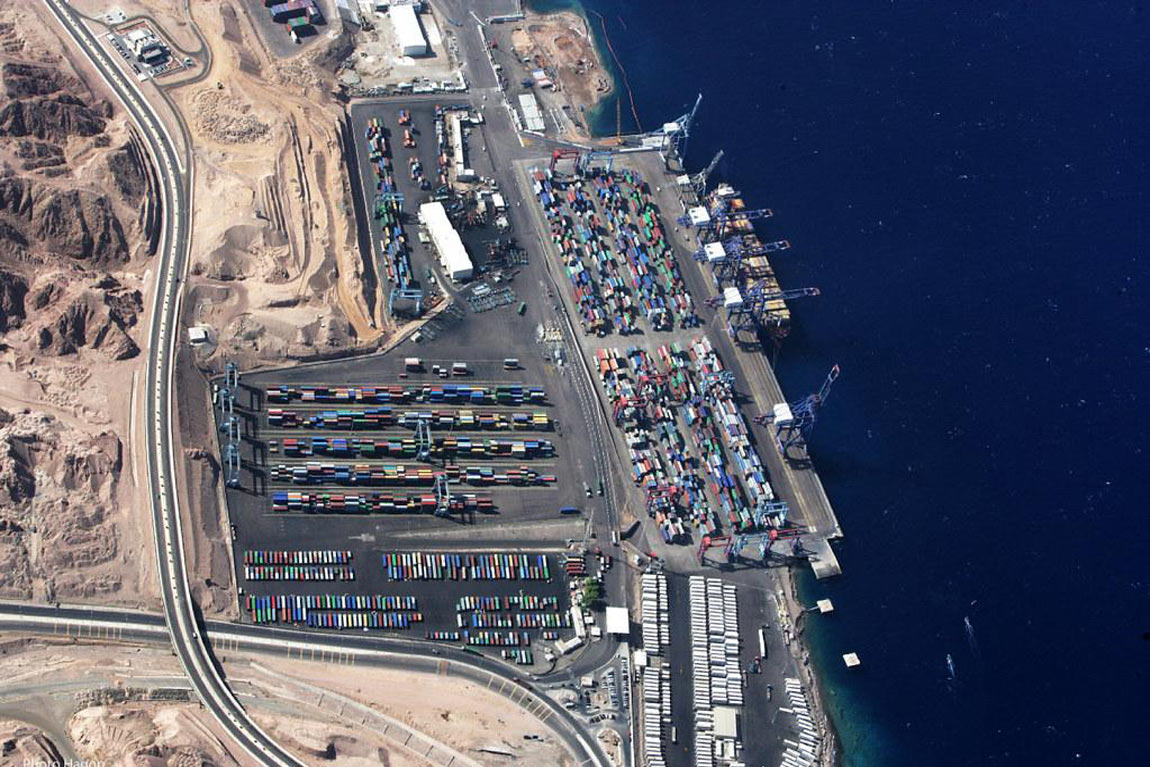
Jordan’s Port of Aqaba, a critical maritime gateway, faces significant strategic challenges following the 2026 Iran war, which resulted in the closure of the Strait of Hormuz. The port is essential for the Jordanian economy, handling approximately 80 percent of the nation’s exports and 65 percent of its imports. This substantial reliance shows the inherent vulnerability of Jordan's trade routes to regional instability and geopolitical shifts. The closure of the Strait of Hormuz, a vital chokepoint for global maritime traffic, has inevitably rerouted shipping lanes, thereby increasing pressure on alternative maritime corridors. This dramatic shift in global logistics unequivocally notes Aqaba's key and increasingly indispensable role for regional commerce, positioning it as a key conduit for goods and resources in a volatile environment. The strategic importance of Aqaba cannot be overstated, as it serves as the nation's primary economic artery, directly impacting its ability to conduct international trade and sustain its population.
Geopolitical Shifts Elevate Aqaba
Aqaba represents Jordan’s sole seaport, making it an indispensable asset for the country's economic stability and regional trade. This unique status places immense pressure on the port to perform efficiently and securely, especially in times of heightened regional tension. In response to these shifting regional dynamics and the urgent need for enhanced energy security, Iraq and Jordan have proposed reviving the Basra–Aqaba oil pipeline, a monumental project that had remained dormant for an extended period. This ambitious initiative aims to not only enhance energy security for both nations but also to significantly bolster connectivity, leveraging Aqaba's strategic position on the Red Sea as an export hub for Iraqi crude. The potential reactivation of this pipeline shows a broader regional effort to forge new economic alliances and infrastructure projects that bypass traditional, now-vulnerable, routes.
Simultaneously, other regional powers are actively developing alternative trade routes that could introduce significant competition for Aqaba. Saudi Arabia, Egypt, and Syria are creating rival infrastructure and corridors to serve their respective economic and strategic interests. These competing projects, driven by national ambitions and the desire for greater self-reliance, necessitate Jordan's proactive engagement in enhancing Aqaba's capabilities to maintain its competitive edge. Despite these developing pressures and the broader regional instability that has gripped the Middle East, Jordan's economy has demonstrated a remarkable degree of resilience. The International Monetary Fund (IMF)’s fifth review concluded that Jordan’s economy successfully maintained macro-economic stability, providing a measure of confidence amidst the evolving geopolitical landscape. This assessment from a reputable international financial institution offers a key endorsement of Jordan's economic management, even as the nation navigates a complex and often perilous regional environment.
Security Threats Undermine Opportunity
The precarious security situation in the region has manifested in direct threats to Aqaba's infrastructure. In July 2026, Jordan’s defense systems intercepted Iranian missiles that were targeting the port city of Aqaba and its nearby airport. This alarming incident occurred as the United States and Israel launched their initial attacks on Iran, marking a significant escalation in regional conflict. The broader implications of this conflict were immediately felt across the region, with the United Arab Emirates closing its stock exchanges in response to the initial US-Israel attacks on Iran, signaling widespread economic apprehension. Reports indicated that Iranian attacks fell near Aqaba on July 22, with smoke clearly visible from the Israeli city of Eilat, showing the proximity and severity of the threat. The visual confirmation from a neighboring country noted the immediate danger posed to both civilian populations and critical infrastructure.
Despite these grave security concerns and the tangible threat of missile strikes, the director general of Aqaba Company for Ports confirmed that port operations continued as normal. This public statement aimed to project an image of continuity and resilience, even as the US embassy claimed the seaport had been evacuated, creating a divergence in official narratives regarding the port's operational status. The regional instability has had a noticeable and immediate impact on Jordan's vital tourism sector, with hotels in the iconic ancient city of Petra reporting a significant drop in occupancy to just 4 percent. This drastic decline in tourism revenue, which also saw a 23 percent fall across Jordan in March, illustrates the profound economic consequences of regional conflict, directly affecting the livelihoods of countless Jordanians and the nation's fiscal health. The interconnectedness of security and economic stability is starkly evident in these figures.
Navigating the Investment Dilemma
Weeks before the outbreak of the 2026 war, the AD Ports Group, a prominent Emirati entity, signed a 30-year agreement to operate the Aqaba multipurpose port. This long-term commitment positioned the port for significant development and operational enhancements under Emirati management, with the explicit aim of bolstering Aqaba's role as a key regional logistics and trade hub. The timing of this agreement, preceding the escalation of regional conflict, shows the long-term strategic vision held by investors regarding Aqaba's potential, despite the inherent risks. This substantial foreign investment was intended to modernize port facilities, improve efficiency, and expand capacity, thereby solidifying Aqaba's position as a competitive maritime gateway.
In July 2026, amidst the ongoing regional tensions, Amman tendered a strategy designed to significantly increase Aqaba’s oil storage capacity, intending to transform the port into a regional storage hub. This ambitious initiative reflects a broader effort by Jordan to capitalize on Aqaba's strategic location on the Red Sea, offering a secure and efficient alternative for energy transit and storage. The proposed expansion of oil storage facilities is expected to attract greater investment and enhance energy security for Jordan and its neighbors, particularly given the ongoing regional instability affecting traditional energy routes. This strategic move aims to diversify Jordan's economic base and leverage its geographical advantage to become a critical player in regional energy infrastructure. However, Jordan does not operate any shipyards offering drydocking services, which presents a significant logistical challenge for the maintenance and repair of vessels calling at Aqaba. This absence means that ships requiring significant repairs or routine drydock inspections must seek facilities in other countries, potentially adding to operational costs and transit times for maritime operators utilizing the port, a factor that could impact its long-term competitiveness as a full maritime hub.
Securing Aqaba's Future Role
Jordan possesses limited fiscal capacity compared to the Gulf Cooperation Council (GCC) states, a reality that shapes its economic strategies and reliance on foreign investment and regional partnerships. This financial constraint necessitates careful allocation of resources and a strategic approach to development, particularly for critical infrastructure like the Port of Aqaba. The United Arab Emirates (UAE), a key regional player, is expanding its West–East pipeline, a project that could significantly influence regional energy transit patterns and potentially compete with or complement Aqaba's aspirations as an energy hub. This development notes the dynamic and competitive nature of regional infrastructure development, where multiple nations are vying for strategic advantages.
In Jordan, the economic fallout from regional instability has been palpable, with tourism revenue experiencing a 23 percent decline in March, further exacerbated by the severe drop in Petra's hotel occupancy to just 4 percent. These figures show the fragility of Jordan's economy to external shocks and the urgent need for diversification and stability. European regulators, responding to the escalating security situation, advised airlines to avoid Jordanian airspace until late summer, severely impacting air travel and further isolating the country economically. Separately, Dubai announced an economic support package totaling AED 1 billion, signaling efforts to bolster its own economy amidst the broader regional dynamics and potential spillovers from the conflict. This package reflects a proactive stance by Dubai to mitigate economic risks, a stark contrast to Jordan's more constrained fiscal position. The challenges facing Aqaba are not merely operational but are deeply intertwined with the geopolitical currents of the Middle East, demanding astute diplomacy, strong security measures, and sustained international support to secure its vital role in regional and global commerce.