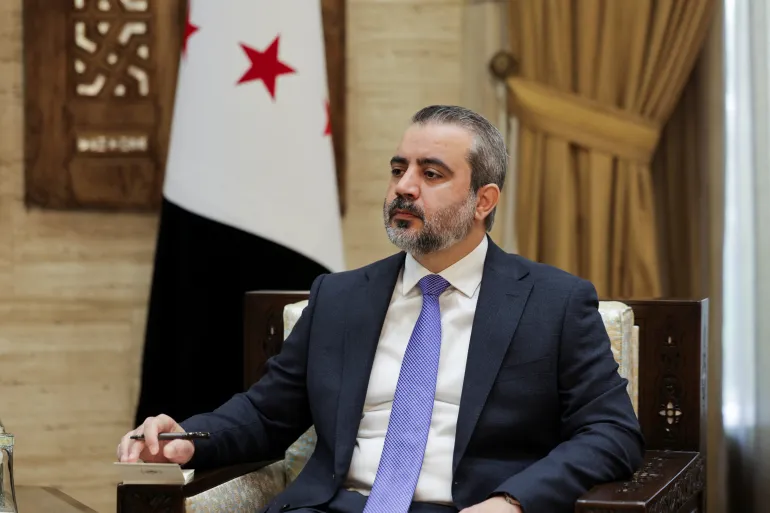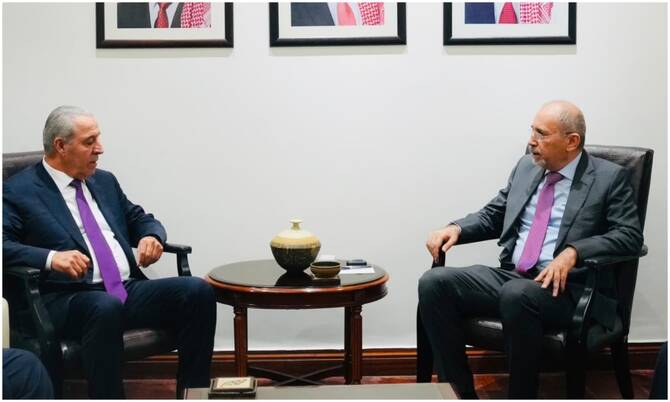
Jordanian Foreign Minister Ayman Safadi and Palestinian Vice President Hussein Al-Sheikh met in Amman on Tuesday to discuss pressing regional developments and coordinate their positions. The high-level meeting showed shared concerns regarding the escalating situation in the Palestinian territories. During their discussions, the officials issued a strong warning about the serious consequences of ongoing illegal Israeli actions, specifically citing the alarming rise in settler violence, unchecked settlement expansion, and widespread land confiscation. These actions, they asserted, undermine prospects for peace and stability in the region.
Safadi and Al-Sheikh also reiterated a call for the full implementation of US President Donald Trump’s peace plan, which was initially announced last October. Their discussions noted deeply held shared concerns regarding the fragile stability in the West Bank and East Jerusalem, emphasizing the urgent need for international intervention to de-escalate tensions and protect Palestinian rights. The meeting served as a key platform for both sides to reaffirm their commitment to a peaceful resolution based on established international parameters.
Key Concerns Raised
The meeting in Amman was also attended by other senior Palestinian officials, including Palestine’s General Intelligence Service Chief Majed Faraj and Palestinian National Council President Rawhi Fattouh, signifying the breadth of Palestinian leadership involved in these critical discussions. Together, the officials unequivocally condemned Israel for its actions targeting the UN Agency for Palestinian Refugees (UNRWA), an organization vital for providing humanitarian assistance to millions of Palestinians. Such actions, they noted, further exacerbate the humanitarian crisis in the territories.
The delegation denounced Israel's controversial decision to issue tenders for hundreds of new settlement units in the E1 project, located in East Jerusalem. This particular project is viewed by many as a significant obstacle to the viability of a future Palestinian state, as it threatens to bisect the West Bank. Echoing these sentiments, Egyptian Foreign Minister Badr Abdel-Aty reiterated Egypt’s firm condemnation of all illegal Israeli actions. He stressed that these actions are aimed at unilaterally imposing a new reality on the ground and systematically undermining Palestinian territorial unity, which is essential for any future peace settlement. The full discussions and official statements from this meeting were formally updated on 25 August 2026.
Proposed Peace Framework
The US peace plan, which Jordanian and Palestinian officials called for the immediate implementation of, outlines specific conditions for a path forward. This framework stipulates a complete Israeli withdrawal from Gaza and the disarmament of Hamas, the militant group governing the enclave. These provisions are designed to pave the way for the Palestinian Authority to effectively govern the coastal enclave, thereby consolidating Palestinian administration across the territories. The officials emphasized that such a framework is key for establishing lasting peace and security for all parties involved. The detailed discussions regarding this proposed plan and other pertinent regional developments were officially updated on August 25, 2026, at 19:53.
Regional Diplomatic Efforts
Prior to the meeting in Amman, Hussein Al-Sheikh and the Palestinian delegation engaged in a significant discussion with Egyptian Foreign Minister Badr Abdel-Aty in El-Alamein. This earlier diplomatic engagement formed an integral part of broader, ongoing regional diplomatic efforts aimed at comprehensively addressing the complex situation in the Palestinian territories and the wider Middle East. The series of consultations shows the concerted efforts among key regional actors to formulate a unified and effective response to recent developments and ongoing challenges.
This engagement noted the continuous and extensive consultations between Palestinian and Arab officials concerning the multifaceted challenges confronting the Palestinian territories and the broader region. These sustained diplomatic interactions aim to coordinate stances, build consensus, and seek joint solutions amid escalating tensions and persistent obstacles to peace. The sequence of high-level meetings reflects a concerted and collaborative effort among regional actors to present a unified front and advocate for a just and lasting resolution to the Israeli-Palestinian conflict.