Jordan and the Palestinian Authority on Tuesday condemned Iranian attacks on the United Arab Emirates. King Abdullah of Jordan condemned the Iranian attacks on the UAE, while the Palestinian Authority condemned Iran for launching 12 ballistic missiles, three cruise missiles, and four drones at the UAE. The United Arab Emirates stated it intercepted 15 missiles and four drones fired from Iran on Monday, marking the first time the UAE has been targeted since Iran and the United States agreed to a ceasefire on April 8. This incident represents a significant escalation in regional tensions, drawing widespread international condemnation and raising concerns about stability in the Gulf. The direct targeting of the UAE, a key economic and political player in the Middle East, shows the volatile nature of the current geopolitical landscape.
One drone attack sparked a fire at an oil facility in the Fujairah Petroleum Industries Zone. This zone is a critical hub for oil storage and export, making any attack on it a serious threat to energy infrastructure. Reports indicated three people, including three Indian nationals, suffered minor injuries in the missile and drone attacks. The injuries, though minor, highlight the human cost of such aggressions and the potential for greater casualties. Jordanian Minister of Foreign Affairs Ayman Safadi spoke with his Emirati counterpart, Abdullah bin Zayed Al Nahyan, and condemned “the renewed Iranian attacks on the UAE.” This direct communication between the two foreign ministers emphasized the immediate and serious nature of the situation. Safadi's remarks showed Jordan's strong stance against actions that destabilize the region and threaten the security of its allies.
Regional Allies Express Solidarity
King Abdullah of Jordan engaged in a telephone conversation with UAE President Sheikh Mohamed bin Zayed Al-Nahyan. During this key discussion, King Abdullah conveyed Jordan's unwavering support for the UAE. Jordan affirmed its solidarity with the United Arab Emirates and expressed support for all measures taken to protect its security and sovereignty. This affirmation signals a unified front among regional partners in the face of external threats. King Abdullah showed the need to work toward sustaining regional de-escalation, emphasizing the importance of diplomatic solutions over military confrontation. He noted the potential for such attacks to unravel efforts towards stability and peace in the broader Middle East. The Palestinian Authority reiterated its solidarity with the Gulf states and Jordan, calling on Iran to cease its attacks, adhere to international law, and respect the principles of good neighborliness. This call from the Palestinian Authority reflects a broader regional desire for respect for sovereignty and non-interference in internal affairs. The Palestinian Authority's statement also stressed the importance of international legal frameworks in governing interstate relations, particularly in a region prone to conflict.
Saudi Arabia condemned and denounced the Iranian targeting of civilian and economic facilities in the UAE, as well as a vessel belonging to an Emirati company. The Saudi statement noted the indiscriminate nature of the attacks, which risked civilian lives and vital economic infrastructure. Qatar stated it "strongly condemns the renewed Iranian attacks" and considers the strikes to be a "blatant violation of the UAE’s sovereignty and a serious threat to the security and stability of the region." This strong condemnation from Qatar, a country that often maintains complex diplomatic relations, shows the severity of the Iranian actions. Kuwait’s Ministry of Foreign Affairs condemned Iran’s "reprehensible aggression" in targeting a UAE oil tanker and deploying drones, describing it as a "direct threat to maritime navigation in the Strait of Hormuz." This concern about maritime navigation points to the broader economic implications of such attacks, particularly in a critical global shipping lane. Bahrain’s Ministry of Foreign Affairs denounced the "Iranian terrorist attacks," considering the strikes "a dangerous escalation that threatens the security and stability of the region." The unified condemnation from these Gulf states signals a strong regional response to Iran's actions.
International Condemnation Mounts
German Chancellor Friedrich Merz strongly condemned Iran's attacks and expressed solidarity with the people of the UAE. Merz stated, "Tehran must return to the negotiating table and stop holding the region and the world hostage: The blockade of the Strait of Hormuz must end. Tehran must not acquire a nuclear weapon. There must be no further threats or attacks against our partners." His statement not only condemned the immediate attacks but also laid out broader demands for Iran's regional conduct and nuclear ambitions. The Office of Canadian Prime Minister Mark Carney issued a statement affirming, "Canada strongly condemns Iran’s unprovoked missile and drone strikes on the United Arab Emirates and stands in solidarity with its people." The term "unprovoked" emphasizes the perceived lack of justification for Iran's actions, aligning with the international community's stance.
French President Emmanuel Macron condemned Iran’s strikes on the UAE, describing them as “unjustified and unacceptable”. President Macron added, "As it has done since the start of the conflict, France will continue to support its allies in the Emirates and in the region for the defence of their territory." This commitment from France notes the enduring alliances and security partnerships in the Gulf. UK Prime Minister Keir Starmer also condemned the attacks and called for Iran to engage in talks to prevent further escalation. Prime Minister Starmer commented, "We stand in solidarity with the UAE and will continue to support the defence of our partners in the Gulf. This escalation must cease. Iran needs to engage meaningfully in negotiations to ensure the ceasefire in the Middle East endures, and a long-term diplomatic solution is achieved." The calls for negotiations from both the UK and Germany show a desire for diplomatic resolution to the underlying tensions, even while condemning the attacks.
The Gulf Cooperation Council denounced the attack on the Emirati oil tanker "in the strongest terms." This collective statement from the GCC, representing a significant bloc of regional power, adds considerable weight to the condemnations. EU Commissioner Ursula von der Leyen denounced the attacks and extended her full solidarity to UAE President Sheikh Mohamed bin Zayed Al Nahyan and his people. Commissioner von der Leyen stated, "These attacks are unacceptable and constitute a clear violation of sovereignty and international law. Security in the region has direct consequences for Europe." Her remarks emphasized the global implications of regional instability, particularly for energy security and international trade. The attacks targeted Fujairah, which serves as the endpoint of a pipeline utilized by the UAE to avoid shipping oil through the Strait of Hormuz. This strategic location makes Fujairah a particularly sensitive target, as an attack there could disrupt the UAE's ability to export oil without navigating the congested and often tense Strait. The pipeline provides a key alternative route, and its targeting signals an attempt to undermine the UAE's energy export capabilities and regional economic resilience.
Escalation and Strategic Impact
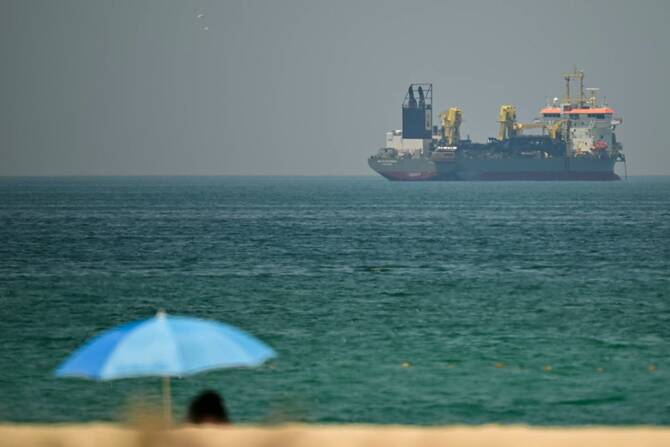
Iran’s actions also included an attack on an empty crude oil tanker belonging to the state oil firm as the vessel attempted to transit the Strait of Hormuz. The incident occurred in a critical maritime chokepoint for global oil shipments. The Strait of Hormuz connects the Persian Gulf to the Gulf of Oman and the Arabian Sea, making it a strategically vital waterway. Naval operations in the strait are closely monitored due to its importance for international energy markets. Such an attack on commercial shipping could potentially disrupt maritime trade and raise concerns about the security of oil supply routes. The state oil firm's tanker was reportedly empty at the time of the incident, mitigating immediate environmental or cargo damage. However, the targeting of a commercial vessel in this sensitive area signals an expansion of the scope of recent hostilities. The Strait of Hormuz has been a flashpoint in regional tensions previously, with various incidents affecting shipping in recent years. This latest event adds to the complexity of the security situation in the Gulf region, emphasizing the ongoing risks to international commerce and the global energy supply chain. The dual nature of these attacks – targeting both land-based infrastructure in Fujairah and maritime assets in the Strait of Hormuz – suggests a coordinated effort to exert pressure and demonstrate capabilities across different strategic domains. This multi-pronged approach exacerbates regional anxieties and poses a significant challenge to international efforts to de-escalate tensions.