Jordan has officially launched preliminary excavation and site preparation works for the Al Hussein Bin Abdullah II International Stadium. This significant undertaking marks a key moment for the nation's sports infrastructure. The stadium, set to be the largest in the region, is scheduled for completion and official opening by the end of 2029. This ambitious project shows Jordan's commitment to enhancing its capacity for hosting major sporting events and establishing a premier venue for athletic competitions.
Stadium Specifications and Features
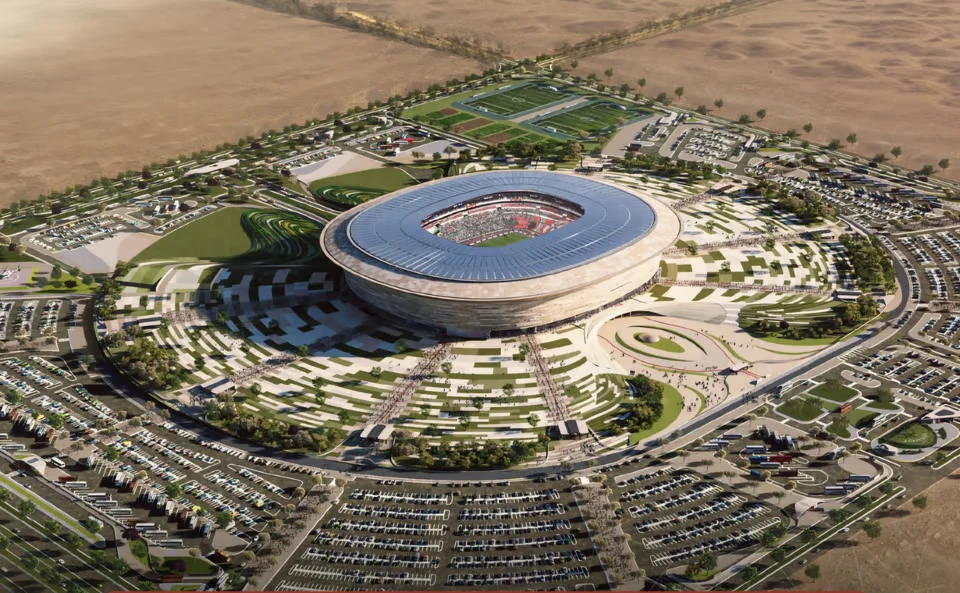
The Al Hussein Bin Abdullah II International Stadium is meticulously designed to accommodate 46,000 spectators, making it Jordan's largest stadium upon its completion. The new facility will be developed on a vast site spanning approximately 1,000 dunums, providing ample space for its full amenities. The project will incorporate advanced construction technologies alongside integrated infrastructure, specifically tailored to support large-scale sporting events and ensure a world-class experience for all attendees.
Plans for the stadium include extensive parking facilities, capable of accommodating up to 6,000 vehicles, addressing a critical need for large-scale venues. Additionally, the project is set to feature dedicated training pitches, key for the preparation of athletes and teams. Beyond the main arena and training grounds, various supporting facilities are planned. These amenities are intended to provide a full range of services for athletes, participating teams, and spectators attending events at the venue, ensuring comfort, convenience, and operational efficiency. The integration of these features aims to create a fully self-sufficient and modern sporting complex.
Project Milestones and Vision
The stadium forms a key component of the first phase of the Amra City development, an extensive project aimed at fostering urban growth and modern infrastructure within Jordan. The launch of excavation works marks a major milestone for the stadium project, signifying the transition from planning to active construction. This initial phase involves preparing the designated site for the foundational structures of the Al Hussein Bin Abdullah II International Stadium, paving the way for its projected completion by 2029.
This foundational work is critical for establishing the strong base required for a facility of this magnitude. The stadium's development is integral to the broader vision for Amra City, which aims to create a full urban center in Jordan, integrating sports, residential, and commercial spaces. The strategic placement of the stadium within Amra City is expected to drive economic development and enhance the overall appeal of the new urban hub. The progression of this project is closely watched as it represents a significant investment in the nation's future.
Regional Sporting Impact
Upon its completion, the Al Hussein Bin Abdullah II International Stadium is set to become Jordan’s largest stadium, a distinction that will significantly elevate its profile. This new facility is expected to play a significant role in enhancing Jordan’s sporting infrastructure, providing a modern and expansive venue for a variety of athletic endeavors. The stadium's development aims to increase the country’s capacity to host major regional and international sporting competitions, a long-term strategic goal for Jordan.
This expansion of infrastructure is anticipated to position Jordan more prominently in the regional sports landscape, attracting a wider array of events and showcasing its capabilities as a host nation. The ability to accommodate large-scale international events will not only boost Jordan's reputation but also foster sports tourism and engagement. The project shows a strategic investment in sports facilities designed to meet international standards and accommodate large-scale athletic gatherings, ensuring Jordan is well-equipped to welcome premier sporting spectacles. The stadium's official opening by the end of 2029 will mark a new era for sports in the Kingdom.