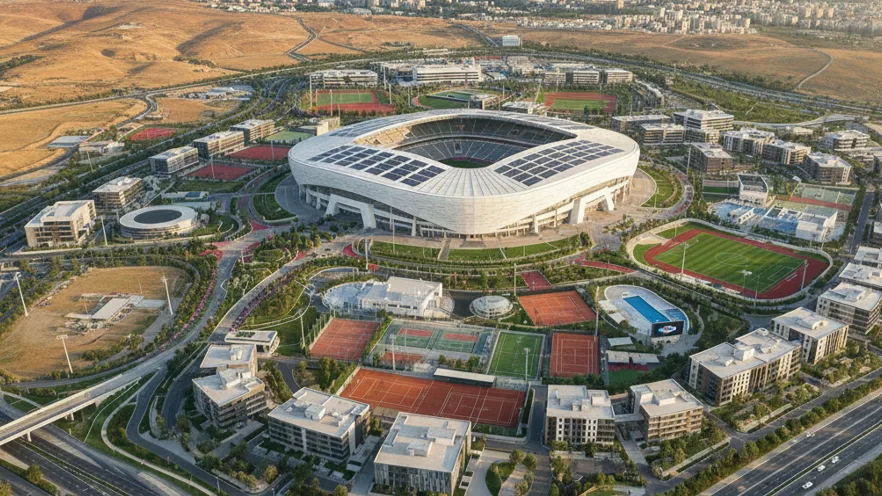
Jordan has initiated preliminary excavation and site preparation work for the Al-Hussein Bin Abdullah II International Stadium, situated east of the capital city of Amman. This development marks a significant step in the first phase of the Amra City development master plan. The stadium project is a key component of Jordan's broader Economic Modernisation Vision (EMV) 2023-25, noting the nation's commitment to infrastructure development and economic growth.
Amra City Development Details
The Amra City development, which encompasses the new stadium, will cover an expansive area of about one million square metres. This substantial land allocation shows the scale and ambition of the project. The stadium itself is designed to have a capacity of 50,000 spectators, positioning it as a major venue for national and international events. The overall development is strategically situated approximately 40km from downtown Amman, providing accessible connectivity while allowing for large-scale urban planning. Its location is about 35km from Zarqa City and 35km from Queen Alia International airport, enhancing its regional accessibility for both domestic and international visitors. Jordan Cities & Facilities Development Company is implementing the development, taking charge of the planning, construction, and oversight of this ambitious undertaking. The company is owned by the Jordan Investment Fund, according to project details, signifying a strong institutional backing for the initiative. The commencement of preliminary excavation and site preparation work represents the initial physical steps in bringing this vision to fruition.
Economic Modernisation Vision
The Al-Hussein Bin Abdullah II International Stadium project is an integral part of Jordan's Economic Modernisation Vision (EMV) 2023-25. This full national strategy aims to increase real income per capita by an average of 3% annually, fostering improved living standards across the population. A central objective of the EMV is the creation of one million jobs, addressing unemployment and stimulating economic participation. Additionally, the strategy seeks to more than double Jordan's Gross Domestic Product (GDP) over the next decade, projecting substantial economic expansion. A core principle of the EMV strategy envisages a leading role for the private sector in achieving these ambitious goals, recognizing its potential as a driver of innovation and investment.
The private sector is expected to account for 73% of the estimated $58.8 billion investment required for the EMV's implementation, showing its critical role in financing and executing key projects. To facilitate this, a substantial pipeline of public-private partnership (PPP) projects is planned across various sectors. These include essential infrastructure developments such as water desalination, school construction, and initiatives in clean energy, green hydrogen, and transport and road infrastructure. These PPP projects are designed to leverage private sector expertise and capital to deliver high-priority national projects efficiently. The PPP unit at the Investment Ministry indicated last year that it was targeting seven key PPP projects specifically for 2025, noting a focused approach to accelerating these collaborations.
Project Timeline and Scope
Main works for the Al-Hussein Bin Abdullah II International Stadium are anticipated to commence early next year, following the successful completion of the current preliminary groundwork. The project is slated for completion in 2029, setting a clear timeframe for the delivery of this significant national asset.