Jordan has faced missile and drone attacks by Iran targeting US facilities and infrastructure within its territory. These incidents include a surprise attack in July that resulted in the deaths of three US service members. The sustained targeting of US assets in Jordan has contributed to heightened regional tensions. The attacks show a volatile period in the Middle East, with Jordan finding itself increasingly caught in the crossfire of broader regional conflicts. The nature of these assaults, involving both missile and drone technologies, notes the evolving security challenges faced by countries hosting foreign military installations.
US Military Presence and Damage
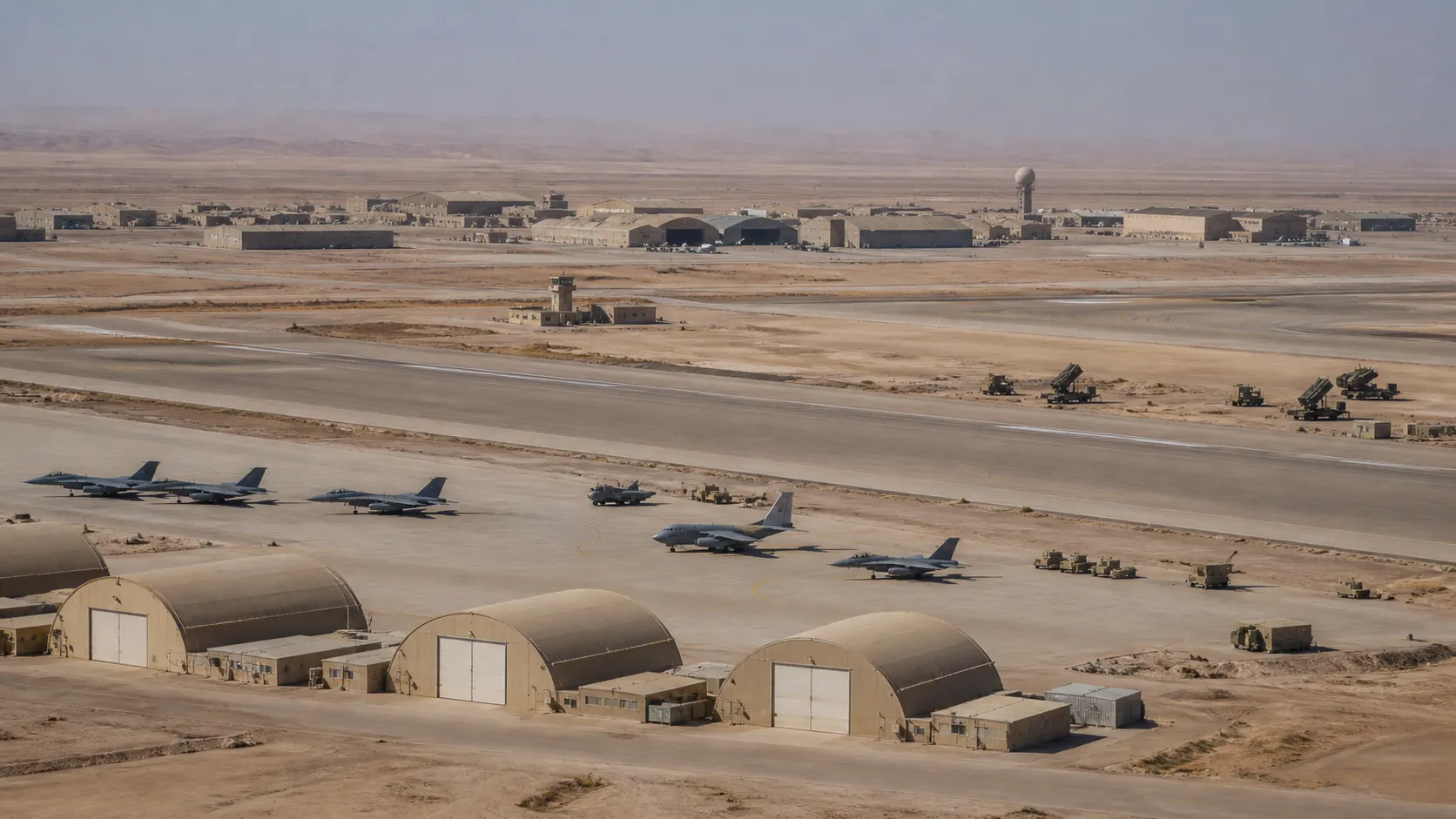
Around 4,000 US military personnel are stationed in Jordan. Muwaffaq Salti Air Base, located near Azraq, is identified as one of the primary US facilities in the country. Reports indicate that this base sustained damage during the recent conflict. The strategic importance of Muwaffaq Salti Air Base cannot be overstated, as it serves as a critical hub for US operations in the region. The base is known to host a variety of US Air Force aircraft, playing a key role in air operations and surveillance. Its defense capabilities are bolstered by advanced air defense systems, including a THAAD (Terminal High Altitude Area Defense) battery, designed to intercept short-, medium-, and intermediate-range ballistic missiles. Despite these strong defenses, the base reportedly incurred damage during the recent hostilities, signalling the intensity and sophistication of the attacks it has faced. The presence of such advanced military hardware and personnel shows the depth of the security partnership between the United States and Jordan, a relationship now being tested by external aggression.
Deepening Anti-American Sentiment
The attacks on US facilities in Jordan have intensified existing anti-American sentiment within the country. This intensification is a direct consequence of the ongoing military engagements and the perception among some segments of the population that Jordan is being drawn into conflicts that are not its own. Last month, hundreds of individuals signed an open letter calling for the withdrawal of foreign forces from Jordan. This public appeal reflects a growing desire among some citizens for a re-evaluation of Jordan's foreign policy and military alliances. The letter also demanded Jordan's withdrawal from its security and defence agreement with the United States, a pact that has underpinned bilateral relations for decades. Despite the significant public appeal and the clear articulation of these demands, the initiative received almost no coverage in Jordanian media, raising questions about freedom of expression and the control of information within the country. The lack of media attention on such a prominent public petition suggests an effort to downplay or suppress dissenting voices regarding Jordan's international alignments.
Anti-American sentiment in Jordan had already intensified following the war in Gaza. The prolonged and devastating conflict in Gaza has resonated deeply within Jordanian society, given the country's historical ties and large Palestinian population. The perceived US support for one side in that conflict has fueled widespread discontent. The ongoing conflict in Gaza, combined with the recent attacks involving Iran and the US facilities in Jordan, has also negatively impacted Jordan's tourism industry. This economic repercussion is a significant concern for a country heavily reliant on tourism revenue, adding another layer of complexity to the domestic challenges stemming from regional instability. The confluence of these events has created a challenging environment for Jordan, balancing its strategic alliances with the growing concerns of its populace.
Regional Context and Reactions
Tensions have persisted for nearly six months since the start of US and Israeli strikes on Iran. This ongoing regional confrontation provides the broader context for the attacks on US facilities in Jordan, indicating a wider pattern of escalation and retaliation across the Middle East. Muwaffaq Salti Air Base, identified as a primary US facility in Jordan, hosts US Air Force aircraft and air defense systems, including a THAAD battery. The presence of such sophisticated defense systems notes the perceived threat level and the strategic importance of the base to US operations in the region. Dozens of Iranian missiles were directed at the base during recent incidents, demonstrating a direct and significant challenge to US military assets. These attacks are not isolated incidents but rather part of a larger, interconnected series of events shaping the security landscape of the Middle East. The continued military presence and engagement in the region occur while Jordan receives more than $1.5 billion in US aid annually to support its budget. This substantial financial assistance shows the strategic partnership between the two nations, even as the security environment becomes increasingly complex and public sentiment within Jordan shows signs of strain. The dual pressures of maintaining a vital alliance and addressing domestic concerns present a delicate balancing act for the Jordanian government amidst persistent regional instability.