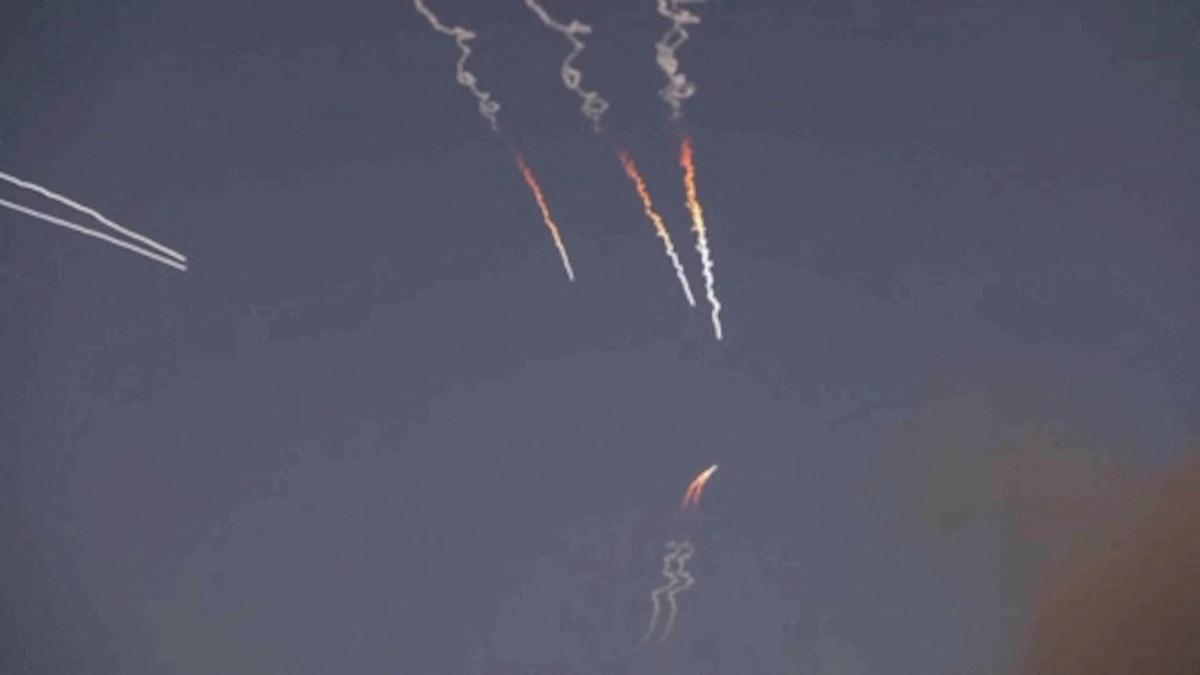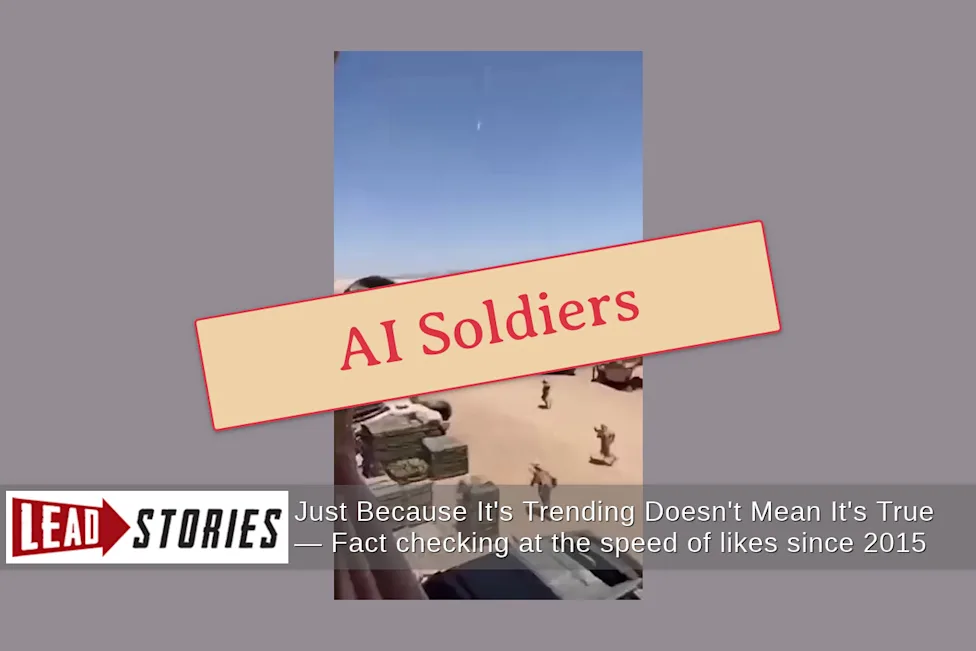
An artificial intelligence-generated video falsely claiming an Iranian attack on a US base in Jordan was circulated on X by the @Aldhame711 account on July 18, 2026. The initial post, made by the @Aldhame711 account on X on that date, included the video alongside the unsubstantiated claim of an attack on a U.S. Base in Jordan. The video quickly drew attention, contributing to concerns about the spread of deceptive content online. Later on the same day, @Aldhame711 issued a clarification regarding the content. The account’s subsequent post stated that the video clip was a simulation, but simultaneously asserted that the news presented in the description was "100% confirmed." This incident contributed to the spread of misinformation regarding regional security and noted the challenges of verifying digital content.
Analysis Reveals Digital Deception
An online artificial intelligence detection tool assessed a video purporting to show an Iranian attack on a U.S. Base in Jordan as likely AI-generated, assigning it an 80.9% confidence score. This assessment indicated a high probability that the footage was not an authentic recording of a real event. Analysis of the video content revealed several indicators consistent with AI generation. These included unnatural movements observed in the smoke and explosions depicted within the footage, which lacked the chaotic unpredictability of real-world phenomena. Additionally, the movements of soldiers appeared stiff and robotic, lacking natural human fluidity, and vehicles and buildings were rendered with a flat, two-dimensional appearance, suggesting a lack of detailed depth and texture. The video also exhibited unnaturally smooth camera work, often a hallmark of synthetic generation rather than handheld or mounted recordings, further suggesting its artificial origin.
Poster Admits Simulation
The @Aldhame711 account on X, which initially shared the video, later acknowledged its artificial nature. The poster described the footage as a "simulation of the Iranian bombing," indicating that the visual content was not a depiction of a real event. This admission followed the original post that claimed an attack on a US base in Jordan. The clarification, posted on July 18, 2026, explicitly stated that the video clip was a simulation. Despite confirming the video's simulated origin, the account simultaneously maintained that the news detailed in its accompanying description remained "100% confirmed." This dual messaging presented a contradiction, separating the visual evidence from the asserted factual claims. The account's subsequent clarification aimed to distinguish the video's simulated imagery from the credibility of the narrative it was used to illustrate, a common tactic in disinformation campaigns to maintain a semblance of truth even when visual evidence is debunked.
Context of Online Disinformation
The Hive Moderation AI-generated content detection tool assessed the video and assigned it an aggregated score of 80.9%, indicating a high likelihood of AI generation. This assessment suggests the video was not an authentic recording of an event, but rather a sophisticated fabrication. The use of such digital tools has become increasingly relevant in identifying manipulated content circulating online, especially as AI technology becomes more accessible and capable of producing convincing fakes. Misinformation campaigns frequently employ advanced techniques to create fabricated visuals that can spread rapidly across social media platforms, leveraging the visual nature of these platforms to quickly influence public perception. The incident shows the challenges in distinguishing real footage from synthetically generated media, particularly in fast-moving news cycles involving geopolitical events where immediate verification is key. Verification processes often rely on a combination of digital forensics and contextual analysis to ascertain the veracity of visual content. Such tools help in flagging suspicious media for further human review, contributing to broader efforts to combat the dissemination of false narratives and protect the integrity of information online. The rapid spread of this video notes the ongoing need for media literacy and critical evaluation of online content.