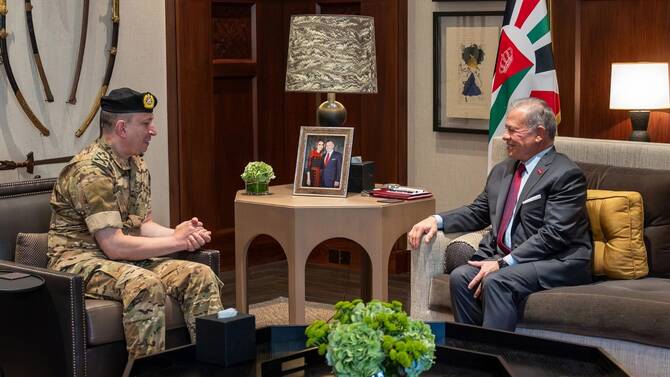
Lebanese Army Commander Gen. Rodolphe Haykal recently discussed regional developments and military cooperation with Jordan’s King Abdullah and Chairman of the Joint Chiefs of Staff Maj. Gen. Yousef Huneiti. Gen. Haykal met with King Abdullah on Sunday at Al-Husseiniya Palace in Amman. Earlier, the Lebanese Army Commander held discussions with his Jordanian counterpart, Maj. Gen. Huneiti, also in Amman. Their meetings focused on strengthening bilateral military ties and addressing security concerns in the region. These high-level discussions show the critical need for coordinated efforts among regional partners to navigate the complex geopolitical landscape of the Middle East. The exchange of views between the military leadership of both nations notes a shared commitment to fostering stability and security in a volatile environment.
Jordanian Support and Regional Outlook
Crown Prince Hussein and Director of the Office of His Majesty Alaa Batayneh were also present during the meeting between King Abdullah and Lebanese Army Commander Gen. Rodolphe Haykal at Al-Husseiniya Palace. King Abdullah used the occasion to reiterate Jordan's commitment to Lebanon's stability, emphasizing the Hashemite Kingdom's ongoing support. He showed Jordan’s commitment to assisting Lebanon in maintaining its security and safeguarding its sovereignty. This pledge of support is particularly significant given the ongoing challenges Lebanon faces, both internally and along its borders. The discussions centered on the broader regional security landscape, with both sides noting the importance of cooperation to address shared challenges. These challenges include cross-border security threats, the implications of regional conflicts, and the need for coordinated responses to maintain peace. The meeting reflected a continued effort to strengthen bilateral relations between the two nations' armed forces, recognizing that a stable Lebanon is vital for broader regional security.
Lebanon's Conflict and Peace Efforts
Since March, the Iran-backed group Hezbollah has drawn Lebanon into a wider conflict with Israel. This conflict has resulted in the displacement of more than 1 million people internally due to a widespread bombing campaign targeting Beirut and villages in southern Lebanon. The humanitarian impact of these hostilities has been severe, leading to significant internal migration and a deepening crisis for the Lebanese population. In an effort to de-escalate the situation, Lebanese and Israeli officials have engaged in several US-mediated meetings. These discussions aim to achieve a ceasefire between the two sides, secure an Israeli withdrawal from villages it currently controls in southern Lebanon, and facilitate the deployment of the Lebanese army in the area. A key objective of these ongoing diplomatic efforts is also the disarmament of Hezbollah, a contentious issue central to long-term stability. The talks show international and regional efforts to stabilize the volatile border region, which has been a flashpoint for decades. Progress in these negotiations is seen as key for alleviating the humanitarian crisis and preventing further escalation.
Military Cooperation and Future Ties
Discussions between Lebanese Army Commander Gen. Rodolphe Haykal and Jordanian officials assessed the latest developments in the Middle East and their implications for regional security. This full assessment included an analysis of emerging threats and the strategic responses required to counter them effectively. The meetings in Amman served to reinforce the existing military cooperation between Lebanon and Jordan, focusing on strategies to enhance stability across the region. Both sides emphasized the importance of continued dialogue and joint efforts to counter security threats, which range from terrorism to cross-border illicit activities. The exchange noted a shared understanding of the complex challenges facing the Middle East, including cross-border security concerns and the need for coordinated responses. This engagement is part of an ongoing commitment by both nations to foster stronger defense ties and ensure regional stability through collaborative military strategies, ultimately aiming to safeguard their national interests and contribute to a more secure Middle East.