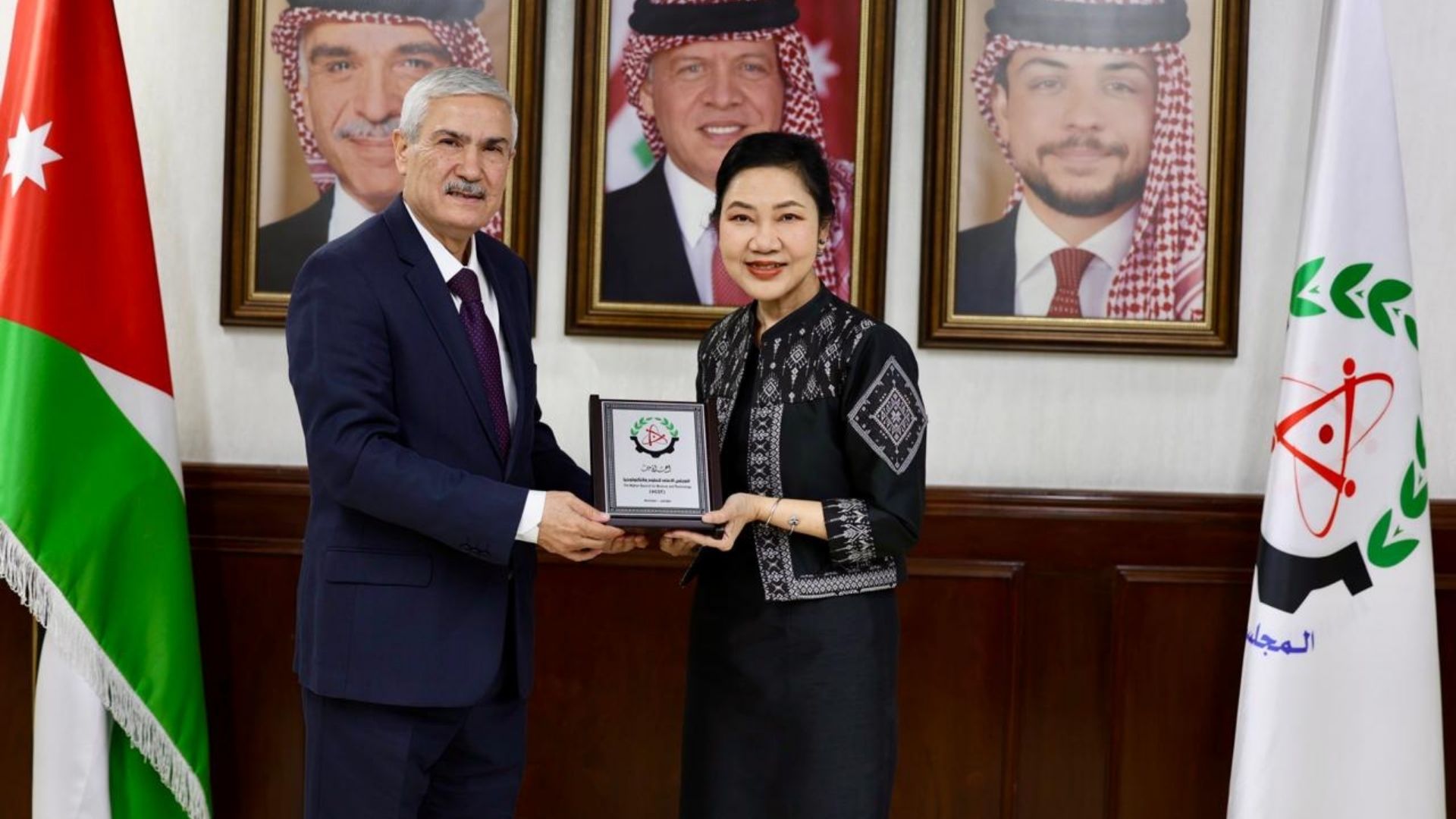
Secretary-General of Jordan's Higher Council for Science and Technology (HCST) Mashhour Rifai met with Thai Ambassador Jirapon Jirampaikool on June 7, 2026, in Amman to discuss collaboration in scientific research, technology, and innovation. The high-level meeting showed the mutual commitment of both nations to foster advancements in key scientific fields. During their discussions, Mr. Rifai described the relationship between the two countries as "deep-rooted," noting the historical ties that form a strong foundation for future partnerships. Ambassador Jirampaikool, in turn, emphasized the meeting's importance "to launch constructive" initiatives between Jordan and Thailand, signaling a proactive approach to developing tangible cooperative projects. The dialogue between the two officials served as a vital step in identifying specific avenues for joint efforts and mutual growth.
Deepening Bilateral Ties
Jordan and Thailand are celebrating 60 years of diplomatic relations, providing a significant and timely backdrop for enhanced cooperation in various sectors. This milestone anniversary shows the enduring friendship and shared interests that have characterized the relationship between the two nations over six decades. During the recent meeting in Amman, the two sides engaged in full discussions aimed at exploring opportunities for collaboration in areas of mutual interest. These discussions spanned a range of scientific and technological domains, seeking to identify where joint efforts could yield the most significant benefits. Conversations also focused intently on establishing practical mechanisms to finance joint research projects, aiming to facilitate and support concrete scientific initiatives between the two nations. This focus on funding mechanisms is key for transforming proposed collaborations into impactful, real-world projects.
HCST's Expanding Role
The Higher Council for Science and Technology (HCST) in Jordan has recently undergone a strategic restructuring, with the Scientific Research and Innovation Support Fund being brought under its umbrella. This integration significantly expands the council's institutional scope and enhances its capacity to drive scientific development. This move positions the HCST to play a more central and influential role in fostering scientific advancement within Jordan, consolidating resources and expertise under a single, unified vision. Looking ahead, the HCST announced it will host the Red Sea Conference early next year, a significant event poised to become a key forum for regional scientific discourse and collaboration. The National Center for Research and Development is actively coordinating and preparing the upcoming Red Sea Conference, ensuring its success and broad participation. This careful preparation shows the collaborative effort involved in organizing major scientific gatherings, further noting the HCST's growing influence in national and regional scientific initiatives and its commitment to promoting dialogue and innovation.
Future Partnership Framework
In a significant move towards formalizing their burgeoning scientific relationship, the two sides announced the possibility of preparing a draft memorandum of understanding (MoU). This proposed MoU would serve as a key framework to guide and structure future cooperation, aiming to establish a long-term strategic partnership between Jordan and Thailand in science and technology. The envisioned partnership would specifically be between Jordan's Higher Council for Science and Technology (HCST) and its counterpart institutions in Thailand, fostering direct links between key scientific bodies. This framework aims to formalize future scientific and technological collaborations between the two nations, providing a clear roadmap for joint projects, researcher exchanges, and shared knowledge initiatives. Such an agreement would solidify the commitment of both countries to sustained cooperation in vital scientific fields.
Ambassador's Call to Action
Ambassador Jirapon Jirampaikool showed the critical importance of establishing a strong and sustainable framework for scientific cooperation between Jordan and Thailand. The Ambassador emphasized the need for tangible outcomes from the discussions, moving beyond initial talks to concrete actions and projects. This call for actionable results suggests that continued engagement and follow-through would be essential for translating shared interests into practical, impactful projects. Discussions between the two nations noted several key areas where collaborative efforts could yield significant advancements in scientific research and innovation, ranging from environmental science to advanced technological development. Moving forward, the Ambassador advocated strongly for regular exchanges and joint initiatives, believing these to be fundamental in strengthening the burgeoning partnership and ensuring its longevity. These efforts aim to build upon the foundations laid during the recent productive meeting in Amman, fostering a dynamic and mutually beneficial scientific relationship.