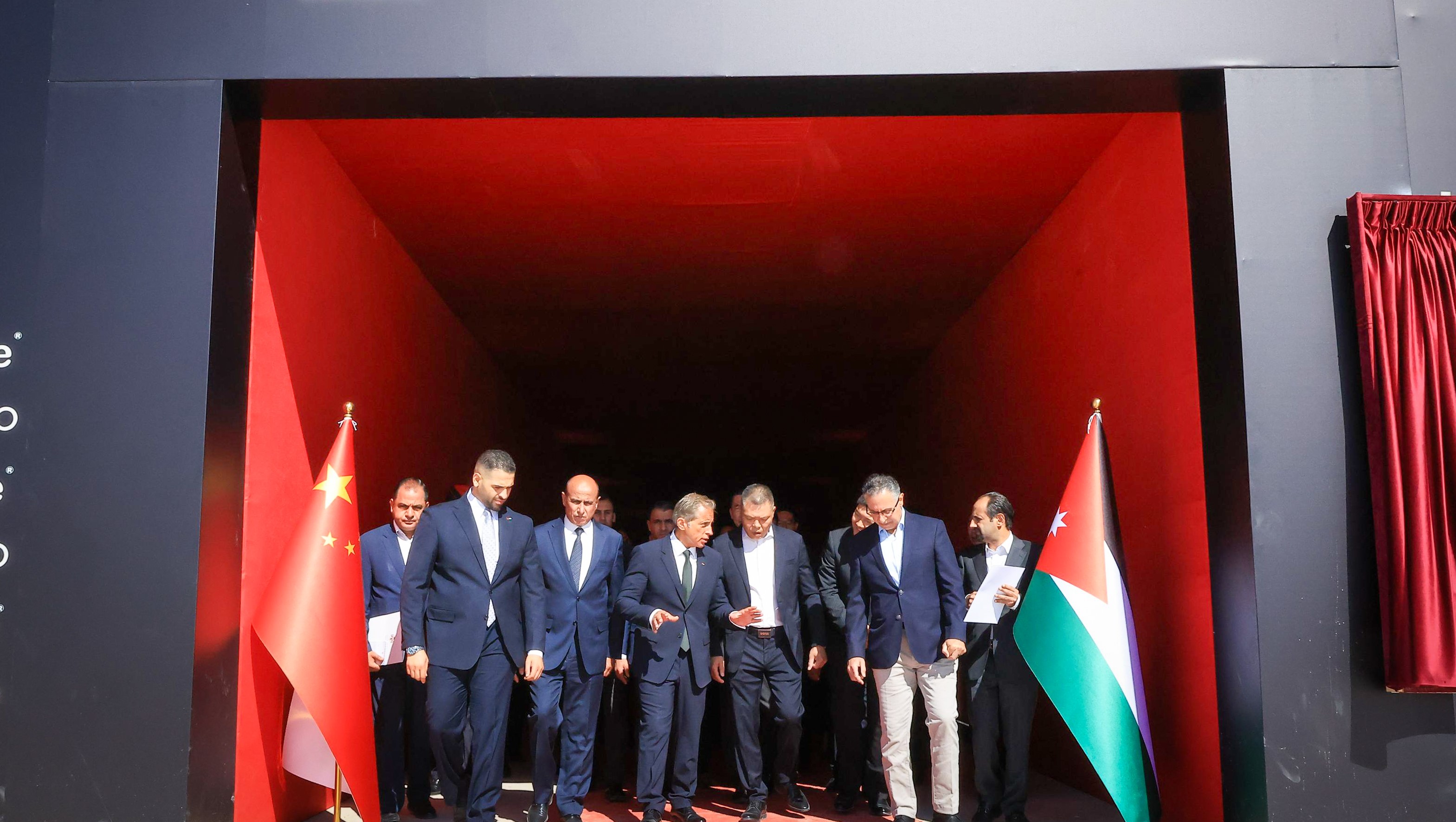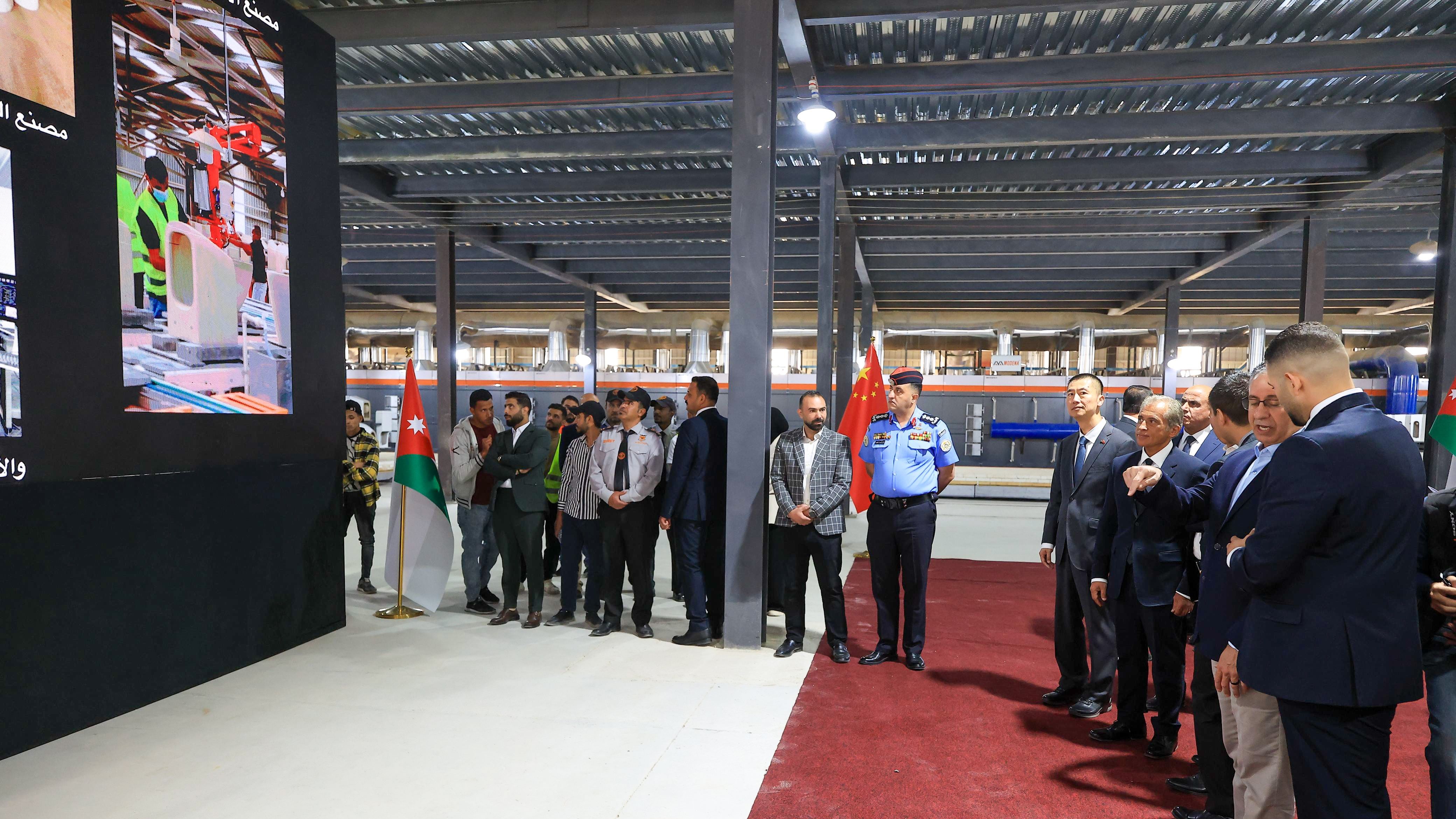
Prime Minister Jafar Hassan inaugurated six new factories belonging to Jinsheng International on Tuesday, marking a significant expansion of industrial investment in Jordan. The newly operational facilities are set to broaden local production, encompassing various sectors such as sanitary ware, stainless steel tanks and pipes, lighting systems, electrical appliances, cardboard packaging, mattresses, and tile adhesives. This diversification in manufacturing capabilities is a key component of the company's strategic growth within the Kingdom.
Wu Jianbo, chief executive officer of Jinsheng International, stated, "The inauguration of six new factories by Prime Minister Jafar Hassan marks a significant milestone for industrial investment in Jordan, reflecting growing foreign confidence in the Kingdom's regulatory stability and incentives." The expansion shows the company's commitment to diversifying manufacturing capabilities within the country, moving beyond its initial product lines to a broader array of industrial goods.
Expanded Production Capabilities
Jinsheng International has expanded its operational footprint in Jordan significantly, growing from a single facility in 2022 to a complex of eight factories by 2026. This rapid growth trajectory notes the company's increasing investment and confidence in the Jordanian market. The company's initial operations, which began with one factory, focused on the production of porcelain, stair tiles, and marble accessories, establishing an early foundation in the construction materials sector. With the inauguration of these six new facilities, Jinsheng International is now poised to produce a much wider range of products, including sanitary ware, stainless steel tanks and pipes, lighting systems, electrical appliances, cardboard packaging, mattresses, and tile adhesives. This strategic expansion into diverse manufacturing areas aims to meet both local and regional market demands, reducing reliance on imported goods and enhancing Jordan's industrial self-sufficiency. This expansion indicates a strategic growth trajectory within the Jordanian industrial sector, reinforcing the country's position as a manufacturing hub.
Government Support and Incentives
Prime Minister Jafar Hassan directed the transition of the industrial complex into a designated development zone, a move aimed at streamlining operations and attracting further investment. This governmental action shows a broader strategy to foster industrial growth within the region, providing a stable and attractive environment for foreign and local investors. The government has also committed significant financial resources to support Jinsheng International's expansion efforts, demonstrating a clear partnership between the public sector and private enterprise. Such commitments are key for large-scale industrial projects that require substantial infrastructural backing.
A government allocation of JD7 million ($9.9 million) has been designated for the construction of a 45-megawatt electrical substation. This substantial infrastructure project is specifically intended to meet the increased power demands arising from the company's expanded manufacturing capabilities, ensuring that the new factories have a reliable and strong energy supply. The substation is critical for ensuring stable and sufficient energy supply across Jinsheng International's new facilities, enabling uninterrupted production and operational efficiency. This investment in energy infrastructure is a testament to the government's commitment to facilitating industrial growth.
Further demonstrating governmental support, 3,000 dunams (741 acres) of state land have been allocated to accommodate the future development of 40 specialized factories. This substantial land provision is central to the long-term vision for industrial growth, providing ample space for a diverse range of manufacturing operations to establish themselves. The allocation facilitates the creation of a full industrial hub, designed to attract and support multiple industrial ventures, fostering a vibrant and interconnected industrial ecosystem. This forward-looking approach aims to solidify Jordan's position as a regional manufacturing powerhouse.
Job Creation and Economic Impact
Jinsheng International currently employs 800 residents in the region, providing significant local employment opportunities. The newly inaugurated plants are projected to generate over 700 additional jobs within the next six months, significantly expanding employment opportunities for the local workforce. This immediate increase in job availability will have a direct positive impact on the community. The company has also made a corporate commitment to create 2,000 full-time jobs over the next three years, indicating a sustained and long-term investment in human capital within Jordan. This expansion is expected to have a substantial economic impact on the local community by increasing employment and contributing to the regional economy through sustained industrial activity. The total workforce of Jinsheng International in Jordan is projected to reach approximately 1,500 employees, reflecting the scale of its operations and its contribution to the national economy.
Local Business Perspective
The designation of the industrial complex as a development zone will grant investors permanent fiscal incentives, according to Jinsheng International CEO Wu Jianbo. He stated, "The designation will grant investors permanent fiscal incentives, including a fixed 5% income tax rate and reduced sales taxes, which Wu noted would enhance the global competitiveness of Jordan's industrial output." These incentives are designed to make Jordan an even more attractive destination for industrial investment, promoting both local and foreign capital injection. Jinsheng International projects its total workforce in Jordan to reach approximately 1,500 employees, showing the significant employment opportunities created by its ongoing expansion and the favorable investment climate.
In a related development, Zaal Kawalit, manager of the Adir Cooperative Dairy Factory, praised a separate site visit by Prime Minister Hassan to his facility on Sunday. This visit noted the government's attention to businesses of all scales. Kawalit commented that "The visit was a strong sign of support for small-scale, community-based enterprises," emphasizing the importance of governmental recognition for local businesses. The Adir Cooperative Dairy Factory currently provides 13 local jobs and "supports local livestock farmers by purchasing milk at preferential rates to supplement rural household incomes," Kawalit added. This demonstrates the broader economic benefits of local industries, which extend beyond direct employment to support the agricultural sector and rural livelihoods.